























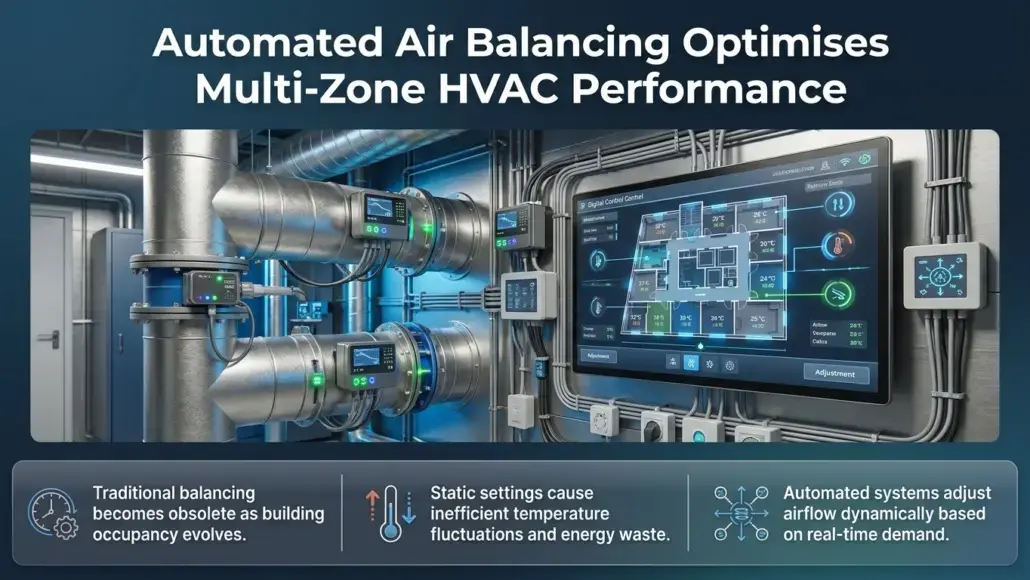


The distribution of conditioned air within a commercial facility is a complex engineering challenge, particularly in buildings with multiple zones and varying occupancy patterns. Traditional air balancing is often a one-time process performed during building commissioning, involving the manual adjustment of dampers based on a static design load. However, as the building’s usage evolves and internal loads fluctuate, these static settings quickly become obsolete, leading to hot and cold spots, energy waste, and occupant dissatisfaction. The implementation of automated air balancing provides a dynamic solution that continuously adjusts airflow to match the real-time requirements of each individual zone. By utilizing smart dampers and advanced control logic, these systems ensure that the correct volume of air is delivered exactly where it is needed, maximizing both comfort and efficiency.
Precision Airflow Control with Smart Damper Actuators
At the heart of any dynamic air management system is a network of smart damper actuators that provide precise control over air volume. Unlike traditional manual dampers, these electronic devices are equipped with position feedback and can be controlled remotely by the building automation system. The ability to modulate the damper position in small increments allows for a level of granular airflow control that is impossible to achieve through manual means. This precision is essential for maintaining the correct pressure relationships between different zones, preventing the migration of odors or contaminants and ensuring that the overall HVAC system is operating within its designed parameters.
The design of these actuators has evolved to prioritize reliability and low power consumption. Modern units feature brushless DC motors that offer high torque and long service life with minimal maintenance. The integration of diagnostic sensors allows the actuator to report its status and performance back to the central controller, enabling facility managers to identify potential issues such as binding or mechanical failure before they impact the building’s operations. This proactive approach to component management is a key factor in the long-term success of automated air balancing initiatives, ensuring that the system remains responsive to the changing needs of the facility.
Beyond this, the installation of these smart dampers can be performed during initial construction or as part of a targeted retrofit project. In many cases, existing manual dampers can be replaced with electronic versions without the need for extensive ductwork modifications. The use of wireless communication protocols can further simplify the installation process, reducing the need for costly and intrusive wiring. This flexibility makes the technology an attractive option for a wide range of commercial buildings, from small office suites to large-scale industrial facilities.
Continuous Commissioning and Dynamic Pressure Balancing
One of the most significant advantages of this dynamic technology is the concept of continuous commissioning. Instead of a once-every-five-years event, the air balancing process occurs every minute of every day. The building automation system constantly monitors the airflow and pressure at various points in the ductwork and makes real-time adjustments to the dampers to maintain the desired setpoints. This dynamic approach accounts for changes in building occupancy, seasonal weather variations, and even the aging of filters and fans. By keeping the system in a state of constant optimization, facility managers can achieve energy savings that far exceed those of traditional, static balancing methods.
Dynamic pressure balancing is a critical component of this continuous optimization. The system must maintain a stable static pressure within the main ductwork while providing the necessary airflow to each terminal unit. By coordinating the operation of the main supply fans with the individual zone dampers, the system can minimize the energy required to move air through the building. When a zone requires less air, the corresponding damper closes slightly, and the main fan speed is reduced accordingly. This coordination ensures that the system is always operating at the lowest possible pressure required to meet the building’s needs, reducing fan energy consumption and minimizing noise and vibration.
Beyond this, the integration of leak detection systems can be viewed as a parallel effort in facility optimization. Just as precise airflow management protects the indoor environment and reduces energy waste, advanced monitoring of the building’s fluid systems prevents costly damage and ensures the long-term integrity of the infrastructure. Both technologies represent a shift toward proactive, data-driven management of the built environment, where the status of every critical system is monitored and optimized in real time. The alignment of these various smart technologies creates a more resilient and efficient building that is better equipped to handle the challenges of modern operations.
Impact on Occupant Comfort and Thermal Uniformity
The primary goal of any HVAC system is to provide a comfortable and productive environment for building occupants. Automated air balancing is a key enabler of this goal, as it ensures that every zone receives the correct amount of conditioned air to maintain its temperature setpoint. By eliminating the imbalances that lead to hot and cold spots, the system provides a more uniform thermal environment across the entire facility. This uniformity is particularly important in open-office plans, where multiple occupants with different thermal preferences share the same large space. The ability to provide precise, zone-level control helps to minimize comfort complaints and improve overall occupant satisfaction.
Thermal uniformity also has a direct impact on the efficiency of the heating and cooling equipment. In a poorly balanced system, some zones may be over-cooled or over-heated in an attempt to compensate for deficiencies in other areas. This leads to simultaneous heating and cooling in different parts of the building, which is a major source of energy waste. By ensuring that every zone is correctly balanced, the system can maintain the desired temperatures using the minimum amount of thermal energy. This targeted approach to air delivery ensures that every kilowatt-hour consumed by the HVAC system is translated into tangible comfort for the building’s occupants.
The relationship between airflow and indoor air quality is also managed more effectively through automation. The system can ensure that every zone receives the minimum amount of fresh air required by local building codes, regardless of how the overall building occupancy changes. In areas with high occupant density, the system can temporarily increase the airflow to flush out pollutants and maintain a healthy indoor environment. This dynamic response to changing air quality needs is a critical feature for modern facilities that must comply with increasingly stringent health and safety standards.
Integration with Variable Air Volume and Zone Controls
The implementation of automated air balancing is most effective when integrated with variable air volume systems and sophisticated zone controls. In a VAV system, the volume of air delivered to each zone is modulated by a terminal unit equipped with a damper and a flow sensor. The balancing logic provides a supervisory layer of control that coordinates the operation of these individual terminal units with the central plant. This integration ensures that the entire system is working together to achieve the highest levels of efficiency and comfort.
The use of advanced zone controllers allows for the implementation of complex control strategies, such as occupancy-based setbacks and demand-controlled ventilation. When a zone is unoccupied, the controller can automatically reduce the airflow to a minimum level, saving energy while still maintaining the necessary air quality. When the zone becomes occupied, the controller can rapidly increase the airflow to reach the desired setpoint. The ability to coordinate these changes across multiple zones prevents sudden pressure spikes in the ductwork and ensures a smooth and stable air distribution throughout the building.
The data collected from the zone controllers also provides valuable insights for long-term system optimization. By analyzing the airflow patterns and temperature trends in each zone, facility managers can identify areas where the HVAC system may be oversized or undersized. This information can be used to inform future equipment upgrades or building modifications, ensuring that the HVACR infrastructure is always aligned with the actual needs of the facility. The integration of these various control layers creates a highly responsive and adaptable air management system that is capable of meeting the diverse needs of modern commercial buildings.
Long Term Reliability and Actuator Maintenance Protocols
Ensuring the long-term reliability of an automated air balancing system requires a structured approach to maintenance and component monitoring. While the use of smart actuators reduces the need for manual adjustments, it introduces new requirements for electronic diagnostics and mechanical inspections. Regular testing of the damper movement and verification of the position feedback are essential to ensure that the actuators are responding correctly to the controller’s commands. Any signs of mechanical binding or electrical failure should be addressed immediately to prevent suboptimal system performance.
Maintenance personnel should also pay close attention to the integrity of the airflow sensors used in the system. Dust accumulation and debris can impact the accuracy of the sensors, leading to incorrect airflow measurements and faulty balancing. Regular cleaning and calibration of the sensors are necessary to maintain the precision of the system. The use of self-diagnostic features in modern actuators and sensors can help identify potential issues, but manual verification remains a critical part of a comprehensive maintenance program. By combining electronic monitoring with physical inspections, facility managers can ensure the continued reliability of their air management infrastructure.
The longevity of the actuators is also influenced by the quality of the installation and the environment in which they operate. Ensuring that the actuators are properly shielded from extreme temperatures and moisture is vital for preventing premature failure. A well-designed maintenance plan should also include the regular update of the control software to ensure that the system is benefiting from the latest optimization algorithms and security patches. By prioritizing the health of both the mechanical and electronic components, building owners can protect their investment and continue to enjoy the benefits of superior comfort and efficiency for many years to come. The proactive management of these systems is the key to achieving a truly high-performance commercial building environment.