
























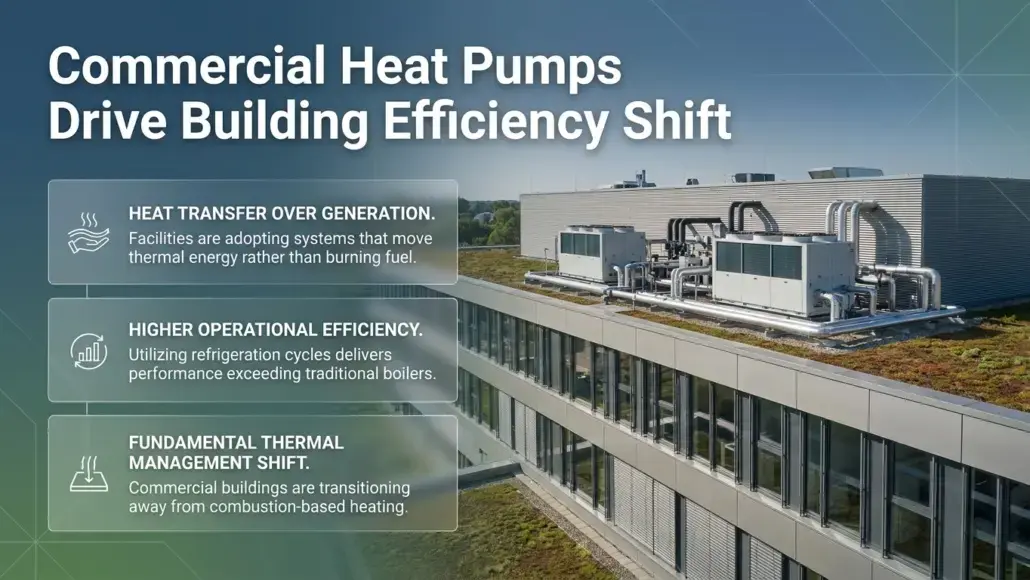


The adoption of heat pump systems represents a fundamental shift in how commercial facilities manage thermal loads. Unlike traditional combustion-based boilers or electric resistance heaters, these units operate on the principle of heat transfer rather than heat generation. By utilizing a refrigeration cycle to move thermal energy from an external source to an internal sink, these systems achieve efficiencies that significantly exceed conventional alternatives. The shift is driven by increasing regulatory pressure to decarbonize the built environment and the escalating costs of fossil fuel energy sources. Building owners are increasingly looking at heat pump systems as the primary solution for modernization projects aimed at long-term sustainability and operational resilience. The technical transition requires a comprehensive understanding of thermodynamics, electrical infrastructure, and building physics to ensure that the promised efficiency gains are realized in practice.
Thermodynamic Efficiency and Coefficient of Performance Standards
Understanding the technical advantages of this technology requires a detailed examination of the coefficient of performance. This metric defines the ratio of heating output to electrical input. While electric resistance heating is capped at a theoretical maximum efficiency of one hundred percent, modern commercial units often achieve values between three and four. This means for every unit of electricity consumed, the system delivers three to four units of thermal energy. Such performance is made possible by the thermodynamic properties of advanced refrigerants which evaporate at low temperatures and release significant latent heat during condensation. The precision of the refrigeration cycle allows for a more granular control over heat delivery, matching the thermal output to the actual losses of the building envelope.
Engineers must account for the variability of these metrics based on ambient conditions. Air-source units, which are common in many retrofit scenarios, face efficiency degradation as outdoor temperatures drop. However, the development of vapor injection technology and variable speed compressors has allowed these systems to maintain high performance even in sub-freezing environments. The ability to modulate capacity ensures that the building receives exactly the amount of heat required, minimizing the cycling losses associated with traditional on-off equipment. This precision is a critical factor in maintaining consistent indoor environments while controlling peak electrical demand. By avoiding the massive spikes in energy consumption characteristic of large boiler ignitions, facilities can maintain a smoother electrical load profile, which often results in lower utility tariffs and reduced stress on local distribution networks.
Beyond this, the integration of demand-controlled ventilation improving commercial airflow management can work in tandem with these heating solutions to optimize the overall building energy profile. By adjusting outdoor air intake based on real-time occupancy, the thermal load on the heating equipment is reduced, allowing the compressors to operate within their most efficient performance range for longer durations. This synergy between heating and ventilation is a cornerstone of modern high-performance building design, ensuring that energy is not wasted on heating excess air that is not required for occupant health. The alignment of these systems requires a sophisticated building automation strategy that can balance indoor air quality with thermal comfort and energy expenditure.
Integration with Existing Hydronic and Forced Air Infrastructure
A significant challenge in upgrading commercial buildings involves the compatibility of new technology with legacy distribution systems. Traditional boilers typically operate at high supply temperatures, often exceeding eighty degrees Celsius. In contrast, many electric heating units are optimized for lower temperature operation, generally between forty-five and fifty-five degrees Celsius. This discrepancy requires a thorough evaluation of the existing heat emitters, such as radiators or fan coil units. In many cases, larger surface areas are necessary to provide equivalent heating capacity at lower water temperatures, or the building envelope must be improved to reduce the overall thermal demand through better insulation and air sealing.
Technical advancements in high-temperature units are bridging this gap. By utilizing cascading refrigeration cycles or natural refrigerants like carbon dioxide, manufacturers are now producing units capable of delivering water at temperatures comparable to traditional boilers. This capability simplifies the retrofit process, allowing for the retention of existing piping and terminal units while still transitioning to an electrified heating source. Additionally, the transition to these systems often involves the installation of buffer tanks to provide thermal mass, which helps in managing defrost cycles without impacting indoor comfort levels. The buffer tank acts as a thermal battery, storing energy during periods of low demand and releasing it when the building requires a rapid increase in heat or when the heat pump enters its maintenance cycle.
The transition also demands a reconfiguration of the electrical infrastructure. Since the load shifts from gas or oil to the electrical grid, facility managers must ensure that the building transformer and switchgear can handle the increased current. The use of soft-starters and variable frequency drives helps mitigate the initial inrush current, protecting the electrical system and reducing potential demand charges from the utility provider. Modern building managers must coordinate closely with utility companies to assess the impact of full-building electrification on the local grid capacity, particularly in urban areas where multiple buildings may be undergoing similar transitions simultaneously.
Cold Climate Performance and Defrost Cycle Management
In regions with severe winters, the reliability of heat pump systems is a primary concern for facility operators. As the outdoor coil temperature drops below the dew point and the freezing mark, frost accumulation occurs. This ice layer acts as an insulator, restricting airflow and reducing heat transfer efficiency. To counter this, the system must periodically enter a defrost mode, reversing the refrigeration cycle to warm the outdoor coil. Managing these cycles effectively is vital to prevent significant drops in indoor supply air temperature. The transition period during defrost can be particularly taxing on the system if not managed with sophisticated logic that accounts for outdoor humidity and compressor discharge temperatures.
Modern controls utilize sophisticated sensors to initiate defrost only when necessary, rather than on a fixed timer. This intelligence preserves energy and ensures that the heating output is maximized during the coldest periods. Some large-scale commercial units employ multiple refrigeration circuits, allowing one circuit to continue heating the building while another undergoes defrosting. This redundancy ensures a continuous supply of thermal energy, preventing the fluctuations in comfort that often plagued early installations. In extreme conditions, supplemental electric resistance heaters or existing gas boilers may be used as a secondary stage, providing a hybrid approach that ensures building safety while still prioritizing the heat pump for the vast majority of the annual heating load.
Additionally, the use of ground-source or water-source units can entirely bypass the challenges associated with extreme air temperatures. By tapping into the stable thermal mass of the earth or a water body, these systems maintain a consistent heat source throughout the year. While the initial capital expenditure for ground loops is higher, the superior efficiency and reliability in cold climates often result in a more favorable total cost of ownership over the lifespan of the equipment. The thermal stability of the ground allows the system to operate at a near-constant coefficient of performance, providing a level of predictability that is highly valued by financial controllers and facility planners.
Maintenance Protocols for High Capacity Refrigeration Circuits
Maintaining peak performance requires a specialized approach compared to traditional heating equipment. The complexity of the refrigeration cycle means that technicians must be proficient in leak detection, refrigerant management, and electronic control diagnostics. Regular inspections should focus on the integrity of the refrigerant charge, as even a minor leak can lead to significant efficiency losses and potential compressor damage. The use of electronic sensors to monitor pressure and temperature differentials allows for the early identification of issues before they lead to system failure. Modern diagnostics can even pinpoint the specific component that is beginning to drift from its factory parameters, allowing for proactive replacements during scheduled shutdowns.
Cleaning the heat exchangers is another critical maintenance task. In air-source systems, the outdoor coils are exposed to environmental debris such as dust, leaves, and pollen. Any obstruction to airflow forces the fans to work harder and reduces the rate of heat absorption. Similarly, in water-source systems, the internal heat exchangers must be protected from scaling and fouling through proper water treatment and filtration. Neglecting these basic tasks can negate the efficiency benefits that these systems are designed to provide. A comprehensive maintenance plan must also include the verification of sensor accuracy, as a single faulty thermistor can cause the system to operate in an inefficient sub-mode or trigger unnecessary defrost cycles.
The longevity of the compressor is also tied to the quality of the lubrication system. Technicians must verify that the oil is free from contaminants and that the internal heaters are functioning to prevent refrigerant migration during off-cycles. As these systems become more integrated with building automation, predictive maintenance becomes possible. By analyzing historical performance data, operators can schedule service based on actual component wear rather than arbitrary calendar dates, further optimizing the operational budget of the facility. The ability to monitor vibrations and acoustic profiles of the compressors adds another layer of security, providing early warning of mechanical wear that might otherwise go unnoticed until a catastrophic failure occurs.
Lifecycle Environmental Impact and Regulatory Compliance
The shift toward electrified heating is intrinsically linked to global efforts to reduce the carbon intensity of the construction sector. By eliminating onsite combustion, these systems remove a major source of direct greenhouse gas emissions. As the electrical grid continues to integrate more renewable energy sources like wind and solar, the operational carbon footprint naturally decreases. This characteristic makes them a future-proof investment for building owners who must comply with increasingly stringent local laws regarding building emissions. The long-term viability of the building asset is often tied to its ability to meet zero-carbon targets, making the transition away from fossil fuels a strategic financial decision rather than just an operational one.
The choice of refrigerant plays a significant role in the overall environmental profile. The industry is currently transitioning away from high global warming potential hydrofluorocarbons toward next-generation synthetic fluids and natural refrigerants. Understanding the safety classifications and handling requirements of these new substances is essential for both designers and maintenance personnel. The implementation of low-GWP refrigerants ensures that systems remain compliant with international environmental protocols like the Kigali Amendment. The move toward natural refrigerants, such as propane or ammonia in specific applications, offers a path to near-zero direct global warming impact, although it introduces new considerations for equipment placement and safety venting.
Beyond carbon emissions, the overall resource efficiency contributes to building certification programs such as LEED or BREEAM. The ability to recover waste heat from cooling processes to provide domestic hot water or space heating further enhances the sustainability credentials of the facility. By treating heat as a resource to be managed rather than a byproduct to be discarded, heat pump systems enable a circular approach to thermal energy management within the modern commercial building. This holistic view of building energy flows allows for the optimization of every kilowatt-hour consumed, providing a clear path to achieving the highest levels of operational excellence in the HVACR sector.