
























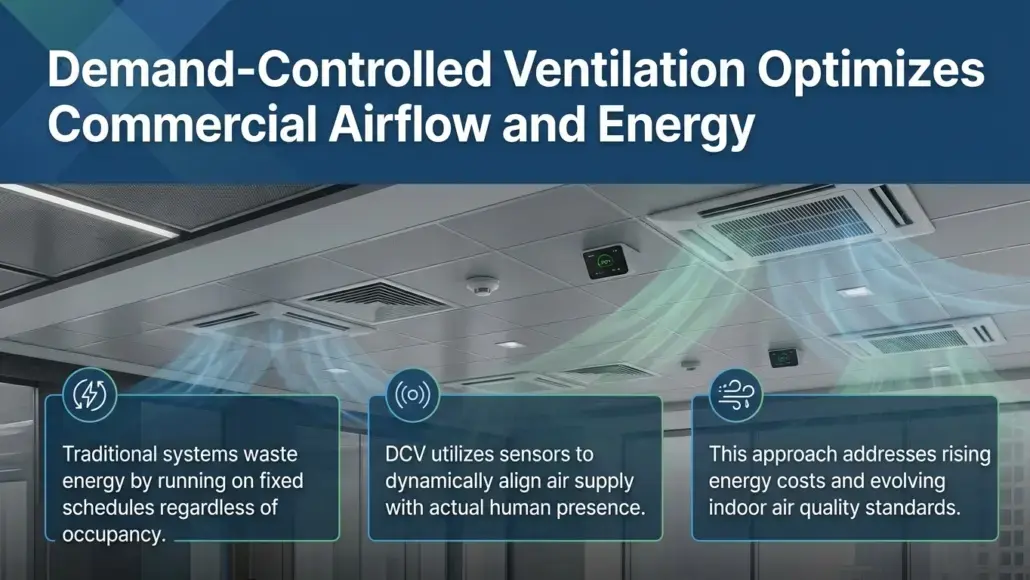


Optimizing the intake of outdoor air is a critical component of modern facility management, particularly as energy costs and indoor air quality standards continue to rise. Traditional ventilation systems often operate on a fixed schedule or constant volume, leading to significant energy waste during periods of low occupancy. In contrast, the implementation of demand-controlled ventilation provides a dynamic solution that aligns air supply with actual human presence. By utilizing sensors to monitor conditions within the building, these systems ensure that ventilation rates are sufficient to maintain health and comfort without unnecessarily heating or cooling excess outdoor air. This approach is particularly effective in spaces with highly variable occupancy, such as conference rooms, auditoriums, and retail environments, where the number of people can fluctuate dramatically throughout the day.
Sensor Technologies for Real Time Occupancy Monitoring
The effectiveness of any dynamic airflow strategy depends heavily on the accuracy and reliability of the data provided by the sensor network. Carbon dioxide sensors are the most common tool used in these applications, as CO2 concentrations serve as a reliable proxy for human metabolic activity. By measuring the parts per million of CO2 in the return air or within individual zones, the system can determine when more fresh air is required. High-quality non-dispersive infrared sensors are favored for their longevity and stability, providing precise measurements over extended periods with minimal calibration drift. However, relying solely on CO2 can sometimes lead to lag times in high-ceiling spaces, necessitating the placement of sensors at the breathing zone to ensure representative readings.
Beyond gas sensing, modern facilities are increasingly incorporating occupancy counters and motion sensors to provide a more immediate response. Infrared sensors, ultrasonic detectors, and even anonymous thermal imaging can detect the presence of individuals before CO2 levels begin to rise significantly. This multi-modal approach allows the building automation system to pre-ventilate a room in anticipation of a scheduled meeting or a sudden influx of visitors. The integration of these sensors requires a resilient communication network, typically utilizing protocols such as BACnet or Modbus to ensure that data flows between the sensors and the central controllers without interruption. Ensuring that these sensors are properly placed and shielded from direct supply air streams is essential to prevent false readings that could lead to under-ventilation or excessive energy use.
Beyond this, the data collected from these sensors can be shared with other building systems to enhance overall performance. For instance, the information can be used by rooftop HVAC units improving commercial building cooling to adjust the cooling load based on the number of occupants in a specific zone. This cross-system communication ensures that the entire HVACR infrastructure is operating in a coordinated manner, maximizing both comfort and efficiency. The ability to track occupancy patterns over time also provides valuable insights for facility managers, allowing them to optimize cleaning schedules and space utilization based on actual usage data.
Integration with Building Automation Systems and Protocols
A successful deployment of demand-controlled ventilation requires deep integration with the existing building automation system. The controller must be programmed with sophisticated logic that can interpret sensor inputs and translate them into specific actuator movements for dampers and fan speed adjustments. This logic must account for various factors, including the minimum ventilation requirements dictated by local building codes and the specific air quality targets set by the facility owner. Proportional-integral-derivative control loops are commonly used to provide smooth transitions in airflow, avoiding the rapid cycling of equipment that can lead to premature wear and occupant discomfort.
The communication architecture of the building plays a vital role in this integration. As systems become more complex, the need for interoperability between different manufacturers’ equipment becomes paramount. The adoption of open standards allows for the easy addition of new sensors or controllers as the building’s needs evolve. In many large-scale commercial projects, a central management platform provides a single interface for monitoring the status of the ventilation system across multiple floors or even different buildings in a campus. This centralized view allows for rapid troubleshooting and the adjustment of setpoints in response to changing environmental conditions or operational requirements.
Security is another critical consideration in the integration process. As building systems become more connected, they also become potential targets for cyber threats. Implementing secure communication protocols and regular software updates is essential to protect the integrity of the ventilation controls. A compromise in the building automation system could lead to significant operational disruptions, ranging from energy waste to the creation of unhealthy indoor environments. Facility managers must work closely with IT departments to ensure that the HVACR network is isolated and protected by appropriate firewalls and access controls.
Impact on Indoor Air Quality and Thermal Comfort
While energy savings are a primary driver for the adoption of this technology, the impact on indoor air quality is equally significant. By ensuring that fresh air is delivered exactly when and where it is needed, these systems can significantly reduce the concentration of indoor pollutants, including volatile organic compounds, odors, and bio-effluents. This targeted approach is more effective than traditional constant-volume systems, which may over-ventilate some areas while under-ventilating others. Maintaining optimal CO2 levels is also linked to improved cognitive function and productivity among building occupants, making it a valuable investment for office environments and educational institutions.
Thermal comfort is also enhanced through more precise airflow management. By avoiding the introduction of large volumes of unconditioned outdoor air during periods of low occupancy, the system can maintain more stable temperature and humidity levels within the building. This is particularly important in humid climates, where the introduction of excess outdoor air can significantly increase the latent cooling load and lead to moisture problems within the building envelope. The ability to modulate the outdoor air fraction allows the system to balance the need for fresh air with the need to maintain a comfortable indoor environment, providing a superior experience for occupants while protecting the building’s structural integrity.
The relationship between air movement and perceived comfort must also be managed. Excessive air velocities can lead to drafts and complaints from occupants, even if the temperature is within the desired range. By using variable speed drives to modulate fan speed in conjunction with damper adjustments, the system can provide a gentle and consistent airflow that is barely noticeable to the occupants. This subtle control is a hallmark of a well-designed ventilation strategy, providing a healthy and productive environment without the intrusive noise and drafts associated with older technology.
Energy Conservation Through Dynamic Damper Control
The primary mechanism for energy savings in a dynamic air management system is the reduction of the outdoor air fraction during periods of partial occupancy. Heating and cooling outdoor air to the desired indoor setpoints is one of the most energy-intensive processes in a commercial building. By reducing the volume of air that needs to be conditioned, the system can significantly lower the load on the heating and cooling equipment. In many applications, these energy savings can lead to a return on investment within just a few years, making it one of the most cost-effective upgrades available to building owners.
Dynamic damper control allows for the precise modulation of the air mixture. Actuators equipped with position feedback ensure that the dampers are moving to the exact position commanded by the controller. This precision is essential for maintaining the correct balance between outdoor air and recirculated air. In some advanced systems, the dampers are coordinated with the exhaust fans to maintain a slight positive pressure within the building, preventing the infiltration of unconditioned air and pollutants through the building envelope. This pressure control is critical for maintaining the efficiency of the overall HVAC system and protecting the indoor environment from external contaminants.
The use of energy recovery ventilators in conjunction with demand-controlled ventilation can further enhance these savings. These units transfer heat and moisture between the outgoing exhaust air and the incoming fresh air, significantly reducing the energy required to condition the outdoor air. When combined with a dynamic control strategy, energy recovery systems can achieve exceptional levels of efficiency, making them a standard feature in high-performance building designs. The integration of these technologies requires a holistic approach to system design, ensuring that all components are sized and controlled to work together effectively.
Maintenance of Carbon Dioxide and Humidity Sensors
To ensure the long-term performance of this airflow strategy, a rigorous maintenance schedule for the sensor network is essential. Carbon dioxide sensors, in particular, can be prone to drift over time, leading to inaccurate readings and suboptimal system performance. Regular calibration and verification against a known standard are necessary to ensure that the sensors remain within their specified accuracy range. Many modern sensors include self-calibration features that utilize the lowest recorded CO2 levels over a period of time to re-zero the sensor, but manual verification is still recommended as part of an annual maintenance program.
Humidity sensors also require regular attention, as they can be affected by dust accumulation and exposure to chemical contaminants. A faulty humidity sensor can lead to incorrect calculations of the latent cooling load, resulting in comfort issues or energy waste. Maintenance personnel should regularly inspect the sensor housings and clean any debris that may be obstructing the airflow to the sensing elements. Replacing sensors that show signs of degradation or inconsistent readings is a small price to pay for the continued efficiency and performance of the overall system.
Beyond the sensors themselves, the mechanical components of the ventilation system must also be maintained. Actuators and dampers should be checked for smooth operation and signs of wear or binding. Lubricating moving parts and ensuring that dampers seal tightly when closed is essential for preventing air leakage and maintaining the integrity of the control strategy. By implementing a proactive maintenance plan that includes both the electronic and mechanical components, facility managers can ensure that the system continues to deliver the promised energy savings and indoor air quality benefits for many years to come. The use of diagnostic software to monitor performance can help identify potential issues before they lead to significant operational problems, providing a clear path to long-term reliability and success.