






















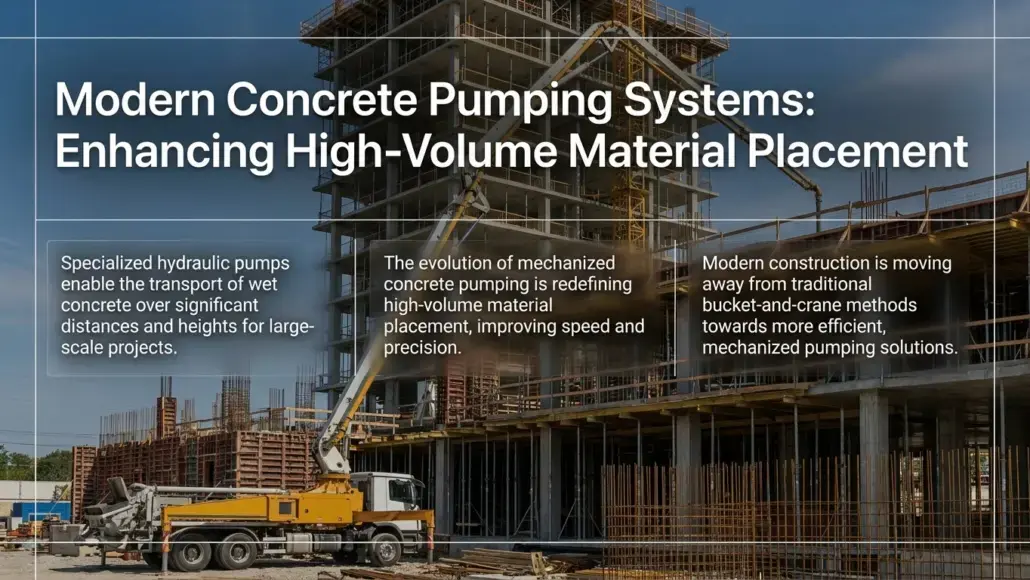


Modern construction projects demand unprecedented speed and precision, particularly when dealing with the logistical complexities of high-volume material placement. The evolution of concrete pumping systems has redefined how large-scale structures are erected, moving away from traditional bucket-and-crane methods toward more dynamic and efficient mechanized solutions. By utilizing specialized hydraulic pumps, contractors can now transport wet concrete over significant distances and heights without compromising the integrity of the mix. This technical advancement is not merely a matter of convenience; it is a fundamental requirement for the viability of contemporary skyscrapers, infrastructure projects, and industrial facilities. The ability to maintain a continuous flow of material allows for seamless pours, which are critical for achieving structural homogeneity and reducing the risk of cold joints. As project timelines tighten and labor costs rise, the role of sophisticated pumping technology becomes even more central to the overall success of a construction site. The operational efficiency gained through these systems is multifaceted, involving a combination of high-pressure hydraulics, advanced boom geometry, and real-time monitoring capabilities. When contractors deploy boom pumps, they gain the advantage of reach and mobility, allowing them to navigate congested urban sites with minimal disruption. These machines can extend their articulating arms over obstacles, delivering concrete exactly where it is needed with surgical precision. For horizontal applications, such as large warehouse slabs or foundation mats, line pumps offer a cost-effective alternative that excels in maintaining steady volume over long distances. The transition to these automated delivery methods has significantly reduced the physical strain on site personnel, shifting the focus from manual handling to equipment management and quality oversight.
Technical Parameters of High Pressure Hydraulic Systems
The core of modern concrete pumping systems lies in the sophisticated hydraulic technology that drives the piston movement. Unlike older mechanical systems, modern hydraulic units provide a consistent force that can be finely tuned to match the specific requirements of the concrete mix being used. High-pressure pumps are essential for moving heavy or dense mixtures through long vertical pipelines, especially in high-rise construction where hydrostatic pressure increases with height. The internal components, including the cylinders and wear plates, must be constructed from high-grade materials to withstand the abrasive nature of the aggregate. Engineers often monitor the stroke frequency and pressure fluctuations to ensure that the pump is operating within its optimal range, preventing cavitation and mechanical fatigue. Effective pressure management also influences the quality of the placed material. If the pressure is too high, the risk of segregation increases; if it is too low, the pipeline may become clogged, leading to costly downtime. Modern systems often incorporate variable speed drives and digital control interfaces that allow operators to make instantaneous adjustments based on the behavior of the concrete at the discharge point. This level of control is particularly important when working with specialized mixtures, such as self-consolidating concrete or fiber-reinforced blends, which have unique flow characteristics. By maintaining a stable hydraulic profile, contractors ensure that the material retains its designed properties from the truck to the formwork.
Strategic Logistics and Boom Geometry Optimization
The physical configuration of a concrete pump is a critical factor in site planning. Boom pumps come in various sizes, with reach capabilities ranging from thirty to over seventy meters. The geometry of the boom, whether it is an R-fold or a Z-fold design, determines how easily the machine can be deployed in tight spaces. A Z-fold boom, for instance, can be unfolded at lower ceiling heights, making it ideal for interior pours or work under bridge decks. Selecting the right boom configuration involves analyzing the site layout, identifying potential obstructions, and calculating the required reach for every section of the pour. This strategic approach minimizes the number of pump relocations required, thereby keeping the project on schedule. Integrating these pumping workflows with advancements in masonry equipment automation ensures that vertical and horizontal construction phases remain synchronized. When the pumping system is coordinated with other automated equipment, the entire workflow becomes more predictable and less prone to human error. Logistics also extend to the coordination of ready-mix delivery trucks. A high-capacity pump is only effective if there is a steady supply of material available. Dispatchers must manage the timing of the trucks to prevent gaps in the pour while also avoiding a buildup of waiting vehicles that could lead to the concrete setting in the drum. Sophisticated software solutions are now being used to track truck locations and pump performance, providing a comprehensive view of the material placement process.
Maintenance Protocols and Component Longevity
Given the harsh environments in which they operate, concrete pumping systems require rigorous maintenance to remain functional. The abrasive nature of concrete means that every component in contact with the mix is subject to rapid wear. Regular inspection of the delivery pipes, couplings, and gaskets is mandatory to prevent blowouts, which can be dangerous and cause significant delays. Operators must also pay close attention to the lubrication of the pump cylinders and the condition of the hydraulic oil. Contamination of the hydraulic system can lead to catastrophic failure, requiring expensive repairs and halting production for days. Planned downtime for maintenance is a hallmark of a professional pumping operation. By replacing wear parts before they fail, contractors avoid the unpredictability of on-site breakdowns. Many modern pumps are equipped with telematics systems that alert maintenance teams to potential issues before they become critical. These systems track hours of operation, pressure peaks, and temperature variances, providing a data-driven basis for service intervals. Investing in high-quality replacement parts is also essential, as sub-standard components can lead to increased friction and higher fuel consumption. A well-maintained pump not only performs better but also has a significantly higher resale value, contributing to the long-term profitability of the fleet.
Safety Frameworks and Operational Risk Mitigation
Safety is the most critical consideration when operating heavy machinery in a construction environment. Concrete pumping involves high pressures and heavy loads, both of which present significant risks if not managed correctly. Outrigger stability is a primary concern; the pump must be set up on firm, level ground to prevent tipping during boom extension. Ground pressure calculations are often required to ensure that the soil can support the weight of the machine and the dynamic forces generated during the pumping cycle. Operators must be highly trained and certified, possessing a deep understanding of the equipment’s limitations and the specific hazards associated with concrete delivery. Communication between the pump operator and the placement crew at the end of the line is vital. In noisy and crowded environments, radio communication or standardized hand signals must be used to coordinate the start and stop of the flow. The hoseman, who directs the concrete into the forms, faces physical risks from the weight and movement of the hose, as well as the potential for air pockets to cause sudden whipping of the line. Safety protocols include the use of whip checks on all pipe connections and the establishment of clear exclusion zones around the pump and boom. By fostering a culture of safety and adhering to strict material placement standards, contractors can minimize the likelihood of accidents and ensure that the project proceeds without injury or loss of life.
Evolution of Pump Design and Future Integration
The future of concrete pumping technology lies in greater automation and digital integration. Manufacturers are developing systems that can automatically adjust to the properties of the concrete mix, optimizing fuel efficiency and reducing wear. Remote-controlled operation is already standard, but the next generation of pumps may feature autonomous boom positioning based on 3D site models. This would allow for even greater precision in material placement, reducing waste and improving the finish of the structural elements. Furthermore, the development of electric and hybrid pumping units is gaining momentum as the industry seeks to reduce its carbon footprint and comply with stricter noise regulations in urban areas. As these systems become more intelligent, they will also become more integrated with the broader building information modeling (BIM) ecosystem. Real-time data from the pump can be fed back into the project model, providing an accurate record of the material placed and the conditions under which it was poured. This data is invaluable for quality assurance and long-term facility management. The ongoing refinement of concrete pumping systems ensures that they will remain an indispensable tool for the construction industry, enabling the creation of ever more ambitious and complex structures. By embracing these technological shifts, contractors can improve their competitive edge and deliver high-quality projects that meet the demands of a rapidly changing world.