




















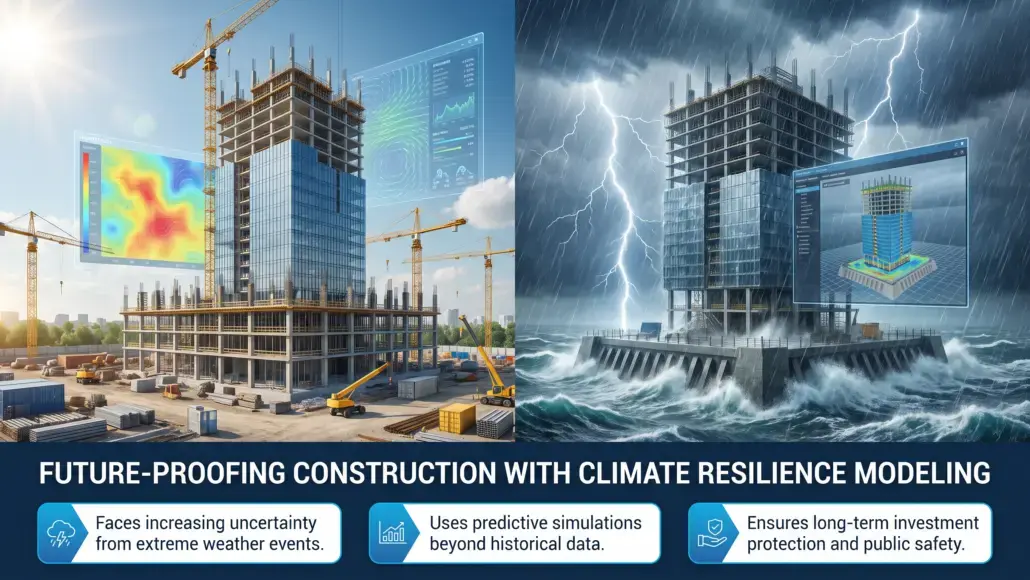


The construction industry is facing a new era of environmental uncertainty, driven by the increasing frequency and intensity of extreme weather events. To protect long term investments and ensure public safety, engineers are increasingly turning to climate resilience modeling as a fundamental component of the design process. These predictive simulations allow designers to move beyond historical weather data, which is no longer a reliable indicator of future conditions. By using advanced algorithms to project how various climate scenarios will impact a specific site, firms can identify vulnerabilities early in the building design phase. This proactive approach ensures that every structure is built with a clear understanding of the atmospheric risks it will face over its multidecadal lifespan.
The complexity of these simulations requires the integration of diverse datasets, including regional climate projections, topographical information, and historical disaster records. By synthesizing this information, climate resilience modeling provides a comprehensive view of how wind patterns, rainfall intensity, and temperature fluctuations will evolve. This data is then used to stress test different design options, allowing engineers to see how a building will perform under worst case scenarios. For example, a simulation might reveal that a proposed glazing system is insufficient for the projected increase in peak wind speeds, prompting a redesign before construction begins. This level of foresight is essential for minimizing the risk of property damage and operational disruption in a rapidly changing environment. As insurance premiums for high risk areas continue to rise, the ability to demonstrate a rigorous approach to climate resilience can also lead to significant financial benefits for developers. By providing a clear record of how the building was designed to withstand extreme events, firms can secure better terms from lenders and insurers, improving the overall economic feasibility of the project. This intersection of technical engineering and financial risk management is becoming a defining feature of the modern construction sector, where resilience is valued as a tangible asset that contributes to the long term stability of the global economy.
Enhancing Structural Durability against Severe Wind Loads
One of the most critical aspects of building design in the context of climate change is the management of severe wind loads. As storms become more powerful, the pressure exerted on building envelopes and structural frames increases significantly. Climate resilience modeling allows engineers to simulate these pressures with high precision, ensuring that the structural durability of the building is matched to the expected conditions. This involves not only reinforcing the primary load paths but also paying close attention to secondary elements like cladding and roofing systems, which are often the first to fail during a major wind event. By optimizing these components based on simulated data, firms can create buildings that are far more resilient to the destructive forces of the atmosphere.
In addition, the insights gained from environmental risk simulation can lead to more innovative architectural solutions for wind mitigation. Instead of simply building stronger, engineers can design buildings with shapes that naturally deflect or dissipate wind energy. This might include aerodynamic profiles, recessed corners, or the strategic placement of balconies and other exterior features that break up wind flow. These design choices not only improve safety but also contribute to the overall efficiency of the building by reducing the demand for heavy structural reinforcement. The focus on durability ensures that the building remains a safe and viable asset even in the most challenging coastal or high altitude environments, providing peace of mind for both developers and the community. This commitment to structural excellence is not just about meeting current standards; it is about setting a new benchmark for performance in an increasingly volatile climate. By integrating these advanced simulations into the design workflow, the industry can avoid the pitfalls of obsolete engineering practices that were based on a more stable environmental past. The transition toward data driven durability represents a significant step forward in our ability to build structures that are truly capable of withstanding the test of time and nature. Through this lens, every project becomes an opportunity to refine our understanding of resilience and to contribute to a safer and more durable built environment for everyone.
Integrating Flood Risk Mitigation into Urban Site Planning
Flooding is one of the most pervasive and costly risks associated with extreme weather, and its mitigation requires a holistic approach to site planning. Through environmental risk simulation, construction firms can accurately predict how rising sea levels and intense rainfall will affect the drainage and stability of a site. This information is vital for determining the optimal building elevation, as well as the design of basement structures and utility connections. By understanding the flow of water across the terrain, engineers can implement effective flood barriers, permeable surfaces, and sustainable drainage systems that protect the building without negatively impacting the surrounding infrastructure.
The integration of flood risk into the building design process also extends to the internal configuration of the structure. In high risk areas, critical mechanical and electrical systems are increasingly being relocated from basements to higher floors to ensure they remain functional during a flood event. Climate resilience modeling helps to justify these design changes by quantifying the potential cost of system failure and the benefits of redundancy. This focus on operational resilience is a key factor in the long term viability of urban developments, especially in low lying areas that are most vulnerable to the effects of climate change. By building with water in mind, the construction industry can create structures that coexist with the natural environment rather than being constantly threatened by it. This paradigm shift in site planning is essential for the survival of urban coastal communities that are on the front lines of sea level rise. The use of environmental risk simulation allows for the development of adaptive waterfronts that can accommodate fluctuating water levels without sacrificing urban vitality. This approach also fosters a greater appreciation for the role of natural ecosystems in flood mitigation, encouraging the restoration of wetlands and the creation of green buffers that serve both functional and aesthetic purposes. The integration of these diverse strategies ensures that flood resilience is not just a technical fix but a core value that informs every aspect of the project from the ground up.
Thermal Stress Management in Response to Rising Temperatures
As global temperatures continue to rise, the management of thermal stress has become a major concern for building design and operation. Extreme heat waves can lead to significant expansion and contraction in building materials, potentially causing structural damage or compromising the airtightness of the envelope. Climate resilience modeling allows engineers to simulate these thermal effects and select materials and systems that can withstand a wider range of temperatures. This might include high performance insulation, solar shading devices, and adaptive glazing that responds to changing light levels. By optimizing the thermal performance of the building, firms can ensure both structural longevity and occupant comfort.
In addition to protecting the physical structure, thermal stress management is essential for reducing the energy demand of the building. Buildings that are poorly designed for heat require more intensive cooling, leading to higher operational costs and a greater environmental impact. Environmental risk simulation provides the data needed to design passive cooling systems, such as natural ventilation and thermal mass, which can reduce the reliance on mechanical HVAC. This move toward more energy efficient and thermally resilient buildings is a critical component of the industry’s response to climate change. The ability to maintain a stable internal environment during a heat wave is not just a matter of comfort; it is a fundamental requirement for the health and safety of the building’s inhabitants. As extreme heat events become more frequent, the demand for resilient thermal management will only intensify, making it a critical differentiator for high performance real estate. By prioritizing these systems today, developers are not only future proofing their assets but also contributing to the overall well being of the urban population. The emphasis on passive cooling and energy efficiency demonstrates a holistic understanding of how buildings interact with their climate, paving the way for a more sustainable and equitable future where everyone has access to a safe and comfortable living environment regardless of the external weather conditions.
Future Proofing Infrastructure through Adaptive Design Strategies
The ultimate goal of environmental risk simulation is to future proof our infrastructure by incorporating adaptive design strategies that can evolve with the changing environment. This involves designing buildings with the flexibility to be easily modified or upgraded as new climate data becomes available. For example, a building might be constructed with foundations that can support additional flood defenses in the future, or with a facade system that can be easily replaced with higher performing materials. This approach recognizes that our understanding of climate change is constantly evolving and that the structures we build today must be capable of adapting to future challenges.
Adaptive design also emphasizes the importance of redundancy and decentralized systems. By incorporating on site renewable energy and water storage, buildings can remain functional even when centralized infrastructure is compromised by extreme weather. Environmental risk simulation helps to optimize the size and placement of these systems, ensuring they provide maximum benefit when they are needed most. This shift toward self sufficiency and flexibility represents a major evolution in how we think about the built environment. As the construction industry continues to embrace these advanced modeling tools, the result will be a more resilient, sustainable, and prosperous future for all. The commitment to building for the future, rather than just for today, is what will define the next generation of excellence in the construction sector.