


























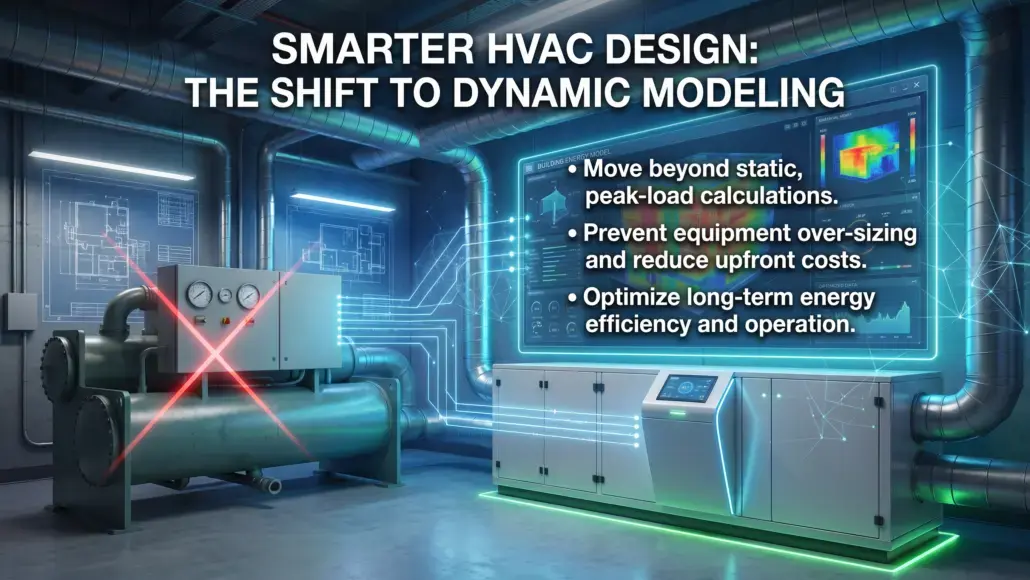


The construction industry is undergoing a significant transformation in how mechanical systems are designed and integrated into the built environment. For decades, the sizing of heating, ventilation, and air conditioning (HVAC) systems relied on static peak-load calculations that often resulted in significant over-sizing. This traditional approach, while safe from a thermal comfort perspective, led to inefficient operation, increased equipment costs, and higher energy consumption. To address these issues, engineers are increasingly adopting building energy modeling as a primary tool for achieving HVAC system sizing accuracy. Unlike static methods, energy modeling provides a dynamic simulation of a building’s thermal behavior over an entire year, accounting for fluctuating external temperatures, solar gains, and internal heat loads from occupants and equipment.
The shift toward dynamic simulations allows for a much more nuanced understanding of how a building interacts with its environment. By simulating the building’s performance at hourly or even sub-hourly intervals, engineers can identify the true peak loads and, more importantly, the off-peak conditions under which the system will operate for the vast majority of its life. This data-driven approach enables the selection of equipment that is precisely matched to the building’s actual needs, rather than a theoretical maximum that rarely occurs. In addition, the use of thermal performance simulation facilitates a more integrated design process, where the impact of architectural choices,such as glazing ratios, insulation levels, and building orientation,on the HVAC load can be quantified early in the design cycle. This ensures that the mechanical system is not just an add-on, but a core component of a high-performance building system. By fostering this early stage collaboration, developers can avoid the costly redesigns that often occur when mechanical requirements clash with architectural intent. The integration of thermal performance simulation into the preliminary design phase allows for a more fluid and efficient project delivery, where every decision is informed by its impact on the final performance of the building. This proactive approach is essential for meeting the increasingly tight schedules and budgets that define the modern construction sector. The ability to visualize the energy implications of different design options provides a level of clarity that empowers all stakeholders to make more informed and responsible choices.
Enhancing HVAC Precision through Detailed Thermal Load Analysis
The core benefit of using thermal performance simulation for HVAC sizing is the ability to perform a detailed thermal load analysis that captures the complexity of modern building operations. Traditional load calculations often simplify internal heat gains, leading to inaccuracies that can cause systems to cycle too frequently or fail to maintain comfort during shoulder seasons. Energy models, however, can incorporate detailed occupancy schedules, lighting power densities, and equipment loads that reflect the specific use case of the building. This level of detail is essential for complex projects like data centers, hospitals, and high-density residential developments, where internal gains are a major driver of the cooling load. By accurately modeling these inputs, engineers can achieve a level of system accuracy that was previously unattainable.
In addition to internal gains, thermal performance simulation provides a precise accounting of the thermal lag inherent in different construction materials. The ability of a building’s thermal mass to absorb and release heat over time can significantly shift the peak load and reduce the required capacity of the HVAC system. Dynamic simulations allow designers to exploit this phenomenon by optimizing the placement and quantity of thermal mass to level out the building’s temperature profile. This not only leads to smaller, more efficient equipment but also improves the overall thermal stability of the indoor environment. The precision offered by these analytical tools is a key factor in the industry’s ability to deliver buildings that are both comfortable and cost-effective, meeting the high expectations of today’s developers and tenants.
Impact of Building Envelope Performance on Equipment Sizing
The performance of the building envelope is the single most important factor in determining the size and efficiency of the HVAC system. Building energy modeling allows engineers to quantify the impact of different envelope strategies on the total thermal load with high precision. By simulating the thermal conductivity, air leakage, and solar heat gain coefficients of various facade assemblies, designers can identify the most effective ways to reduce the demand for mechanical heating and cooling. This “envelope first” approach to design is a fundamental principle of high-performance construction, as it minimizes the reliance on active systems and ensures that the building is inherently efficient. The data generated by the energy model provides a scientific basis for investment in high-quality windows, insulation, and air barriers.
In addition, the use of thermal performance simulation allows for a more accurate assessment of how the envelope performs under extreme weather conditions. As climate change leads to more frequent heat waves and cold snaps, the ability of the envelope to protect the interior environment becomes even more critical. The simulation can reveal how a building will react to these events, helping designers to specify materials that provide the necessary thermal resilience. This focus on the envelope ensures that the HVAC system is not forced to compensate for a poorly performing building skin, which is a common cause of operational inefficiency. By prioritizing a high quality envelope, engineers can often reduce the size of the HVAC equipment, leading to immediate savings in capital expenditure. These savings can then be reinvested into other high performance features, such as advanced control systems or renewable energy integration. The result is a more balanced and efficient building that provides superior value to its owners and occupants over the long term. This commitment to envelope excellence is a cornerstone of modern building science, demonstrating that the best way to save energy is to reduce the demand for it in the first place. Through the application of thermal performance simulation, this goal becomes a practical and achievable reality for every project. By aligning the mechanical design with the performance of the envelope, firms can create buildings that are not only more comfortable but also more resilient and sustainable in the face of a changing climate.
Optimizing Operational Efficiency and Reducing Lifecycle Costs
Beyond the initial savings in equipment and installation costs, the primary driver for achieving HVAC system sizing accuracy is the long-term reduction in operational costs. Properly sized systems operate more efficiently, as they can run for longer periods at their design conditions rather than cycling on and off. This reduces the wear and tear on components, extending the lifespan of the equipment and lowering maintenance expenses. Building energy modeling provides the data needed to optimize the control strategies of the HVAC system, ensuring that it responds effectively to changing loads while minimizing energy use. This level of operational intelligence is a key component of the modern “smart building” and is essential for achieving the ambitious energy savings targets set by many organizations.
The reduction in energy consumption directly translates to lower utility bills, providing a clear economic benefit for building owners. Over the lifecycle of a building, the energy savings from a properly sized and operated HVAC system can easily exceed the initial cost of the thermal performance simulation process. This high return on investment makes energy modeling a standard practice for forward-thinking developers who view sustainability as a key driver of asset value. In addition, the increased comfort and air quality provided by a well-designed system can lead to higher occupant satisfaction and productivity, adding a significant non-financial benefit to the project. The ability to demonstrate these long-term gains through rigorous simulation is a powerful tool for justifying the adoption of advanced engineering practices in a competitive market.
Aligning System Design with Modern Sustainability Standards
As global building codes and sustainability certifications become more stringent, the role of thermal performance simulation in ensuring compliance has become indispensable. Programs like LEED, BREEAM, and the Living Building Challenge require detailed energy simulations to demonstrate that a project meets specific performance thresholds. By using these models to achieve HVAC system sizing accuracy, firms can ensure that they are meeting or exceeding the requirements of these standards. This not only helps to secure the desired certification but also provides a verified record of the building’s environmental performance. The alignment of mechanical design with sustainability goals is a clear indication of a firm’s commitment to responsible construction and long-term environmental stewardship.
The ongoing development of more advanced modeling tools and the availability of better climate data will continue to enhance the accuracy and utility of energy simulations. The move toward “net-zero” and “carbon-neutral” buildings will require an even higher level of precision in how we design and operate our mechanical systems. Building energy modeling will remain at the heart of this effort, providing the analytical framework needed to integrate renewable energy systems, heat recovery, and other advanced technologies into the building fabric. The commitment to data-driven design is what will allow the construction industry to meet the challenges of the future, creating a built environment that is both high-performing and deeply sustainable. As the technology matures, we can expect to see even more seamless integration between energy modeling and other digital design tools, such as building information modeling and generative design. This convergence will enable the creation of truly intelligent buildings that can adapt their operation in real time to minimize their environmental impact and maximize occupant comfort. The role of the engineer will evolve from a technical specialist to a strategic advisor who leverages data to drive value across the entire building lifecycle. By embracing these tools today, the industry is setting the stage for a more prosperous and sustainable future where every building is an asset to its community and the planet. Through this lens, thermal performance simulation is not just a technical requirement; it is a fundamental driver of innovation and excellence in the modern built environment. As we look ahead, the integration of energy modeling into every stage of the project lifecycle will be the hallmark of excellence in the engineering and construction sector.