




























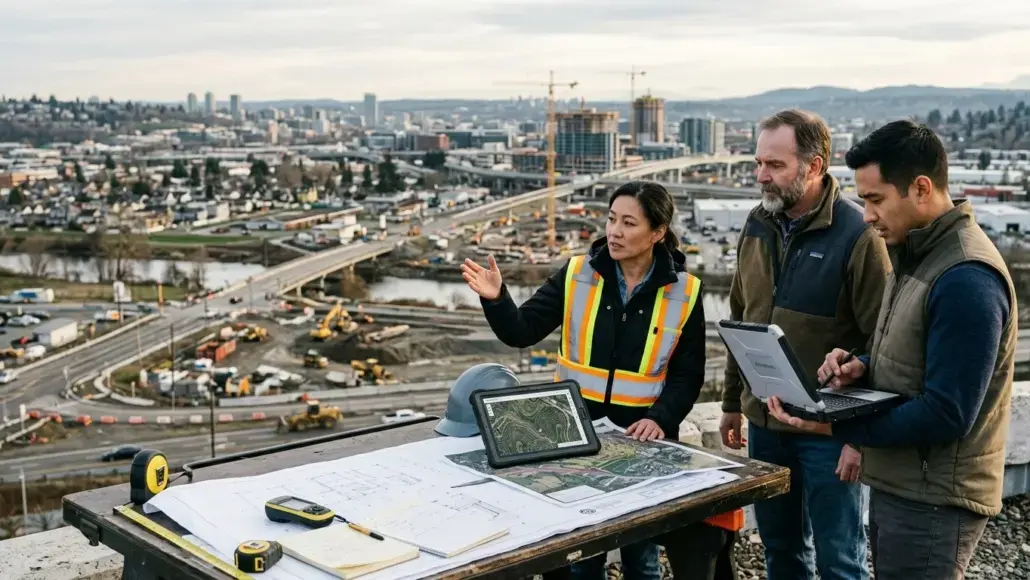


The precision of modern civil engineering is increasingly dependent on the ability to interpret complex environmental and topographical data before the first shovel hits the ground. In an era defined by rapid urban expansion and intensifying climate volatility, the traditional methods of site survey and land-use analysis are being superseded by more sophisticated frameworks. The implementation of geospatial intelligence infrastructure allows project managers and urban planners to navigate a multidimensional landscape of data, ensuring that new developments are not only efficient but also resilient. By synthesizing information from satellites, drones, and ground-based sensors, the industry is moving toward a highly predictive model of infrastructure delivery that minimizes environmental impact and maximizes long-term structural value across diverse global regions.
The Convergence of Location Data and Spatial Analytics
At its core, geospatial intelligence is the practice of extracting actionable insights from data that is tied to a specific location on the Earth’s surface. In the context of large-scale construction, this involves more than just mapping; it requires the use of Geographic Information Systems (GIS) to layer diverse datasets over a digital representation of the physical world. When applying geospatial intelligence infrastructure to the planning phase, engineers can visualize the interplay between subsurface geology, existing utility networks, and environmental constraints in a single, unified environment. This holistic perspective allows for the identification of potential conflicts early in the design loop, reducing the likelihood of expensive rework or legal disputes during the construction phase. The ability to see “through” the ground and “around” obstacles via data is the defining characteristic of the modern planning ecosystem.
Enhancing Site Selection and Environmental Feasibility
One of the most critical stages of any project is the initial selection of the site. A poor choice can lead to decades of maintenance challenges, environmental degradation, and financial loss. Geospatial intelligence infrastructure provides a robust framework for assessing site feasibility by analyzing thousands of variables simultaneously. Advanced spatial analytics can evaluate topographical slope, soil stability, and proximity to sensitive ecosystems with a speed that manual surveys cannot match. Furthermore, by integrating historical climate data, planners can predict the long-term viability of a site in the face of rising sea levels or shifting rainfall patterns. This data-driven site selection ensures that infrastructure is placed in the most optimal location for both human need and environmental preservation, creating a foundation for sustainable urban growth.
Satellite Imagery and the Scale of Modern Monitoring
The role of satellite imagery construction has evolved from simple static images to a dynamic, real-time monitoring tool. High-resolution multispectral imagery allows planners to detect minute changes in land use, vegetation health, and surface water movement that are invisible to the naked eye. When integrated into geospatial intelligence infrastructure, this data provides a global perspective that is essential for mega-projects spanning vast distances, such as pipelines, high-speed rail lines, or regional electrical grids. By utilizing temporal analysis comparing images taken over weeks or months planners can monitor the pace of urban encroachment and environmental change, ensuring that infrastructure planning remains proactive rather than reactive. This macro-level visibility is a vital component of the risk mitigation strategies employed by the world’s leading engineering firms.
Infrastructure Risk Assessment and Structural Resilience
The stability of our built environment is under constant threat from natural hazards, from earthquakes and landslides to extreme flooding. Geospatial intelligence infrastructure is the primary tool used for sophisticated infrastructure risk assessment. By modeling the interaction between the built environment and geological hazards, engineers can design structures that are precisely tuned to their specific environmental stressors. Spatial analytics can identify which segments of a rail network are most vulnerable to soil erosion or which bridges are at the highest risk from river scour. This level of granularity allows for the prioritization of maintenance budgets, ensuring that limited resources are directed toward the areas that pose the greatest risk to public safety. Resilience is no longer a generic goal but a mathematically calculated design standard.
The Role of Drones and Reality Capture in Planning
While satellites provide the macro-view, unmanned aerial vehicles (UAVs) or drones provide the high-fidelity detail needed for the “last mile” of infrastructure planning. Drones equipped with LiDAR (Light Detection and Ranging) can create hyper-accurate 3D point clouds of a site, capturing the exact geometry of the terrain and existing structures with millimeter precision. When this data is fed into the geospatial intelligence infrastructure, it creates a “reality capture” foundation that serves as the basis for the digital twin. This ensures that the design phase is based on the actual physical conditions of the site, rather than an idealized survey. The integration of drone-derived data drastically reduces the time and cost of site survey while providing a much richer dataset for the engineering team to work with.
Digital Twins and the Temporal Dimension of GIS
The ultimate expression of geospatial intelligence infrastructure is the creation of the urban digital twin. This is not just a 3D model, but a living, breathing digital replica of the infrastructure that is continuously updated with real-time data. By integrating GIS with real-time sensor information, planners can see how a building or bridge is performing at any given moment. This temporal dimension the ability to track changes over time is what allows for “predictive maintenance.” Instead of waiting for a structural failure to occur, the geospatial intelligence system can identify the subtle patterns of wear or movement that precede a crisis. This ensures that infrastructure remains safe and functional throughout its multi-decadal lifecycle, providing a higher return on investment for the public and private stakeholders.
Spatial Analytics and the Optimization of Project Delivery
The benefits of location-based intelligence extend into the logistics and delivery phase of a project. Geospatial intelligence infrastructure can be used to optimize the movement of heavy machinery, the sourcing of local materials, and the coordination of vast subcontractor networks. Spatial analytics can identify the most efficient transport routes to minimize fuel consumption and community disruption. Furthermore, by tracking the location of materials in real-time, project managers can ensure that the right components are delivered to the right part of the site exactly when they are needed. This level of logistical precision is essential for maintaining project timelines and budgets in the increasingly complex world of modern construction management.
Navigating the Challenges of Data Sovereignty and Ethics
As the volume of geospatial data continues to grow, the issues of data sovereignty and ethics are moving to the forefront. Geospatial intelligence infrastructure involves the collection of highly sensitive information about land use, resource distribution, and critical infrastructure. Ensuring that this data is stored securely and accessed only by authorized parties is a top priority for national governments and private firms alike. Furthermore, the use of satellite and drone imagery raises important questions regarding privacy and the surveillance of public spaces. Establishing robust governance frameworks that balance the need for data-driven planning with the right to privacy is a critical part of the workforce transformation in the digital era. Transparency and ethical data management are the hallmarks of a responsible geospatial intelligence practice.
Standardizing Spatial Data for Global Interoperability
For geospatial intelligence infrastructure to reach its full potential, the industry must overcome the challenge of data fragmentation. Different software platforms and national agencies often use varying standards for spatial data, making it difficult to share information across borders or project phases. The movement toward “Open GIS” standards and the adoption of unified data formats like CityGML are essential for ensuring interoperability. This standardization allows for the creation of regional or even global infrastructure datasets that can be used to solve macro-challenges like climate adaptation and cross-border energy distribution. By speaking a common “digital language” of location, the global engineering community can collaborate more effectively on the infrastructure challenges of the twenty-first century.
The Role of Machine Learning in Automating Interpretation
The sheer volume of data generated by modern geospatial systems is far beyond the capacity of human analysts to interpret manually. This is where artificial intelligence and machine learning become vital. Modern geospatial intelligence infrastructure utilize machine learning algorithms to automatically identify features in satellite imagery, such as new road construction, changes in forest cover, or the structural deformation of a dam. These algorithms can sift through petabytes of data to identify the “signals” of risk or opportunity that a human might miss. This automation ensures that the infrastructure planning process is not just data-rich but “insight-rich,” providing decision-makers with the high-level intelligence they need to navigate the complexities of urban development.
Conclusion: The New Map of Infrastructure Excellence
The maps of the past were static representations of a world that was perceived as unchanging. The maps of today powered by geospatial intelligence infrastructure are dynamic, data-driven engines of urban progress. By embracing the synergy between location data, spatial analytics, and real-time monitoring, the construction industry is building a more resilient and efficient world. This technological evolution is the primary defense we have against the uncertainties of a changing climate and the pressures of a growing global population. As we look forward, the most successful and sustainable infrastructure projects will be those that understand that location is not just where you build, but the most valuable data asset you have in the planning process. The digital map is the new foundation of structural excellence.