























The construction site is one of the most dynamic and high-risk environments in the world, where safety is the paramount concern for every project manager. For decades, safety management has been largely reactive, based on inspections, incident reports, and manual monitoring. However, the introduction of AI workforce analytics construction is ushering in a new era of proactive and predictive safety. By harnessing the power of artificial intelligence to analyze vast amounts of data from the workforce, companies can now identify risks before they lead to accidents. This technology is not just about monitoring it is about creating a data-driven culture of care that protects the most valuable asset in construction: the people.
AI workforce analytics involves the collection and interpretation of data from various sources, including wearable sensors, computer vision systems, and project management software. These tools provide a continuous, real-time view of worker movements, behaviors, and environmental conditions. When this data is processed through sophisticated AI algorithms, it can reveal patterns that are invisible to the human eye. For instance, the system might detect that a particular crew is consistently working in high-risk zones without proper fall protection or that fatigue is increasing during certain times of the day. This level of insight allows for immediate intervention and long-term safety improvements.
Real-Time Monitoring and Computer Vision
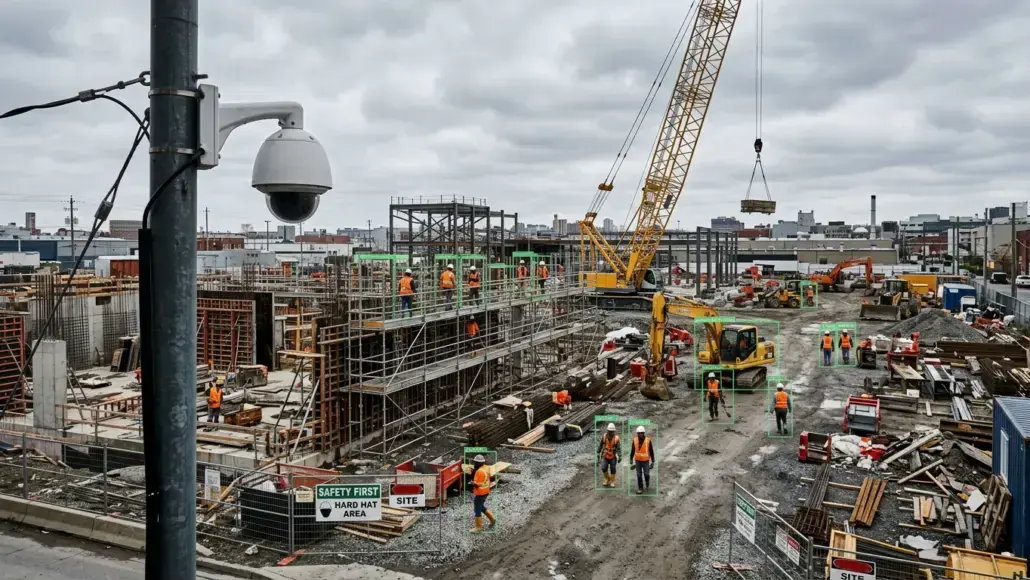
One of the most impactful applications of AI workforce analytics construction is the use of computer vision for site monitoring. Existing security cameras can be upgraded with AI software that automatically detects safety violations, such as workers not wearing personal protective equipment (PPE) like hard hats, vests, or masks. The system can also identify when individuals enter restricted areas or move too close to operating heavy machinery. This autonomous monitoring provides a 24/7 safety net that complements human supervision, ensuring that safety protocols are followed even when a foreman is not present.
Beyond simple PPE detection, advanced computer vision can analyze worker posture and ergonomics. By identifying repetitive motions or awkward lifting techniques, AI can help prevent musculoskeletal injuries, which are a major cause of long-term disability in the construction industry. This data can be used to provide personalized feedback to workers and to redesign tasks to be more ergonomic. The result is a workforce that is not only safer in the moment but also healthier throughout their careers. This proactive approach to worker well-being is a key component of a modern, human-centric construction strategy.
Wearable Technology and Biometric Insights
The integration of wearable devices is another critical pillar of AI workforce analytics construction. Smart helmets, vests, and wristbands equipped with sensors can track a worker’s vital signs, including heart rate, body temperature, and exertion levels. This is particularly important in extreme environments, such as high-heat outdoor sites or deep underground tunnels. If a worker’s biometrics indicate a risk of heat stroke or exhaustion, the system can automatically send an alert to both the worker and the supervisor, prompting an immediate break or medical check.
Wearables also provide valuable data on worker location and environmental exposure. For example, sensors can detect the concentration of harmful dust, gases, or noise levels in a specific area. If a threshold is exceeded, the system can trigger an evacuation or remind workers to use specialized respirators. Furthermore, in the event of a man-down incident, the device can instantly broadcast the worker’s exact location, significantly reducing response times for emergency services. This level of connectivity ensures that no worker is ever truly alone, even on the largest and most complex project sites.
Predictive Safety and Risk Modeling
The true power of AI workforce analytics construction lies in its ability to predict the future. By analyzing historical safety data alongside real-time inputs, AI can generate a safety score or risk profile for a project or a specific task. For example, if data shows that accidents are more likely to occur on Fridays during high-wind conditions when a particular subcontractor is on site, the project manager can take preemptive action. This might include holding an extra safety briefing, delaying high-risk activities, or increasing the number of safety marshals in the area.
Predictive safety also extends to the maintenance of equipment and the layout of the site. AI can analyze the movement patterns of both people and machines to identify near-miss hotspots where collisions are likely to occur. This information can be used to re-route traffic or to install additional barriers and warning signs. By treating safety as a data science problem, the industry can move away from the zero accidents goal as a mere aspiration and toward a measurable, achievable reality. The shift from anecdotal evidence to empirical data is the most significant advancement in construction safety in a generation.
Enhancing Productivity Through Safety
There is often a perceived tension between safety and productivity, but AI workforce analytics construction proves that the two are actually synergistic. A safer site is inherently more productive. Every accident leads to delays, increased insurance costs, and damage to crew morale. By minimizing incidents and injuries, AI analytics keeps the project on schedule and within budget. Furthermore, the data collected for safety can also be used to optimize site logistics and resource allocation. For instance, if analytics show that workers are spending excessive time walking to retrieve tools, the site layout can be adjusted to improve efficiency.
In conclusion, AI workforce analytics is transforming the construction industry from the inside out. By providing a deep, data-driven understanding of workforce behavior and site conditions, we are creating a safer, more resilient, and more productive environment. This technology represents a commitment to the safety and well-being of every person on the job site. As we continue to refine these tools and integrate them into our daily workflows, the construction industry will become a global leader in the application of AI for the protection of human life. The future of construction safety is intelligent, connected, and proactive.