
























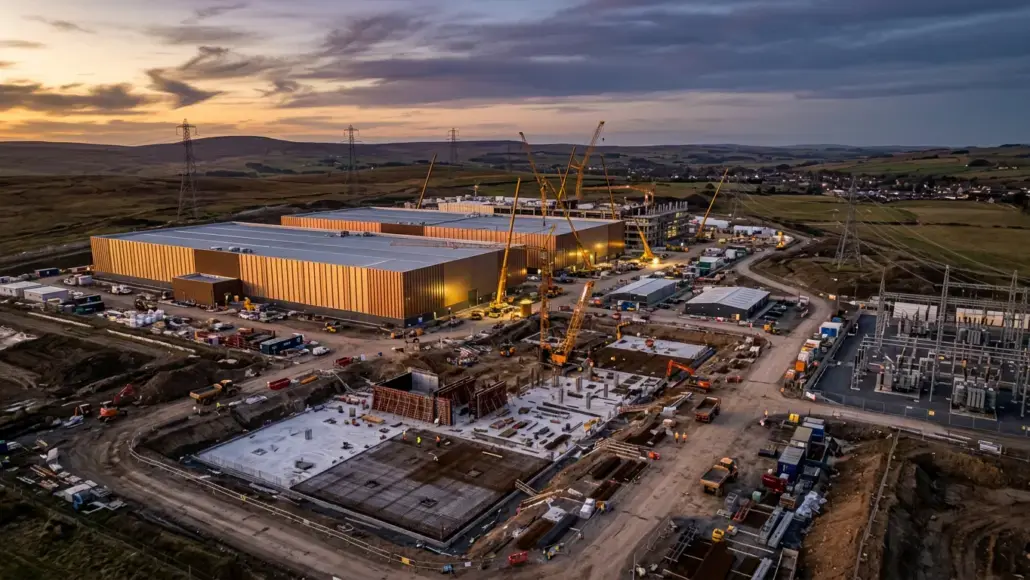


The global landscape of physical infrastructure is undergoing a radical transformation, driven by the invisible forces of data processing and digital storage. We are currently witnessing an era where data center construction demand is no longer just a niche sector of the building industry but a primary engine of economic and structural growth. As the world becomes increasingly reliant on real-time data, cloud services, and the explosive growth of artificial intelligence, the physical structures that house the brains of the internet have become some of the most complex and resource-intensive projects in modern construction. This shift is not merely about building more warehouses for servers it is about reinventing the way we approach power, cooling, and connectivity on a massive scale.
The rise of the hyperscale data center has set a new benchmark for infrastructure projects. These facilities, often spanning hundreds of thousands of square feet, are designed to support the massive computing needs of tech giants and global enterprises. The demand for these facilities is driven by the need for low-latency processing and the massive data sets required to train large language models. Consequently, the construction industry is seeing a shift in project priorities, where speed to market, energy efficiency, and scalability are the defining metrics of success. This urgency is reshaping supply chains, as contractors scramble to secure the specialized equipment from high-capacity transformers to liquid cooling systems necessary to bring these digital cathedrals online.
The AI Catalyst and the Need for High-Performance Facilities
Artificial Intelligence is the single most significant driver of the current surge in data center construction demand. Unlike traditional cloud computing, which primarily involves storage and retrieval, AI workloads require immense computational power and high-density rack configurations. This puts an enormous strain on the thermal management and power delivery systems of a facility. Modern data centers must now be designed with the flexibility to accommodate the rapid evolution of hardware, specifically the high-performance GPUs and TPUs that power AI. This necessitates a move away from traditional air cooling toward more advanced liquid-to-chip cooling solutions, which in turn complicates the mechanical and plumbing requirements of the construction process.
Furthermore, the geographical distribution of data centers is changing. While traditional hubs like Northern Virginia and Dublin remain critical, there is a growing trend toward building in secondary markets where land is more affordable and power is more accessible. This decentralization of AI infrastructure requires a coordinated effort between private developers and public utility providers. The construction of a single hyperscale facility can consume as much electricity as a small city, forcing a rethink of regional power grid stability and the integration of renewable energy sources. The challenge for today’s builders is not just the structure itself, but the massive utility infrastructure required to support it.
Power Infrastructure and the Renewable Energy Mandate
One of the most critical bottlenecks in meeting the growing data center construction demand is the availability of reliable, high-capacity power. Data centers are among the most energy-intensive buildings in the world, and their carbon footprint is under intense scrutiny. This has led to a paradigm shift in how energy infrastructure is integrated into these projects. We are seeing a move toward onsite power generation, microgrids, and the direct procurement of renewable energy. For construction firms, this means that projects now often include the installation of massive solar arrays, wind farm connections, or even small modular reactors (SMRs) as part of the broader site development plan.
The integration of energy storage systems is also becoming a standard feature of modern data center design. Large-scale battery arrays and fuel cells are being deployed to provide backup power and to help balance the load on the grid during peak times. This level of technical sophistication requires a workforce that is not only skilled in traditional trades but also proficient in advanced electrical engineering and sustainable energy technologies. The construction industry is adapting by forming closer partnerships with energy specialists to ensure that the power infrastructure can keep pace with the digital demand. This synergy between the energy and digital sectors is defining the next generation of industrial construction.
Advanced Cooling Systems and Thermal Management
As server densities increase, traditional methods of cooling are proving insufficient. This has triggered a wave of innovation in mechanical systems within the data center construction sector. We are seeing the widespread adoption of immersion cooling, where servers are submerged in non-conductive fluids, and rear-door heat exchangers that handle the thermal output directly at the rack level. These systems require a much more precise and integrated approach to construction, as the plumbing and fluid dynamics must be perfectly synchronized with the electrical and data cabling. The precision required for these installations is far greater than what is typically seen in standard commercial buildings.
The environmental impact of water usage for cooling is another critical consideration that is driving infrastructure demand toward more sustainable models. Closed-loop systems and dry cooling technologies are being prioritized to minimize the strain on local water resources. In many regions, the ability to build a data center is contingent on the developer’s ability to prove that the facility will be water-neutral. This regulatory environment is forcing construction teams to innovate, finding ways to recycle water and utilize ambient air for cooling whenever possible. The result is a more resilient and efficient facility that can operate reliably even in water-stressed environments.
Connectivity and the Digital Silk Road
Beyond power and cooling, the physical connectivity of data centers is a massive undertaking. The demand for high-performance facilities has led to a surge in the construction of subsea cables and terrestrial fiber-optic networks. A data center is only as valuable as its ability to transmit data to the end-user, making the last mile of connectivity a vital part of the construction scope. This involves complex permitting, trenching, and the deployment of high-density fiber across vast distances. The construction of these digital corridors is essential for the global economy, enabling the seamless flow of information that powers everything from financial markets to telemedicine.
In conclusion, the surge in data center construction demand is a testament to the central role that digital infrastructure plays in our lives. As we continue to push the boundaries of AI and cloud computing, the buildings that support these technologies will become even more sophisticated and essential. The construction industry must continue to evolve, embracing new technologies and sustainable practices to meet this challenge. By building smarter, more efficient, and more resilient data centers, we are laying the groundwork for a future where information is accessible, reliable, and sustainable for everyone.