






















The global construction sector is entering a decisive phase of technological recalibration. After years of incremental digital adoption, 2026 is shaping up to be a year where integration and not experimentation defines competitive advantage. Across mature and emerging markets alike, contractors, developers, and infrastructure planners are converging around a set of core priorities: productivity, sustainability, workforce efficiency, and risk mitigation.
As World Construction Today observes, ongoing industry tracking indicates that the conversation is no longer about whether technology should be adopted, but how quickly it can be embedded into core workflows without disrupting project continuity.
The Industry Inflection Point: From Fragmentation to Integration
Historically, construction has lagged behind other sectors in digital maturity due to fragmented supply chains and project-based operational models. However, several macroeconomic and regulatory pressures are accelerating change:
- Labour shortages across Europe and North America
- Increasing regulatory scrutiny around carbon emissions
- Rising material costs and supply chain volatility
- Demand for faster infrastructure delivery in urbanising regions
These forces are pushing firms to adopt interoperable, scalable technologies rather than isolated digital tools. As a result, Construction Technology Trends are centred on platforms that unify data across the project lifecycle—from design and procurement to execution and maintenance.
Core Construction Technology Trends
The following trends are emerging as the most commercially relevant for industry stakeholders:
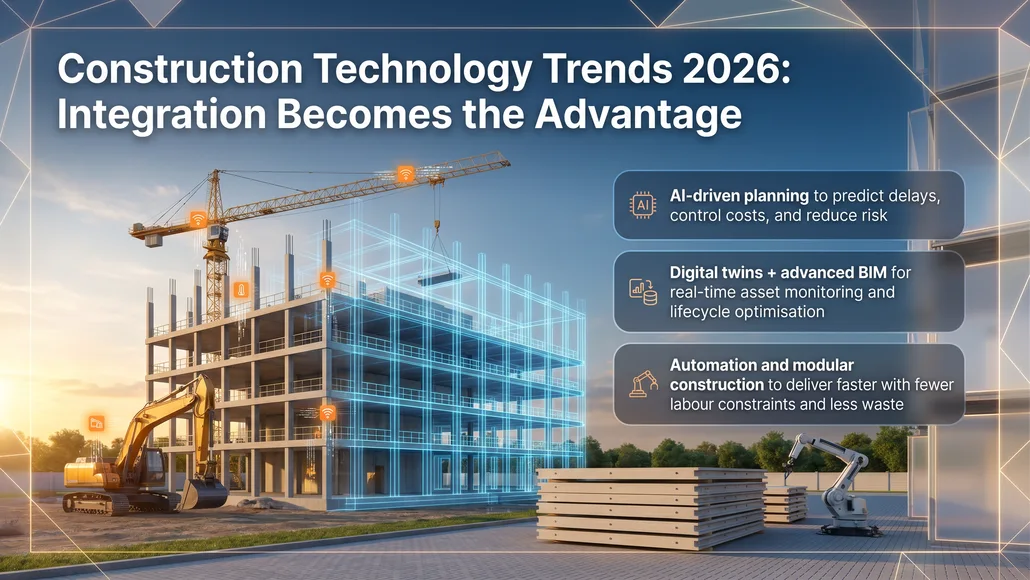
- AI-driven project planning and predictive analytics improving cost forecasting and risk management
- Digital twins and BIM evolution enabling real-time simulation and lifecycle optimisation
- Autonomous and semi-autonomous construction equipment addressing labour shortages
- Offsite and modular construction methods reducing timelines and waste
- Sustainable construction technologies aligned with net-zero targets
- IoT-enabled job sites enhancing safety and operational visibility
- Advanced materials innovation improving durability and environmental performance
This cluster of technologies reflects a shift toward industrialisation of construction where processes become repeatable, measurable, and increasingly automated.
Artificial Intelligence Moves from Pilot to Core Function
Artificial intelligence is no longer confined to pilot programs or niche applications. In 2026, its role is expanding into core project functions such as scheduling, cost estimation, and risk prediction.
AI models trained on historical project data are enabling firms to anticipate delays, identify cost overruns early, and optimise resource allocation. This is particularly critical in large-scale infrastructure projects where even minor inefficiencies can translate into significant financial impact.
Moreover, generative AI is beginning to influence early-stage design processes, offering multiple design scenarios based on cost, sustainability, and regulatory constraints. While human oversight remains essential, the speed at which viable options can now be evaluated is reshaping decision-making timelines.
For B2B stakeholders, the implication is clear: firms that fail to integrate AI into planning workflows risk operating at a structural disadvantage.
Digital Twins and BIM: From Static Models to Living Systems
Building Information Modelling (BIM) has been widely adopted over the past decade, but its evolution into dynamic digital twins marks a critical shift.
Digital twins enable real-time monitoring of assets by integrating sensor data, environmental inputs, and operational metrics. This allows stakeholders to simulate scenarios, predict maintenance needs, and optimise performance throughout the asset lifecycle.
In 2026, governments and large developers are increasingly mandating advanced BIM and digital twin capabilities for major infrastructure projects. This is particularly evident in transport, energy, and smart city developments.
The transition from static models to living systems is a defining aspect of Construction Technology Trends, as it transforms buildings and infrastructure into data-driven assets rather than fixed structures.
Automation and Robotics Address Workforce Constraints
Labour shortages remain one of the most pressing challenges facing the construction industry. In response, automation and robotics are gaining traction across multiple applications:
- Robotic bricklaying and concrete pouring systems
- Autonomous earthmoving and grading equipment
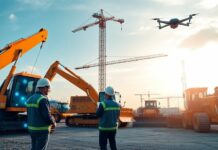
- Drones for site surveying and progress monitoring
- Exoskeletons to support worker safety and productivity
While full automation is still limited by site variability, hybrid models—where human workers collaborate with machines—are proving effective.
The economic rationale is compelling: automation not only mitigates labour shortages but also improves consistency and reduces rework. As such, investment in robotics is expected to scale steadily through 2026 and beyond.
Modular Construction Gains Commercial Momentum
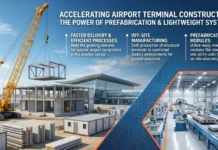
Offsite and modular construction methods are transitioning from niche applications to mainstream adoption. By manufacturing components in controlled environments, companies can achieve higher quality standards, reduce waste, and accelerate project timelines.
Data from multiple public infrastructure projects indicates that modular methods can reduce construction time by up to 20–50% depending on project type. Additionally, waste reduction and improved material efficiency align with sustainability targets.
In 2026, modular construction is particularly gaining traction in:
- Residential housing projects
- Healthcare infrastructure
- Data centres and industrial facilities
This trend reflects a broader shift toward industrialised construction processes, where predictability and efficiency take precedence over traditional site-based methods.
Sustainability Moves to the Core of Construction Strategy
Sustainability is no longer a compliance requirement it is becoming a central pillar of business strategy. Governments across Europe and other regions are tightening regulations related to carbon emissions, energy efficiency, and material sourcing.
As a result, Construction Technology Trends are heavily influenced by sustainability-driven innovation, including:
- Low-carbon concrete and alternative cement materials
- Circular construction practices and material reuse
- Energy-efficient building systems
- Carbon tracking and reporting platforms
Publicly available data from international energy and construction bodies consistently highlights that buildings account for a significant share of global energy consumption and emissions. This places the construction sector at the forefront of decarbonisation efforts.
IoT-Enabled Job Sites Enhance Safety and Efficiency
The integration of Internet of Things (IoT) technologies is transforming construction sites into connected environments. Sensors embedded in equipment, materials, and worker wearables are providing real-time data on site conditions, equipment performance, and worker safety.
Key applications include:
- Monitoring structural integrity during construction
- Tracking equipment utilisation and maintenance needs
- Enhancing worker safety through real-time alerts
- Improving logistics and material tracking
These capabilities are particularly valuable in large-scale or high-risk projects, where visibility and responsiveness are critical.
The result is a more transparent, data-driven construction process that reduces uncertainty and enhances operational control.
Advanced Materials Redefine Performance Standards
Material innovation is playing a crucial role in shaping construction outcomes. Research and development efforts are focused on improving durability, reducing environmental impact, and enhancing performance under extreme conditions.
Emerging materials include:
- Self-healing concrete that extends infrastructure lifespan
- High-performance insulation materials for energy efficiency
- Recycled and bio-based construction materials
- Lightweight composites for structural applications
While adoption varies by region and project type, the trajectory is clear: materials are becoming smarter, more sustainable, and more adaptable to modern construction demands.
Data Integration Becomes the Competitive Differentiator
Perhaps the most significant shift underpinning Construction Technology Trends is the move toward integrated data ecosystems.
Rather than operating in silos, leading construction firms are implementing platforms that connect design, procurement, construction, and operations data. This enables:
- End-to-end visibility across project lifecycles
- Improved collaboration among stakeholders
- Faster decision-making based on real-time insights
- Enhanced risk management and compliance
The ability to harness and interpret data effectively is emerging as a key differentiator in the industry. Companies that invest in data integration are better positioned to navigate complexity and deliver consistent results.
Strategic Implications for Industry Stakeholders
For contractors, developers, and suppliers, the implications of these trends are both strategic and operational.
Firstly, technology investment must be aligned with business objectives rather than driven by experimentation. This requires a clear understanding of where value can be created whether through cost savings, efficiency gains, or risk reduction.
Secondly, workforce transformation is critical. As technology adoption increases, the demand for digital skills within construction organisations will continue to grow. Training and upskilling initiatives will therefore play a central role in successful implementation.
Finally, collaboration across the value chain is becoming essential. Technology adoption often requires coordination between multiple stakeholders, including architects, engineers, contractors, and technology providers.
Conclusion: A Defining Year for Construction Transformation
The construction industry in 2026 stands at a pivotal moment. The convergence of digital technologies, sustainability imperatives, and economic pressures is driving a fundamental transformation in how projects are planned, executed, and managed.
The analysis of Construction Technology Trends by World Construction Today suggests that the industry is moving toward a more integrated, data-driven, and industrialised model.
This shift is not without challenges ranging from implementation complexity to workforce adaptation but the direction is unmistakable. Firms that embrace these changes proactively are likely to gain a significant competitive advantage, while those that delay may find it increasingly difficult to keep pace.
In a sector traditionally defined by inertia, 2026 may well be remembered as the year construction began to operate with the speed, precision, and intelligence of a truly modern industry.