



















Close
ALUMINIUM CHINA2026
Thursday, July 2, 2026
LiGHT26

First Carbon Concrete Plant to Launch in Leipzig, Germany

Note* - All images used are for editorial and illustrative purposes only and may not originate from the original news provider or associated company.

Subscribe

- Never miss a story with notifications

- Gain full access to our premium content

- Browse free from any location or device.

Media Packs

Expand Your Reach With Our Customized Solutions Empowering Your Campaigns To Maximize Your Reach & Drive Real Results!

โ€“ Access the Media Pack Now

โ€“ Book a Conference Call

โ€“ Leave Message for Us to Get Back

Related stories

Trimble Integrates Advanced AI into MEP Estimating Solutions

Trimble has announced the deployment of new artificial intelligence...

Adaptive Reuse Strategies Extending Building Lifecycles

Transforming existing structures for contemporary use has emerged as a cornerstone of sustainable urban development, offering a viable alternative to the carbon-intensive cycle of demolition and new construction. By creatively repurposing historical and underutilized buildings, cities can preserve their architectural heritage while meeting the evolving needs of modern populations. These methods prioritize resource efficiency and waste reduction, ensuring that the inherent energy and materials of our built environment are maximized for future generations.

Construction Cybersecurity Protecting Connected Job Sites

As digital transformation sweeps through the building industry, the vulnerability of connected job sites to sophisticated cyber threats has become a critical concern. Protecting sensitive project data, securing building information modeling systems, and ensuring the integrity of IoT-enabled machinery are now essential components of modern project management. Implementing robust defense mechanisms and a culture of digital vigilance is vital for safeguarding assets and maintaining the continuity of complex construction operations in an increasingly interconnected landscape.
- Advertisement -

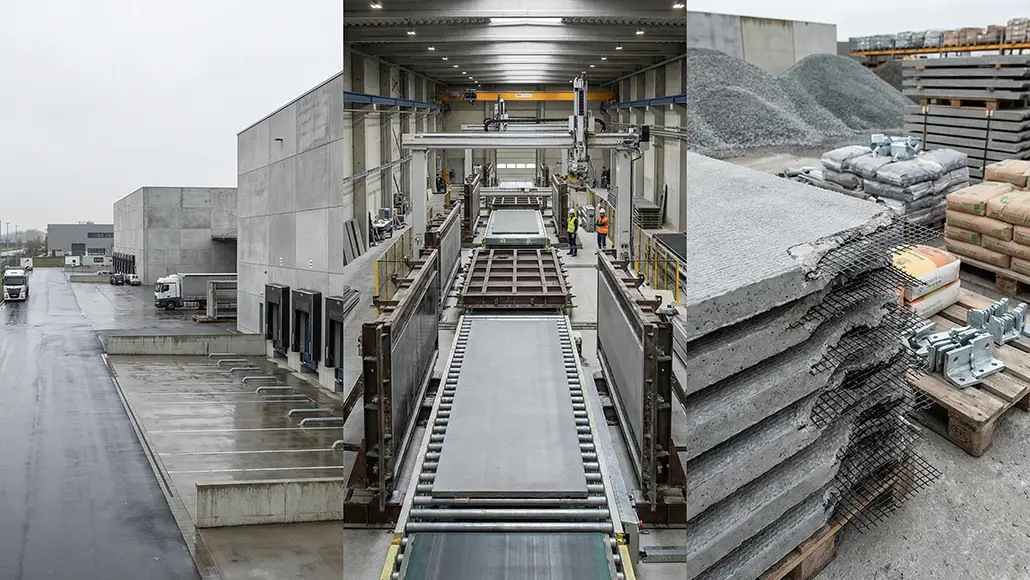
The launch of the โ€œC-Factoryโ€ signals the beginning of a major industrial policy initiative in Saxony, Germany, focused on advancing climate-friendly construction practices. At its core, the project aims to establish the worldโ€™s first carbon concrete plant, designed for the fully automated production of COโ‚‚-storing carbon concrete components tailored for building construction.

Backed by approximately 14 million euros in funding from the Federal Ministry for Economic Affairs and Energy (BMWE), the initiative falls under the Federal Funding Program for Industry and Climate Protection (BIK) and is scheduled to run until the end of 2029. The project is initiated and coordinated by Kahnt & Tietze GmbH in Leipzig, bringing together a consortium of industry and academic partners. These include Betonwerk Oschatz GmbH, SCHWENK Zement GmbH & Co. KG, Prilhofer Consulting GmbH & Co. KG, ABS Storkow GmbH, the Research and Transfer Center Leipzig e. V. of the Leipzig University of Applied Sciences (HTWK), and the Dresden University of Technology (TUD).

The construction, modernization, and operation of buildings account for 40 percent of greenhouse gas emissions in Germany, placing the sector at the center of decarbonization efforts. Carbon concrete offers a material alternative with reduced resource demand, enabling slimmer, lighter, and more durable components compared to traditional reinforced concrete. As carbon does not corrode, the required concrete cover is minimized, leading to significant reductions in cement, gravel, and sand usageโ€”delivering resource savings of up to 80 percent. When combined with COโ‚‚-mineralized aggregates and additional COโ‚‚-storing materials, components produced at the carbon concrete plant are expected to function as carbon sinks.

Over the past two decades, carbon concrete construction has moved from research to early-stage applications, including the Carbon Concrete CUBE in Dresden. Building on these developments, the C-Factory represents the transition toward industrial-scale production. The project will establish a prototypical, fully automated production line for large-format carbon concrete components, alongside the integration of COโ‚‚-storing building materials. Over the next four years, the pilot plant in Leipzig will be constructed and commissioned to produce demonstration components, serving as a reference model for future facilities and enabling broader industrial deployment of this construction method.

Achema Middleeast

Never miss a construction headline

The construction industry moves fast โ€“ stay on top of it with our must - read briefings.

  • The top construction and infrastructure stories, straight to your inbox
  • The biggest news, features, interviews, and analysis
  • Dedicated coverage of the key developments shaping global construction markets

Latest stories

Related stories

Trimble Integrates Advanced AI into MEP Estimating Solutions

Trimble has announced the deployment of new artificial intelligence...

Adaptive Reuse Strategies Extending Building Lifecycles

Transforming existing structures for contemporary use has emerged as a cornerstone of sustainable urban development, offering a viable alternative to the carbon-intensive cycle of demolition and new construction. By creatively repurposing historical and underutilized buildings, cities can preserve their architectural heritage while meeting the evolving needs of modern populations. These methods prioritize resource efficiency and waste reduction, ensuring that the inherent energy and materials of our built environment are maximized for future generations.

Construction Cybersecurity Protecting Connected Job Sites

As digital transformation sweeps through the building industry, the vulnerability of connected job sites to sophisticated cyber threats has become a critical concern. Protecting sensitive project data, securing building information modeling systems, and ensuring the integrity of IoT-enabled machinery are now essential components of modern project management. Implementing robust defense mechanisms and a culture of digital vigilance is vital for safeguarding assets and maintaining the continuity of complex construction operations in an increasingly interconnected landscape.

Green Procurement Strategies in Construction Supply

Sourcing materials and services with environmental integrity has moved from a niche consideration to a core operational necessity within the global building sector. By prioritizing low-carbon alternatives, ethical labor practices, and circular economy principles, organizations can significantly mitigate their ecological footprint while fostering long-term resilience across the supply chain. This strategic shift requires a deep integration of sustainability metrics into the selection process, ensuring that every procurement decision aligns with broader climate goals and resource efficiency.

Subscribe

- Never miss a story with notifications

- Gain full access to our premium content

- Browse free from any location or device.

Media Packs

Expand Your Reach With Our Customized Solutions Empowering Your Campaigns To Maximize Your Reach & Drive Real Results!

โ€“ Access the Media Pack Now

โ€“ Book a Conference Call

โ€“ Leave Message for Us to Get Back

Translate ยป