



























Key Takeaways:
- Transformative Impact: Self-driving construction machinery is fundamentally altering traditional job site operations, leading to significant gains in efficiency, safety, and project quality.
- Technological Sophistication: Autonomy is powered by an integration of AI, machine learning, advanced sensors, GPS, and IoT, enabling complex decision-making and precise execution.
- Enhanced Safety & Precision: Driverless vehicles reduce human exposure to hazards, mitigate human error, and achieve higher levels of accuracy in tasks like grading and excavation.
- Boosted Productivity: Continuous operation, optimized workflows, and faster project completion contribute to substantial productivity increases and reduced operational costs.
- Evolving Workforce Roles: While autonomous equipment takes over repetitive and hazardous tasks, human roles are shifting towards supervision, data analysis, and advanced maintenance, fostering a collaborative future.
- Addressing Challenges: Navigating regulatory landscapes, initial investment costs, and cybersecurity are crucial for the widespread adoption and successful integration of autonomous technology.
The Unstoppable Ascent of Self-Driving Construction Machinery on Modern Job Sites
The roar of diesel engines, the steady rhythm of excavation, the orchestrated chaos of a busy building site – these have long been the hallmarks of construction. Yet, beneath this familiar orchestration, a quiet revolution has been brewing, steadily gaining momentum to reshape the very fabric of how we build. This transformation is driven by the advent and rapid integration of self-driving construction machinery, powerful autonomous equipment that is redefining the operational landscape of modern job sites. What once seemed like a distant vision from science fiction is now a tangible reality, with driverless vehicles performing tasks ranging from precision grading to heavy hauling, fundamentally altering project execution, enhancing safety, and elevating productivity to unprecedented levels.
For decades, the construction industry has grappled with persistent challenges: labor shortages, safety risks inherent in heavy machinery operation, and the relentless pressure to complete projects faster and more cost-effectively. Traditional methods, while proven, often reached their limits in terms of efficiency and human capacity. Enter self-driving construction machinery, an innovation that isn’t just about replacing a human operator; it’s about reimagining the entire workflow, injecting a layer of intelligence and tireless precision that human-operated equipment, for all its skill, simply cannot consistently replicate. This isn’t merely an upgrade; it’s a paradigm shift, setting the stage for a new era of construction where machines work in harmony, guided by sophisticated algorithms and data, pushing the boundaries of what’s possible on our building sites.
The Dawn of Autonomy on Construction Sites: Redefining Operational Paradigms
The concept of automation in construction isn’t entirely new; elements like automated surveying or robotic welding have been around. However, the true leap forward lies in the full autonomy of heavy equipment – the ability of machines to perceive their environment, make decisions, and execute complex tasks without direct human intervention. This capability is ushering in an era of truly autonomous job sites, where efficiency becomes intrinsic to the system.
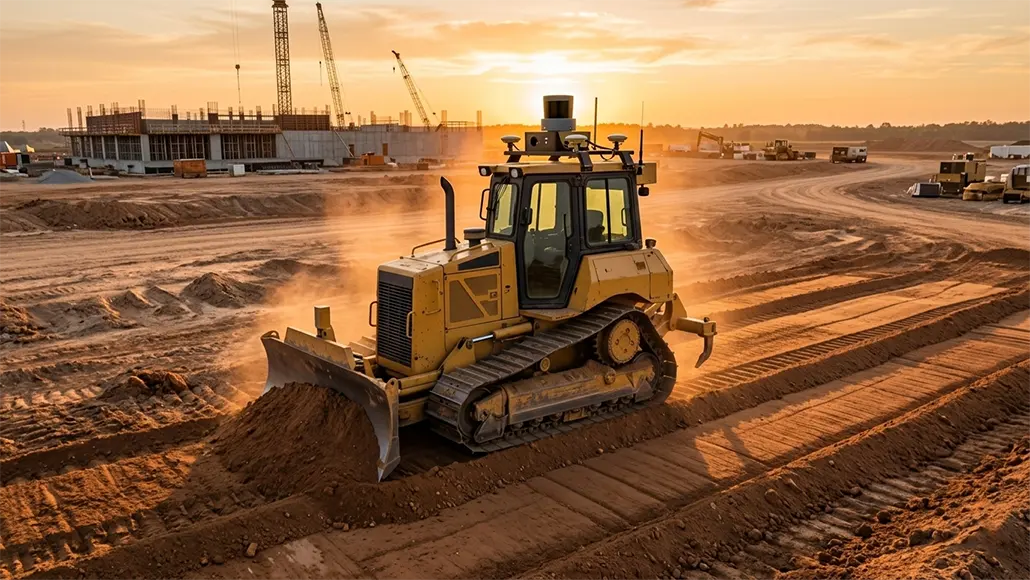
This isn’t a singular machine but an ecosystem of autonomous construction equipment working synergistically. Imagine large dump trucks navigating predefined routes across sprawling sites, excavators digging trenches to millimeter-perfect specifications, and bulldozers grading vast expanses with unwavering consistency, all controlled by sophisticated software rather than a human hand. These machines leverage an array of sensors – LiDAR, radar, cameras, and GPS – to build a real-time, 3D map of their surroundings, detecting obstacles, monitoring progress, and adjusting their actions on the fly. The continuous, data-driven feedback loop ensures that every movement is optimized, every task executed with a level of accuracy that minimizes rework and material waste. This intelligent orchestration represents the pinnacle of construction machinery automation, turning what used to be a labor-intensive, often unpredictable process into a streamlined, high-precision operation.
Enhancing Safety and Precision Through Driverless Operations
Perhaps one of the most compelling arguments for the widespread adoption of self-driving construction machinery lies in its profound impact on safety. Construction remains one of the most hazardous industries globally, with human error often at the root of accidents involving heavy equipment. Removing operators from the immediate vicinity of dangerous tasks drastically reduces their exposure to risks such as rollovers, collisions, and falls. Driverless construction vehicles can operate in environments deemed too dangerous for humans, whether it’s unstable ground, extreme temperatures, or areas with hazardous materials. They don’t get tired, distracted, or complacent, maintaining a consistent level of vigilance and adherence to safety protocols throughout their operational shifts.
Beyond safety, the precision offered by autonomous equipment is revolutionary. Modern robotic heavy equipment is equipped with advanced navigation and positioning systems, often combining high-accuracy GPS with real-time kinematic (RTK) technology. This allows them to execute tasks with accuracy down to a few centimeters or even millimeters, far surpassing what is achievable through manual operation. For instance, autonomous graders can achieve perfectly level surfaces or precise slopes, reducing the need for multiple passes and extensive manual checking. This inherent accuracy translates directly into higher quality infrastructure, fewer errors, and a significant reduction in material overruns, underscoring the intrinsic value these smart construction machines bring to every phase of a project.
Boosting Productivity and Efficiency: A New Paradigm
The economic imperative driving the adoption of self-driving construction machinery is undeniable. One of the most significant advantages is the ability to operate continuously. Unlike human operators who require breaks, shift changes, and can be limited by daylight hours, autonomous machines can work around the clock, day or night, in almost any weather condition, significantly accelerating project timelines. This uninterrupted workflow means projects can be completed faster, reducing overhead costs associated with prolonged site presence.
Furthermore, these systems optimize routes and task execution through algorithmic intelligence. They learn from data, identifying the most efficient paths for hauling, the optimal digging patterns for excavation, and the most effective sequences for grading. This leads to reduced fuel consumption, minimized wear and tear on equipment due to smoother operation, and a more streamlined use of resources. The cumulative effect of these efficiencies is a substantial boost in overall project productivity and a notable reduction in operational costs, making the case for investing in job site technology increasingly compelling for forward-thinking construction firms.
The Technological Underpinnings of Smart Construction Machines
The impressive capabilities of self-driving construction machinery are not magic; they are the result of sophisticated technological convergence. At the core of every autonomous vehicle lies a complex interplay of artificial intelligence (AI), machine learning (ML), and an intricate network of sensors. AI algorithms process the vast amounts of data collected from the machine’s surroundings, enabling it to interpret scenarios, predict outcomes, and make real-time operational decisions. Machine learning allows these machines to learn from experience, continuously improving their performance and adaptability to diverse site conditions over time.
Beyond AI and ML, several other critical technologies form the backbone of these smart construction machines. High-precision GPS, often augmented with satellite-based augmentation systems (SBAS) or ground-based reference stations, provides accurate positioning. LiDAR (Light Detection and Ranging) sensors create detailed 3D maps of the environment, crucial for obstacle detection and precise navigation. Radar sensors are invaluable for penetrating adverse weather conditions like fog or heavy dust, while an array of cameras offers visual context and object recognition capabilities. The Internet of Things (IoT) plays a crucial role in connecting these machines to a central command center, allowing for remote monitoring, data analytics, and over-the-air updates. This integration of diverse technologies ensures that robotic heavy equipment can operate intelligently, safely, and effectively within dynamic construction environments.
Real-World Applications and Success Stories
The impact of self-driving construction machinery is already being felt across various sectors. In the mining industry, large autonomous haul trucks have been operating successfully for years, transporting vast quantities of ore with unparalleled safety and efficiency in remote and hazardous locations. These operations have demonstrated significant reductions in operational costs and increases in throughput.
On traditional construction sites, autonomous bulldozers and excavators are being deployed for earthmoving, trenching, and foundation preparation. Companies are reporting faster completion times for large-scale grading projects and improved accuracy in excavation. For instance, projects involving complex architectural designs or intricate infrastructure layouts benefit immensely from the precision offered by these machines, ensuring that the initial build adheres perfectly to the digital blueprint. From laying down expansive road networks to preparing sites for massive commercial developments, the evidence strongly suggests that investing in advanced job site technology yields tangible returns in terms of speed, quality, and cost savings.
Navigating the Challenges and Embracing the Future of Job Site Automation
While the benefits of self-driving construction machinery are compelling, their widespread adoption is not without its hurdles. Regulatory frameworks are still catching up to the pace of technological innovation. Clear guidelines for the safe operation of driverless construction vehicles in shared spaces, liability in the event of an accident, and certification standards for autonomous systems need to be established. The initial investment in such advanced autonomous construction equipment can also be substantial, requiring companies to conduct thorough cost-benefit analyses before committing.
Furthermore, the integration of these sophisticated systems demands a highly skilled workforce. While machines handle the physical labor, human roles shift towards programming, monitoring, maintenance, and data analysis. This necessitates significant upskilling and reskilling initiatives within the construction industry to prepare the existing workforce for these new responsibilities. Cybersecurity is another critical concern; as more equipment becomes connected, the risk of cyber threats and data breaches increases, requiring robust security protocols. Addressing these challenges proactively will be crucial for unlocking the full potential of construction machinery automation and ensuring a smooth transition to more autonomous job sites.
The Evolving Role of Human Operators and the Collaborative Future
The rise of self-driving construction machinery does not necessarily mean the obsolescence of human workers. Instead, it signifies a transformation in their roles. Human operators will transition from directly manipulating controls to becoming supervisors, managing fleets of autonomous machines from a control center, intervening only when necessary for complex decisions or unforeseen circumstances. They will be responsible for programming tasks, monitoring machine performance, interpreting data, and performing advanced maintenance. This shift offers an opportunity to elevate the skill sets of the workforce, moving them into higher-value, less physically demanding, and safer positions.
The future of construction lies in a collaborative ecosystem where humans and smart construction machines work in tandem. Human intelligence will continue to be invaluable for creative problem-solving, strategic planning, and adapting to novel situations that even the most advanced AI cannot yet fully comprehend. Autonomous equipment will handle the repetitive, dangerous, and physically demanding tasks, freeing up human talent to focus on innovation, oversight, and the intricate details that require human ingenuity. This harmonious blend of human intellect and machine capability is poised to create job sites that are not only more efficient and safer but also more intelligent and adaptable than ever before.
Conclusion
The journey towards fully autonomous construction sites, powered by self-driving construction machinery, is an exhilarating one. It represents not just a technological advancement but a fundamental rethinking of how we approach one of humanity’s oldest endeavors: building. From significantly enhancing safety by removing humans from hazardous environments to delivering unparalleled precision and boosting productivity through continuous, optimized operations, the benefits are clear and profound. While challenges related to regulation, investment, and workforce adaptation remain, they are surmountable with strategic planning and collaboration across the industry. As we look to the horizon, the image of modern job sites is rapidly evolving, populated by intelligent, tireless, and precise machines that work hand-in-hand with human expertise. This unstoppable ascent promises to deliver infrastructure faster, safer, and with an unprecedented level of quality, truly laying the groundwork for a smarter, more sustainable built environment for generations to come.