





























In the construction industry, the “last mile” of a project the installation of finishes is often the most critical for client satisfaction. Among these finishes, the floor is arguably the most complex to execute correctly. Historically, the success of a flooring project relied almost entirely on the localized skill of an artisan and a set of simple manual tools. However, as buildings have become more complex and project timelines more compressed, the industry has turned toward a new generation of installation technology flooring projects. This shift is characterized by the integration of digital measuring systems, advanced chemical engineering in adhesive solutions, and robotic assistance. These innovations are not just making the job easier for the contractor; they are fundamentally redefining building efficiency and the long-term structural integrity of our interior environments.
The Foundation of Precision: Digital Subfloor Preparation
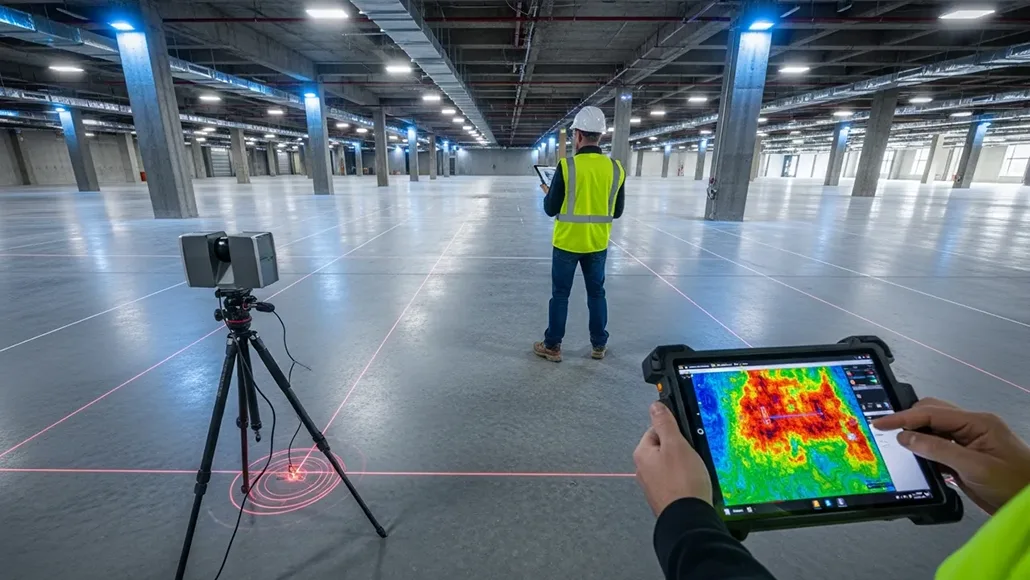
Every expert installer knows that a floor is only as good as the subfloor beneath it. In the past, identifying and correcting irregularities in a concrete slab or wooden subfloor was a time-consuming process of manual checking and localized patching. Today, installation technology flooring projects utilize 3D laser scanning to create a “heat map” of the subfloor’s topography. These scanners can detect variations as small as a fraction of a millimeter across thousands of square feet. Once the data is gathered, contractors can use self-leveling compounds that are specifically engineered to flow into low spots with minimal intervention. This level of precision ensures that the final flooring material whether it is large-format tile or high-performance laminate has a perfectly flat foundation, preventing the “hollow spots” and joint failures that lead to long-term issues.
Adhesive Innovation and Chemical Engineering
One of the most profound areas of growth in floor installation systems is the development of advanced adhesive solutions. Traditional adhesives were often slow to cure and released high levels of volatile organic compounds (VOCs), requiring buildings to be ventilated for days before occupancy. Modern installation technology flooring projects now utilize moisture-cured, silane-modified polymers (SMP) that provide a permanent, flexible bond while being virtually odorless and solvent-free. These “smart” adhesives can even act as a secondary moisture barrier, protecting the wood or vinyl from alkalinity and vapor emission from the concrete slab. Furthermore, the advent of “rapid-set” technology allows installers to walk on and finish a floor in a fraction of the time, dramatically increasing building efficiency and allowing other trades to resume their work sooner.
Rapid Flooring Installation and Modular Systems
The drive for speed in the modern construction market has led to the rise of adhesive-free and modular installation systems. Click-locking mechanisms, which first revolutionized the residential market, have now evolved into heavy-duty commercial grades capable of withstanding the weight of forklifts and industrial equipment. In many installation technology flooring projects, “loose-lay” and magnetic installation systems are being used to eliminate the need for liquid glue entirely. These systems allow for the rapid flooring installation of large areas sometimes thousands of square feet in a single shift without the mess or drying time of traditional methods. For commercial tenants who need to move in quickly, or for retail spaces that undergo frequent re-branding, the agility provided by these modular systems is a major economic advantage.
Digital Tooling and the Empowerment of the Contractor
The “tool kit” of the modern flooring professional has been completely transformed by construction technology. Beyond the lasers and scanners, we are seeing the emergence of mobile apps that can calculate material requirements with surgical precision, reducing on-site waste and ensuring that orders are optimized for the project’s specific geometry. These contractor tools also include thermal imaging cameras used to detect “hot spots” in radiant heating systems or hidden moisture pockets that could compromise the installation. By putting this data into the hands of the installer, technology is reducing the “guesswork” that has historically plagued the trade, leading to a significant reduction in callbacks and insurance claims. This data-driven approach is a key pillar of building efficiency in the 21st century.
Robotics and the Automation of the Job Site
While still in the early stages of adoption, robotics is beginning to play a tangible role in installation technology flooring projects. Autonomous floor-prep robots can be programmed to sand, grind, and vacuum a concrete slab with a level of consistency that a human operator cannot maintain over an eight-hour shift. In some high-tech installations, robotic arms are even being used to precisely place large-format stone tiles, reducing the physical strain on workers and ensuring that every tile is perfectly aligned with its neighbor. These robotic systems are not intended to replace the skilled laborer but to act as “force multipliers,” allowing a smaller crew to complete larger, more complex projects with higher quality. This human-robot collaboration is the next frontier of rapid flooring installation.
The Role of Augmented Reality in Complex Layouts
For high-end architectural projects involving intricate patterns or custom-designed “digital stone” mosaics, augmented reality (AR) is becoming an essential tool. Using AR headsets, an installer can see a digital overlay of the final design projected directly onto the subfloor. This allows for the “dry-laying” of the pattern in virtual space, ensuring that every piece is in the correct position before any adhesive is applied. In installation technology flooring projects where a single mistake in a custom pattern can cost thousands of dollars, this “digital blueprint” provides an invaluable safety net. AR also facilitates better communication between the architect and the installer, as the designer can remotely view the installation in progress and provide real-time feedback through the headset’s camera.
Environmental Responsibility and the Clean Job Site
Sustainability is no longer just about the materials we choose; it is about how we install them. Modern installation technology flooring projects are increasingly focused on the “clean job site” concept. This includes the use of HEPA-filtered dust extraction systems that are integrated directly into cutting and grinding tools, ensuring that silica dust a major health hazard is captured at the source. Furthermore, the move toward modular and adhesive-free systems supports the circular economy by making the floor easier to dismantle and recycle at the end of its life. By reducing the chemical and physical waste generated during the installation process, technology is helping the construction industry meet its broader environmental commitments while protecting the health of the workers on-site.
Education and the Digital Skills Gap
The rapid pace of innovation in floor installation systems has created a need for a new type of skilled worker the “technician-installer.” Traditional apprenticeship models are being supplemented with digital training platforms and VR simulations that allow workers to practice complex installation techniques in a risk-free environment. This focus on education is a critical component of installation technology flooring projects, as the most advanced adhesive or robotic tool is only effective if the person using it understands its underlying science. Manufacturers are playing a leading role in this by providing “certified installer” programs that ensure their high-performance products are being installed using the latest technologies and best practices, thereby guaranteeing the product’s performance for the end-user.
Conclusion: The Future of the Finished Interior
The transformation of flooring installation through technology is a testament to the industry’s commitment to excellence and efficiency. We are moving away from a world of “good enough” toward a future of “perfectly precise.” Through the integration of digital data, advanced chemistry, and robotic assistance, installation technology flooring projects are setting new standards for what a finished interior can be. As these technologies continue to mature and become more accessible, we will see even shorter project timelines, higher levels of customization, and floors that are truly built to last. The foundation of every great building is its floor, and with the right installation technology, that foundation has never been more secure or more efficiently realized.