






























Slipping and falling is generally one of the most common hazards in any premises. But, the winter months, in particular, are when the risks increase even further due to icy conditions. It’s up to the building owners to take a preventative approach and protect people from serious injuries.
Where do slip risks come from?
Slip risks rarely come from one single factor. It’s usually a combination of different environmental conditions or surface materials, as well as human behaviour in certain scenarios. External areas, such as car parks, outdoor staircases, footpaths and loading bays, are a hazard during the winter. Indoor spaces, on the other hand, can quickly become dangerous due to spillages or inappropriate flooring choices.
Since the risks can vary widely, the first step for any building is to identify the high-risk areas. This is typically done through dedicated site safety inspections, which should also be completed regularly, accounting for each season. Pay extra attention to entrances, ramps, staircases or any other zones that may be extra hazardous. Additionally, look at locations where moisture is frequent or where surface friction could change unexpectedly (e.g. slippery flooring near the exit doors, where water gets trapped).
Once risks are identified, the health and safety officers should assess both the likelihood and severity of the risk. This will help decide on the appropriate long-term solutions, rather than short-term fixes. For instance, grit and sand are a common solution to fix the slipping risk outdoors, during the winter.
However, just spreading sand in the morning may not be enough, as it may snow or rain throughout the day. Placing practical grit and salt bins near access points allows people to use it as and when needed, instead of relying solely on the maintenance staff. Businesses can even get mobile or lockable boxes for added security – you may explore all options available from Seton, the leading safety equipment provider.
Designing slip-resistant environments
Beyond weather-related hazards, the physical design of the building plays an important role in preventing slips and injuries. Externally, surfaces should be chosen with slip resistance in mind, particularly for the pedestrian-heavy areas. Such flooring as textured pavements or anti-slip coatings can significantly reduce risks. Even with all that in place, hazardous outdoor areas should still have handrails or grab bars installed, minimising the damage in case of slips.
Internally, entrance matting systems offer a simple yet effective solution against slips caused by wet footwear. Mats should be appropriately sized and securely fixed to the floor to prevent tripping over them (another common hazard in workplaces). Similarly, drainage systems near entrances allow water to run off instead of pooling in one spot. Lighting can also be an important consideration, as poor visibility can increase the risks significantly.
For organisations responsible for residential or mixed-use properties, it is also helpful to align commercial safety practices with domestic preparations. For example, they may consider providing guidance that encourages occupiers to also prepare their homes for winter time. This could include practical tips on managing ice build-up and maintaining their outdoor areas (balconies, patios, gardens, etc.).
Training and accountability
While physical controls are essential, human behaviour can also be a critical factor in slip prevention. This is primarily related to the training and accountability of building staff, including those responsible for maintenance and cleaning. Staff should clearly understand their role in the wider safety procedures, not just following the rules but taking a proactive approach too. For example, if any loose tiles or worn out flooring is noticed, they should know where to report it for prompt repairs.
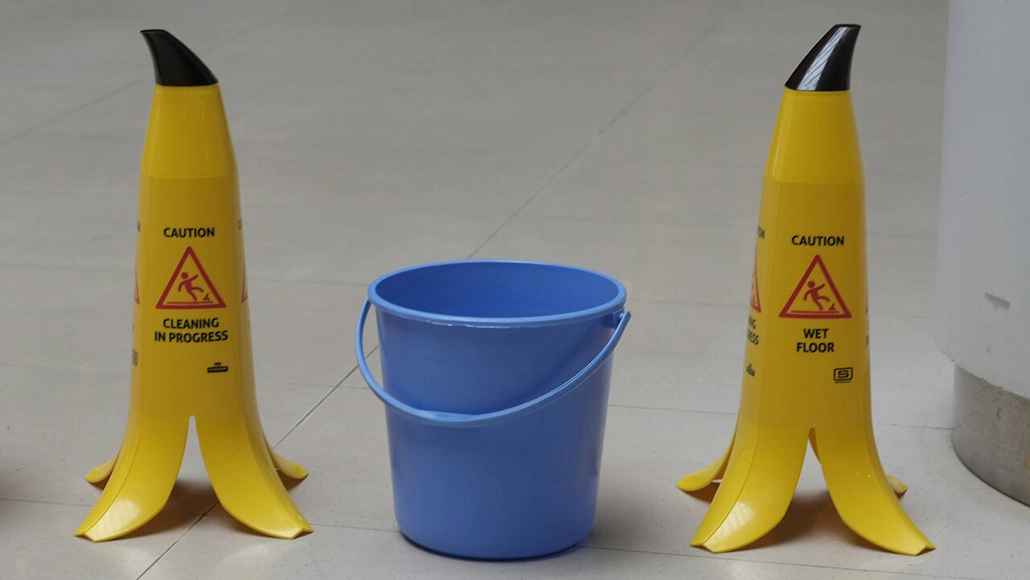
Cleaning activities, in particular, require a lot of careful planning. Wet floors during routine cleaning can become a direct hazard to the building residents, even if the risk is short term. These should ideally be scheduled outside of the peak footfall times (i.e. 7-9 am and 5-6 pm), but also managed with appropriate signage and barriers (i.e. Caution – Wet Floor!). The signs should be a bright colour to attract attention and placed in a location that is visible and easy to read, without blocking the entrance points.
This is where accountability should be clearly defined. People who are assigned the tasks for regular inspections, winter preparations, cleaning activities or maintenance are responsible for making sure the building is a safe environment for everyone. When there are no clear roles or accountability, these tasks can easily fall between operational gaps. Moreover, all reports of incidents (including near-misses or minor incidents) should be collected and analysed. This data helps organisations understand the need for additional measures or extra training.
A safer footing
It’s clear that mitigating slip risks around buildings and premises requires a lot of careful consideration, from practical tools to major changes in interior design. But, even more importantly, a proactive approach is necessary for hazard prevention, both from the building owners’ and the staff.