
























Close
ALUMINIUM CHINA2026
Thursday, July 2, 2026
LiGHT26

Caterpillar to Get Autonomous Technology in Construction

Note* - All images used are for editorial and illustrative purposes only and may not originate from the original news provider or associated company.

Subscribe

- Never miss a story with notifications

- Gain full access to our premium content

- Browse free from any location or device.

Media Packs

Expand Your Reach With Our Customized Solutions Empowering Your Campaigns To Maximize Your Reach & Drive Real Results!

– Access the Media Pack Now

– Book a Conference Call

Leave Message for Us to Get Back

Related stories

VINCI Construction Appointed as Lead Partner for Liverpool’s Pall Mall Development

The strategic redevelopment of Liverpool's commercial core has accelerated...

Trimble Integrates Advanced AI into MEP Estimating Solutions

Trimble has announced the deployment of new artificial intelligence...

Construction Cybersecurity Protecting Connected Job Sites

As digital transformation sweeps through the building industry, the vulnerability of connected job sites to sophisticated cyber threats has become a critical concern. Protecting sensitive project data, securing building information modeling systems, and ensuring the integrity of IoT-enabled machinery are now essential components of modern project management. Implementing robust defense mechanisms and a culture of digital vigilance is vital for safeguarding assets and maintaining the continuity of complex construction operations in an increasingly interconnected landscape.
- Advertisement -

Caterpillar is going ahead with a major leap forward when it comes to autonomous technology by way of announcing the introduction of intelligent machines that are engineered to transform the construction operations across the world.

These innovations go on to represent the culmination of over three decades of research, development, and also real-world deployment when it comes to automation along with machine intelligence, says Caterpillar.

The chief technology officer of Caterpillar, Jaime Mineart, remarked that through embedding autonomous technology within the construction workflows, they are actually reshaping the industry in order to attain safer job sites, much better jobs, and also easy precision, which goes on to redefine the productivity when it comes to modern job sites.

Intelligent product lines are going to include –

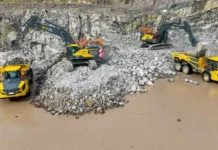
Excavators – autonomous trenching, loading, grading, etc.

Loaders – material handling along with truck loading, that are powered by autonomous navigation and also real-time data processing.

Haul Trucks – off-road machines that go on to carry as well as distribute large amounts of materials such as rock, soil, and minerals.

Dozers – precision grading and also earthmoving in order to have optimal efficiency.

Compactors – automated surface preparation, making sure of consistent quality along with safety for construction.

Site Optimization – Cat VisionLink and Cat MineStar site systems go ahead and connect fleets and also help with coordinated and intelligent operations throughout the job site.

It is worth noting that Caterpillar has been right at the forefront of automation for over 30 years, as per the company. The entry of the company into autonomy started in the 1980s along with a partnership with Carnegie Mellon for developing software and GPS as well as perception systems, which led to the first autonomous truck tests for Caterpillar.

In the 1990s, Caterpillar teams advanced its capabilities in sensing and positioning as well as control, which actually became the very base of autonomous operations in today’s times. By the mid-2000s, the company experienced a leap in real-world testing within extreme conditions, and due to this, Caterpillar is one of the first to roll out level 4 autonomy – machines that function independently.

Today, the autonomous mining fleet of Caterpillar is regarded to be one of the largest and even the most proven across the world and has safely moved more than 11 billion tons of material and also traveled over 236 million mi.

The autonomous solutions of Caterpillar are built on the very foundation of AI, computer vision, and machine learning, as well as edge computing, which processes sensor data and that too in real time and serves as a digital nervous system for the job sites of customers. Integrated LiDAR, radar, and GPS, along with high-resolution cameras, offer a 360-degree, consistently updated digital view when it comes to the job site, helping with precise and dependable autonomous operations even in environments that are complex and chaotic.

According to Mineart, together with their customers, they are indeed transforming the industries that they serve – one breakthrough, one job site, and one bold idea at a time.

Achema Middleeast

Never miss a construction headline

The construction industry moves fast – stay on top of it with our must - read briefings.

  • The top construction and infrastructure stories, straight to your inbox
  • The biggest news, features, interviews, and analysis
  • Dedicated coverage of the key developments shaping global construction markets

Latest stories

Related stories

VINCI Construction Appointed as Lead Partner for Liverpool’s Pall Mall Development

The strategic redevelopment of Liverpool's commercial core has accelerated...

Trimble Integrates Advanced AI into MEP Estimating Solutions

Trimble has announced the deployment of new artificial intelligence...

Construction Cybersecurity Protecting Connected Job Sites

As digital transformation sweeps through the building industry, the vulnerability of connected job sites to sophisticated cyber threats has become a critical concern. Protecting sensitive project data, securing building information modeling systems, and ensuring the integrity of IoT-enabled machinery are now essential components of modern project management. Implementing robust defense mechanisms and a culture of digital vigilance is vital for safeguarding assets and maintaining the continuity of complex construction operations in an increasingly interconnected landscape.

AI Vision Systems Transforming Building Inspections

Leveraging the power of computer vision and machine learning, the construction industry is undergoing a paradigm shift in how quality control and safety monitoring are conducted. Automated systems now enable the rapid detection of structural defects, deviations from design, and potential safety hazards with a level of precision that far exceeds human capabilities. By integrating these intelligent vision tools into the daily workflow, project teams can ensure higher standards of compliance while significantly reducing the time and cost associated with manual site evaluations.

Subscribe

- Never miss a story with notifications

- Gain full access to our premium content

- Browse free from any location or device.

Media Packs

Expand Your Reach With Our Customized Solutions Empowering Your Campaigns To Maximize Your Reach & Drive Real Results!

– Access the Media Pack Now

– Book a Conference Call

Leave Message for Us to Get Back

Translate »