





















Managing Construction Risks in Complex Terminal Infrastructure
The development of terminal infrastructure represents one of the most challenging undertakings in modern construction, where the convergence of massive scale, operational complexity, and stakeholder diversity creates unprecedented risk scenarios that demand sophisticated management approaches. Construction risk management in terminal infrastructure has evolved beyond traditional project risk assessment to encompass comprehensive strategies that address technical, operational, financial, and regulatory challenges simultaneously.
Terminal construction projects operate within environments where risk materialization can have far-reaching consequences, affecting not only project outcomes but also broader transportation networks, economic activity, and public safety. The interconnected nature of modern transportation systems means that construction delays, safety incidents, or quality failures can cascade through regional and international networks, amplifying the importance of proactive risk management throughout project lifecycles.
The complexity of terminal construction risks stems from the multitude of interdependent systems, diverse stakeholder requirements, and dynamic operating environments that characterize these projects. Successful risk management requires integrated approaches that anticipate potential issues, develop comprehensive mitigation strategies, and maintain adaptive capabilities that respond to emerging challenges throughout construction phases.
Comprehensive Risk Identification and Assessment
The foundation of effective construction risk management in terminal infrastructure begins with systematic identification of potential risks across all project dimensions, including technical, commercial, environmental, regulatory, and operational categories. Risk identification processes must account for the unique characteristics of terminal projects, where traditional construction risks are amplified by operational constraints, security requirements, and the need to maintain service continuity during construction activities.
Technical risks in terminal construction encompass design complexity, material performance, construction methodology challenges, and integration requirements for sophisticated building systems. The scale and complexity of modern terminals create scenarios where seemingly minor technical issues can have significant impacts on project schedules, costs, and operational performance.
Geotechnical risks represent a particularly critical category for terminal construction, where foundation conditions, soil stability, and subsurface challenges can significantly impact project feasibility and construction approaches. Many terminals are constructed on challenging sites, including reclaimed land, soft soil conditions, or areas with complex geological formations that require specialized foundation solutions.
Supply Chain and Logistics Risk Assessment
Terminal construction projects depend on complex supply chains that deliver specialized materials, equipment, and systems from global suppliers. Supply chain disruptions, quality issues, or delivery delays can significantly impact project schedules and costs, particularly for critical path activities that depend on specific materials or equipment.
The global nature of terminal construction supply chains introduces additional risks related to international trade, currency fluctuations, political stability, and transportation logistics that must be evaluated and managed throughout project phases. These risks require sophisticated monitoring and mitigation strategies that account for dynamic global conditions.
Schedule Risk Management and Critical Path Protection
Schedule delays represent one of the most significant risks in terminal construction projects, where extended timelines can result in substantial cost overruns, operational disruptions, and stakeholder dissatisfaction. Schedule risk management requires comprehensive analysis of activity dependencies, resource constraints, and external factors that could affect project timelines.
Critical path analysis identifies activities that directly impact project completion dates, enabling focused attention on risk mitigation for activities that have the greatest potential to affect overall project schedules. Buffer management strategies provide schedule contingencies for critical activities while maintaining realistic completion targets.
Weather-related schedule risks require particular attention in terminal construction, where exposed work areas and outdoor activities are vulnerable to seasonal variations and extreme weather events. Climate data analysis and seasonal planning help minimize weather-related delays while maintaining construction productivity throughout project phases.
Resource Management and Availability Planning
Skilled labor availability represents a significant schedule risk in terminal construction, where specialized trades and experienced personnel may be in limited supply. Resource planning strategies address labor availability, training requirements, and succession planning that ensure adequate skilled personnel throughout project phases.
Equipment availability and logistics coordination prevent schedule delays related to specialized construction equipment, particularly for critical activities such as heavy lifting, excavation, and system installation. Equipment scheduling and backup planning ensure that critical activities can proceed as planned while managing equipment-related risks.
Cost Control and Financial Risk Mitigation
Cost overruns represent a persistent challenge in terminal construction projects, where complex scope requirements, changing market conditions, and unforeseen complications can significantly impact project budgets. Financial risk management requires comprehensive cost estimation, change management processes, and contingency planning that address potential cost variations throughout project phases.
Market volatility risks affect material costs, labor rates, and equipment pricing throughout extended construction periods. Cost escalation management strategies include price adjustment mechanisms, bulk purchasing agreements, and supplier partnerships that provide cost stability while managing market risk exposures.
Currency risk management becomes critical for international terminal projects or those with significant imported content, where exchange rate fluctuations can substantially impact project costs. Financial instruments and hedging strategies help manage currency exposures while maintaining budget predictability.
Procurement Strategy and Contract Management
Strategic procurement approaches balance cost optimization with risk management, ensuring that contractor selection and contract structures support successful project delivery while managing financial exposures. Fixed-price contracts provide cost certainty but may include risk premiums, while cost-plus arrangements provide flexibility but require active cost management.
Contract risk allocation strategies ensure that risks are assigned to parties best positioned to manage them effectively while maintaining reasonable risk-reward relationships that attract qualified contractors and suppliers. Clear contract terms and dispute resolution mechanisms prevent costly conflicts while maintaining project momentum.
Safety Risk Management and Incident Prevention
Safety represents the highest priority in terminal construction risk management, where the combination of complex construction activities, operational environments, and public access creates unique safety challenges that require specialized management approaches. Safety risk assessment processes identify potential hazards and develop comprehensive prevention strategies that protect workers, passengers, and the public.
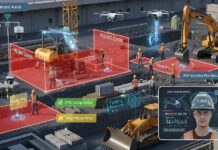
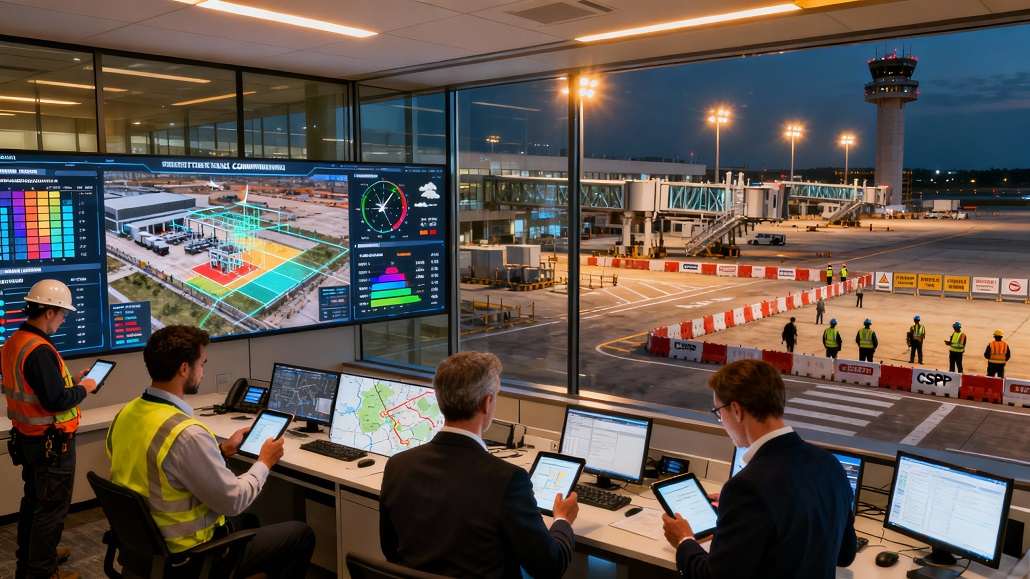
Construction safety risks in terminal environments are amplified by the need to maintain operational activities during construction, creating potential interactions between construction personnel and passengers or operational staff. Safety barriers, segregation strategies, and controlled access procedures prevent dangerous interactions while maintaining operational functionality.
The integration of safety management systems with construction planning ensures that safety considerations are incorporated into all project activities, from initial design through final commissioning. Safety performance monitoring and incident investigation processes support continuous improvement in safety practices while preventing recurring incidents.
Emergency Response Planning
Comprehensive emergency response planning addresses potential incidents that could affect construction personnel, terminal operations, or public safety. Emergency response procedures must be coordinated with terminal operators, emergency services, and regulatory authorities to ensure effective response capabilities throughout construction phases.
Evacuation planning and emergency communication systems ensure that construction areas can be quickly evacuated in emergency situations while maintaining clear communication with all personnel and stakeholders. Regular emergency drills and training exercises validate emergency response capabilities and identify areas requiring improvement.
Quality Risk Management and Performance Assurance
Quality risks in terminal construction can result in rework, schedule delays, operational performance issues, and long-term maintenance problems that affect project success and lifecycle performance. Quality management systems ensure that construction activities meet design specifications and performance requirements while preventing quality-related risks.
Material quality control processes verify that materials and components meet specifications and performance requirements before installation, preventing quality issues that could require costly rework or compromise long-term performance. Supplier qualification and quality assurance programs ensure that vendors meet quality standards throughout supply chains.
Construction quality assurance includes inspection protocols, testing procedures, and documentation requirements that verify compliance with specifications and standards. Independent quality control and commissioning processes provide objective verification of construction quality and system performance.
System Integration and Performance Validation
Complex terminal systems require comprehensive integration testing and performance validation to ensure that individual components work together effectively to meet operational requirements. System commissioning processes validate performance against design criteria while identifying integration issues that require resolution before operations commence.
Performance monitoring during construction phases tracks system installation and testing progress while identifying potential performance issues that could affect operational capability. Early identification of performance issues enables corrective action while minimizing impacts on project schedules and costs.
Environmental and Regulatory Risk Management
Environmental compliance risks in terminal construction encompass air quality, water quality, noise pollution, and waste management requirements that must be maintained throughout construction activities. Environmental management systems ensure compliance with applicable regulations while minimizing environmental impacts.
Regulatory compliance risks include building codes, aviation regulations, safety standards, and environmental requirements that must be satisfied for project approval and operation. Regulatory coordination and compliance monitoring prevent regulatory violations that could result in stop-work orders, fines, or project delays.
Permitting risks can significantly impact project schedules if required permits are delayed or denied. Permit planning and early coordination with regulatory agencies help ensure timely permit approvals while identifying potential compliance issues that require attention.
Stakeholder Management and Community Relations
Community relations and stakeholder management prevent opposition that could result in project delays, regulatory challenges, or legal disputes. Proactive stakeholder engagement and communication strategies build support for projects while addressing community concerns that could create risks.
Political and regulatory stability risks affect long-term project viability and regulatory compliance requirements. Political risk assessment and government relations strategies help manage these risks while maintaining project support throughout political cycles.
Technology and Innovation Risk Management
Technology risks in terminal construction include system integration challenges, performance uncertainties, and obsolescence concerns related to advanced building systems and operational technologies. Technology risk assessment evaluates new technologies and innovative approaches while managing implementation risks that could affect project success.
Cybersecurity risks affect terminal systems and construction management platforms that rely on digital technologies and network connectivity. Cybersecurity management strategies protect systems and data while maintaining operational capability and preventing security breaches that could affect construction activities.
The integration of innovative construction methods and technologies requires careful risk assessment to balance potential benefits with implementation risks. Pilot projects and phased implementation approaches enable evaluation of new technologies while managing risks associated with unproven approaches.
Digital System Integration
Building information modeling and digital construction technologies create efficiencies but also introduce new risks related to data management, system integration, and technology performance. Digital risk management strategies address these challenges while maximizing the benefits of advanced construction technologies.
The increasing reliance on automated systems and artificial intelligence in construction management requires risk assessment of system reliability, data quality, and decision-making algorithms that could affect construction outcomes. Human oversight and backup systems ensure that technology failures do not compromise project success.
The evolution of construction risk management in terminal infrastructure reflects the increasing complexity and importance of these critical transportation facilities. Organizations that develop comprehensive risk management capabilities position themselves for successful project delivery while contributing to the development of resilient transportation infrastructure that supports economic growth and community connectivity. The integration of advanced risk management practices with innovative construction approaches creates opportunities for improved project outcomes while managing the inherent challenges of complex terminal development projects.