
















Close
WORLD OF CONCRETE
Saturday, December 20, 2025
JEC WORLD 2026

Commercial Construction In US To Stay Robust In Near Future

Note* - All images used are for editorial and illustrative purposes only and may not originate from the original news provider or associated company.

Subscribe

- Never miss a story with notifications

- Gain full access to our premium content

- Browse free from any location or device.

Media Packs

Expand Your Reach With Our Customized Solutions Empowering Your Campaigns To Maximize Your Reach & Drive Real Results!

– Access the Media Pack Now

– Book a Conference Call

Leave Message for Us to Get Back

Related stories

How To Choose Trailer GPS Units That Actually Work for UK Fleets

You know the drill. A trailer van goes missing...

Lifecycle Focused Construction Practices for Sustainable Infrastructure

Sustainable infrastructure development requires extending construction thinking beyond initial project completion to encompass the entire building lifecycle spanning decades of operation, maintenance, and eventual decommissioning. By integrating lifecycle cost analysis, selecting durable materials, designing for operational efficiency, planning for maintenance accessibility, and anticipating end-of-life material recovery, construction professionals create assets that deliver long-term value while minimizing environmental impact. This holistic approach transforms infrastructure from cost centers requiring perpetual maintenance into resilient assets that serve communities sustainably across generations.

Improving Construction Efficiency Without Compromising Quality

Achieving construction efficiency requires process-focused improvements that enhance productivity while maintaining or improving quality standards. Through workflow optimization, enhanced coordination mechanisms, quality management practices, and strategic technology integration, construction organizations deliver projects faster and more cost-effectively without sacrificing structural integrity or compliance. Balancing speed with excellence transforms construction management from a trade-off exercise into a synergistic approach where efficiency and quality reinforce one another.
- Advertisement -
Achema Middleeast

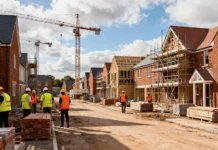
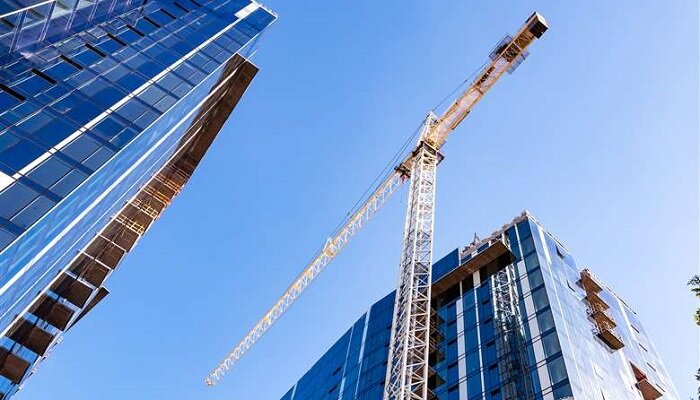
In a recent development that has taken place, overall construction spending in the US dipped by 0.1% in February since the demand for data centres as well as manufacturing plants balanced out weak single-family homebuilding and public construction.

Apparently, the Associated General Contractors of America’s- AGC evaluation of the federal data determined that the demand for numerous kinds of commercial construction is going to remain strong for the immediate future. The spending on construction that was not adjusted for inflation was valued at $1.84 trillion because of a seasonally adjusted annual rate that existed in February, which was notably 0.1% lower than the January rate.

As far as private residential construction is concerned, spending dipped for the ninth consecutive month in February by 0.6%. When it came to non-residential construction, there was an increase of 0.7% in February, although the public construction arena saw an investment dip of 0.2%.

There was also variation in spending when it came to large non-residential segments. The biggest of them all, the manufacturing plant segment, saw a jump of 2.7%. Private office construction like the data centres and Power construction, saw an increase by 0.5% and 1.5% respectively. That said, commercial construction, which majorly comprises retail, warehouse, farm construction, etc., saw a decline of 0.6% in February.

When it comes to the public categories, highway and street construction saw a jump of 0.3%, but education construction declined by 0.9%. It is well to note that public spending on transportation projects saw a fall of 0.7%.

When it comes to the public’s residential spending, a decline was seen due to a 1.8% shrink from January in single-family homebuilding. This outweighed a surge of 1.4% in multifamily construction. The chief economist of the association, Ken Simonson, opined that continued strong demand for data centres as well as manufacturing plants, besides the increase in power projects, contributed to the surge in private non-residential construction. According to him, these segments are most likely to keep growing in the months to come.

However, as per association officials, many projects have been held up due to a lack of clear guidance when it comes to new regulatory measures that have been associated with novel federal investments when it comes to construction. This included confusion on the administration’s approach as far as Buy America rules are concerned, as well as labour measures concerning the new semiconductor funding and registered apprenticeship mandate related to green energy investments, which are either unclear or not finished. Stephen E. Sandherr, the AGC Chief Executive, said that the president as well as his team are more focused on interpreting laws so as to fit their agenda than on making progress when it comes to the billions in new federal investments that the Congress has gone on to authorise. He went on to add that instead of adding more miles of new red tape, the authorities must work with the construction sector to pry out ways to get the construction started as fast as possible.

Achema Middleeast

Latest stories

Related stories

How To Choose Trailer GPS Units That Actually Work for UK Fleets

You know the drill. A trailer van goes missing...

Lifecycle Focused Construction Practices for Sustainable Infrastructure

Sustainable infrastructure development requires extending construction thinking beyond initial project completion to encompass the entire building lifecycle spanning decades of operation, maintenance, and eventual decommissioning. By integrating lifecycle cost analysis, selecting durable materials, designing for operational efficiency, planning for maintenance accessibility, and anticipating end-of-life material recovery, construction professionals create assets that deliver long-term value while minimizing environmental impact. This holistic approach transforms infrastructure from cost centers requiring perpetual maintenance into resilient assets that serve communities sustainably across generations.

Improving Construction Efficiency Without Compromising Quality

Achieving construction efficiency requires process-focused improvements that enhance productivity while maintaining or improving quality standards. Through workflow optimization, enhanced coordination mechanisms, quality management practices, and strategic technology integration, construction organizations deliver projects faster and more cost-effectively without sacrificing structural integrity or compliance. Balancing speed with excellence transforms construction management from a trade-off exercise into a synergistic approach where efficiency and quality reinforce one another.

Training Strategies for Operating Advanced Construction Equipment

Modern construction equipment demands operator skills that extend far beyond basic machinery operation. Comprehensive training programs combining classroom instruction, simulator practice, and hands-on field experience prepare operators to safely and efficiently manage increasingly sophisticated equipment. Through structured certification approaches, ongoing skill development, and commitment to continuous learning, construction organizations develop operator competency that enhances project safety, productivity, and equipment longevity.

Subscribe

- Never miss a story with notifications

- Gain full access to our premium content

- Browse free from any location or device.

Media Packs

Expand Your Reach With Our Customized Solutions Empowering Your Campaigns To Maximize Your Reach & Drive Real Results!

– Access the Media Pack Now

– Book a Conference Call

Leave Message for Us to Get Back

Translate »