

























Key Takeaways
- Modern masonry systems integrate with steel and concrete structural frames, allowing architects to leverage masonry’s aesthetic and performance benefits without structural load-bearing limitations.
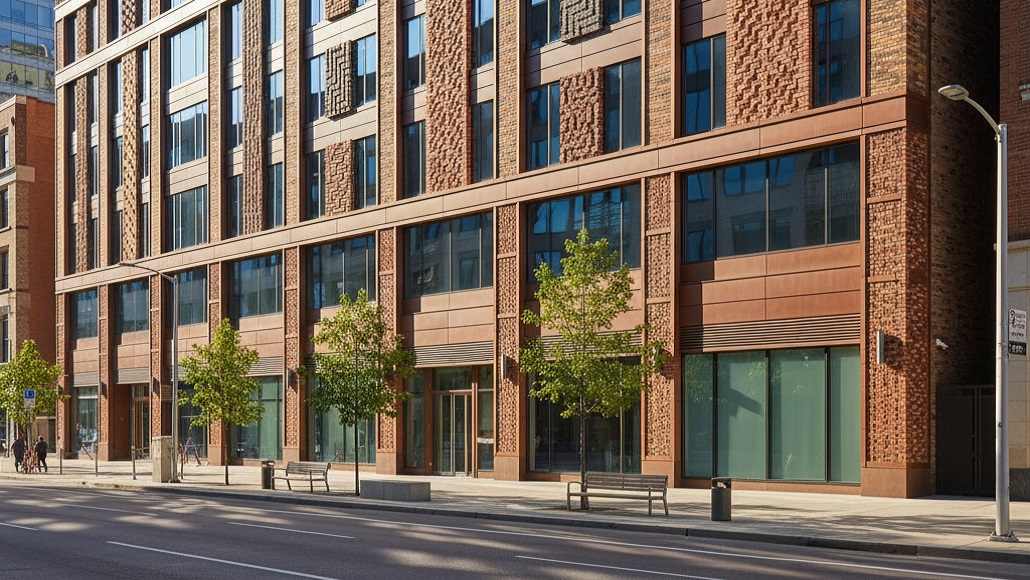
- Engineered materials and precision manufacturing enable masonry to accommodate complex geometries, varied textures, and sophisticated color schemes that create striking facades meeting both functional and design requirements.
- Contemporary masonry systems achieve superior thermal performance through insulated assemblies, thermal breaks, and advanced mortars that meet energy codes while maintaining the thermal mass benefits of traditional masonry.
- Prefabrication and modular masonry components significantly reduce field labor, improve quality control, and accelerate construction timelines while maintaining the enduring aesthetic qualities of masonry.
Evolution of Masonry in Contemporary Construction
Masonry has served humanity for millennia, with some of the world’s most enduring structures testament to the durability and performance of well-executed brick, stone, and block construction. Yet for much of the twentieth century, as steel and concrete advanced rapidly, masonry was increasingly relegated to decorative cladding roles rather than serving central structural functions in commercial and institutional buildings. The beginning of the twenty-first century marked a profound shift in this trajectory. Modern masonry systems have fundamentally redefined what masonry can accomplish, enabling contemporary architects to employ these timeless materials in sophisticated ways that merge structural performance with architectural vision.
The transformation began with recognition that masonry’s inherent advantages durability, fire resistance, thermal mass, aesthetic appeal, and locally available sourcing could be amplified through technological advancement and design innovation. Rather than attempting to replicate the unreinforced bearing wall masonry of historical construction, contemporary systems integrate masonry with modern structural approaches, creating hybrid solutions that provide superior performance across multiple performance dimensions. This evolution demonstrates that traditional materials and modern technology need not be in conflict; rather, they can synergize to create solutions exceeding what either could accomplish independently.
Material Advancements and Manufacturing Innovation
The quality and consistency of modern masonry units represent a substantial advancement over historical products. Contemporary brick and block manufacturing employs precision processes that ensure dimensional accuracy, uniform properties, and superior material quality. Advances in clay body formulation and firing processes have created masonry units with improved strength, reduced water absorption, and superior durability characteristics. Similarly, concrete masonry units now incorporate advanced aggregates and cementitious systems that enhance performance across multiple parameters.
Beyond individual unit improvements, modern masonry systems incorporate sophisticated mortar formulations that go far beyond the simple lime-cement mixes of historical construction. Contemporary mortars are engineered to match the properties of the masonry units they will join, ensuring that differential movement, moisture transmission, and durability characteristics function harmoniously throughout the assembly. Some advanced mortars incorporate additives that enhance weather resistance, reduce efflorescence susceptibility, and improve bond performance with contemporary sealants and insulation systems.
The integration of reinforcement within masonry assemblies represents another significant advancement. Reinforced masonry walls can provide substantial load-bearing capacity comparable to concrete frames, yet with greater architectural flexibility and often superior aesthetic outcomes. Vertical reinforcement positioned within masonry cavities and horizontal reinforcement embedded in bed joints creates engineered systems capable of resisting both gravity and lateral loads. This reinforcement approach enables masonry to perform structural functions in mid-rise commercial buildings, opening applications that unreinforced masonry could not effectively serve.
Architectural Flexibility Through System Integration
One of the most transformative aspects of modern masonry systems is the flexibility they provide to architects pursuing sophisticated design visions. Traditional bearing wall masonry imposed significant constraints on window and door placement, floor planning, and overall architectural form. Modern masonry veneer systems, by contrast, work seamlessly with steel and concrete structural frames, allowing architects complete freedom in structural planning while still leveraging masonry’s aesthetic and performance advantages for facade treatment.
Masonry veneer systems typically consist of a non-structural masonry wythe attached to a structural backup system through mechanical anchors. The separation between structural and non-structural components enables architects to design building facades independently from structural constraints. A building might employ a steel frame optimized for floor planning and space efficiency, then apply masonry veneer that creates the aesthetic character the architect envisions. This flexibility extends to the masonry facade itself architects can incorporate varied colors, textures, unit sizes, and bond patterns that would be impractical or impossible in traditional bearing wall construction.
Contemporary masonry design increasingly embraces geometric complexity that historical construction would have found extremely challenging. Buildings incorporate curved masonry walls, steeply angled surfaces, and three-dimensional patterns created through variations in unit color and orientation. Computer modeling and Building Information Modeling capabilities enable architects to precisely plan these complex assemblies before construction begins, allowing manufacturers to prepare components for optimized field installation. Some projects employ masonry units with specialized shapes or surface treatments that reinforce the architect’s design intent, demonstrating that masonry can be as versatile as more contemporary materials in enabling architectural expression.
Hybrid Structural Systems and Performance Integration
Modern commercial and institutional buildings frequently employ what might be termed hybrid masonry systems assemblies in which masonry serves multiple simultaneous functions. The masonry wythe might provide structural capacity for its own weight and transferred loads from the building envelope, while the backup system provides primary structural support for the building’s gravity and lateral loads. This distributed responsibility approach often results in more efficient use of material and labor than either monolithic masonry or purely frame construction would achieve independently.
Masonry’s thermal mass properties become particularly valuable in hybrid systems. While the structural frame might be optimized for strength and cost efficiency, the masonry exterior provides thermal mass that moderates interior temperature swings, reducing heating and cooling demands throughout the building’s service life. In contemporary energy-conscious design, this thermal mass contribution often exceeds the value of the insulation alone, making masonry an attractive choice for buildings pursuing energy efficiency certifications and net-zero operational performance.
The integration of masonry with modern building systems extends beyond thermal performance. Masonry facades can incorporate building-integrated photovoltaic systems, solar thermal collectors, and other renewable energy technologies. The structural robustness of masonry supports the weight and mounting requirements for these systems, while the regular grid pattern of masonry units accommodates solar array layouts with visual harmony that some architects find more aesthetically compelling than solar arrays applied to flat contemporary facades.
Thermal Performance and Energy Efficiency
Historical concerns about masonry thermal performance the perception that uninsulated masonry walls were energy inefficient have been thoroughly addressed through development of insulated masonry systems. Contemporary specifications typically incorporate continuous insulation applied outboard of the masonry wythe, thermal breaks within the assembly, and advanced mortars that minimize thermal bridging through the mortar joints. These innovations enable masonry buildings to achieve thermal performance exceeding energy code requirements and competitive with other facade approaches.
The thermal mass properties of masonry create energy performance benefits that insulation values alone don’t fully capture. During warm daytime hours, masonry surfaces absorb solar radiation, storing thermal energy. During cool nighttime periods, this stored energy is released into the building interior, moderating temperature swings and reducing mechanical heating and cooling loads. In buildings with significant glass area that generates interior solar gains, masonry thermal mass helps absorb excess daytime heat, preventing interior overheating that might otherwise require energy-intensive cooling. Careful modeling of thermal mass benefits should become routine in energy analysis for buildings incorporating significant masonry area.
Advanced masonry materials now enable thermal and moisture performance previously unachievable with traditional construction. Materials incorporating phase-change salts or other latent heat storage mechanisms can absorb significant thermal energy as temperature rises, then release that energy as temperature drops, providing even greater moderation of interior temperature extremes. While these advanced materials remain more costly than conventional masonry, buildings where energy performance commands high priority often find the investment justified through operational savings and enhanced occupant comfort.
Seismic Performance and Lateral Load Resistance
Unreinforced masonry has traditionally been considered vulnerable to seismic damage, with numerous earthquake failures demonstrating the inadequacy of unreinforced masonry buildings in seismic regions. Modern masonry systems have essentially eliminated this concern through development of reinforcement techniques and flexible connection systems that enable masonry structures to accommodate building movement while maintaining integrity. Reinforced masonry buildings designed according to contemporary seismic provisions perform reliably in significant earthquake events, protecting occupants and maintaining structure integrity.
The development of flexible connection systems represents a critical innovation enabling seismic-resistant masonry construction. Traditional connections between masonry and structural systems were designed to transfer loads rigidly, allowing little movement. Contemporary connections incorporate slip planes or flexibility that allow the building structure to move during seismic events while the masonry facade accommodates this movement without cracking or failing. This approach maintains the protective function of the masonry while preventing it from becoming a structural liability during extreme seismic activity.
Hybrid systems where masonry serves as facade while the primary lateral load resistance comes from concrete shear walls or steel braced frames prove particularly effective in seismic regions. The primary structure is designed and detailed specifically for seismic resistance, while the masonry facade is connected in a way that allows necessary movement. This division of responsibility simplifies both structural analysis and construction, while ensuring both components can perform their intended functions effectively.
Construction Efficiency Through Prefabrication and Modular Approaches
Contemporary masonry construction increasingly incorporates prefabrication and modular assembly approaches that improve construction quality, reduce labor requirements, and accelerate field construction timelines. Rather than building masonry walls entirely through traditional hand placement of individual units, some projects employ prefabricated masonry panels masonry walls assembled in controlled factory settings, then transported to the construction site for installation as large components.
Prefabricated masonry panels provide several advantages over traditional field construction. In the factory environment, masonry units are assembled under controlled conditions with quality oversight impossible to maintain consistently in field settings. Bond patterns and mortar joints achieve superior consistency. Openings for windows and doors are cut to precise dimensions in the factory rather than attempting careful field installation. Reinforcement placement and quality can be validated before components leave the factory. These quality benefits translate into superior final appearance and performance.
The efficiency gains from prefabrication extend to project timelines and labor costs. Rather than requiring large crews of skilled masons to construct masonry walls over extended periods, prefabricated panels reduce required field labor substantially. Construction timelines compress when major facade elements can be fabricated while site preparation and structural frame construction proceed simultaneously, then installed quickly once structural elements are ready. For projects on compressed schedules or in labor-constrained markets, these efficiency gains prove invaluable.
Design Flexibility and Aesthetic Expression
The design flexibility enabled by modern masonry systems extends to the creation of highly differentiated architectural expressions that vary significantly from conventional masonry aesthetics. Architects now commonly incorporate masonry in ways that blur the boundary between load-bearing structure and decorative cladding, using color, texture, and geometric manipulation to create visual impacts that transcend masonry’s historical roles.
The palette of available masonry units has expanded dramatically. Rather than the limited selection of brick colors and textures typical of mid-twentieth century commercial construction, contemporary projects can employ masonry units in virtually any color, with varied surface textures including intentional distressing or artistic treatments. Some manufacturers produce custom units shaped to specific architectural requirements, enabling projects to achieve extremely precise design intent through masonry selection and placement.
The ability to integrate masonry with complementary materials glass, metal, wood, and others—enables contemporary designers to create layered facades where masonry provides texture, pattern, and material warmth while other materials add additional design dimensions. These mixed-material facades often achieve visual richness and architectural sophistication that purely masonry or purely contemporary facades might not attain independently.
Sustainability and Environmental Benefits
Masonry materials, particularly brick derived from locally available clay deposits, offer sustainability advantages increasingly valued in contemporary construction. The permanence of well-constructed masonry buildings built centuries ago still stand and perform means masonry buildings require little maintenance and long-lasting durability compared to materials requiring more frequent replacement. Over a building’s full lifecycle, this durability often translates into substantially lower environmental impact than alternatives requiring periodic renovation and replacement.
The thermal mass properties of masonry contribute to reduced operational energy consumption throughout the building’s service life. A building that requires less energy for heating and cooling over decades of occupancy generates substantially less environmental impact from operational energy than a thermally equivalent building relying purely on active mechanical systems. For buildings occupying their sites for fifty years or more, the accumulated environmental benefit from reduced operational energy often exceeds the embodied carbon of the construction materials themselves.
Masonry’s inherent fire resistance provides environmental and safety benefits distinct from other facade approaches. The non-combustibility of masonry eliminates fire risk from facade materials, reducing fire protection requirements and associated energy demands. The durability of masonry also means facades less likely to require replacement due to degradation, reducing waste and environmental impact from renovation activities.
