






















Close
WORLD OF CONCRETE
Friday, December 19, 2025
JEC WORLD 2026

Siemens to invest more than US$500 million in U.S. manufacturing for critical infrastructure in 2023

Note* - All images used are for editorial and illustrative purposes only and may not originate from the original news provider or associated company.

Subscribe

- Never miss a story with notifications

- Gain full access to our premium content

- Browse free from any location or device.

Media Packs

Expand Your Reach With Our Customized Solutions Empowering Your Campaigns To Maximize Your Reach & Drive Real Results!

– Access the Media Pack Now

– Book a Conference Call

Leave Message for Us to Get Back

Related stories

Lifecycle Focused Construction Practices for Sustainable Infrastructure

Sustainable infrastructure development requires extending construction thinking beyond initial project completion to encompass the entire building lifecycle spanning decades of operation, maintenance, and eventual decommissioning. By integrating lifecycle cost analysis, selecting durable materials, designing for operational efficiency, planning for maintenance accessibility, and anticipating end-of-life material recovery, construction professionals create assets that deliver long-term value while minimizing environmental impact. This holistic approach transforms infrastructure from cost centers requiring perpetual maintenance into resilient assets that serve communities sustainably across generations.

Improving Construction Efficiency Without Compromising Quality

Achieving construction efficiency requires process-focused improvements that enhance productivity while maintaining or improving quality standards. Through workflow optimization, enhanced coordination mechanisms, quality management practices, and strategic technology integration, construction organizations deliver projects faster and more cost-effectively without sacrificing structural integrity or compliance. Balancing speed with excellence transforms construction management from a trade-off exercise into a synergistic approach where efficiency and quality reinforce one another.

Managing Material Costs in a Volatile Construction Market

Construction material price volatility presents significant challenges to project budgeting and risk management. Strategic procurement approaches, supply chain resilience strategies, and contract mechanisms that balance risk effectively enable stakeholders to navigate market fluctuations successfully. Understanding market dynamics, implementing escalation clauses, developing flexible procurement strategies, and maintaining strong supplier relationships help construction professionals maintain project viability despite unpredictable material cost movements.
- Advertisement -

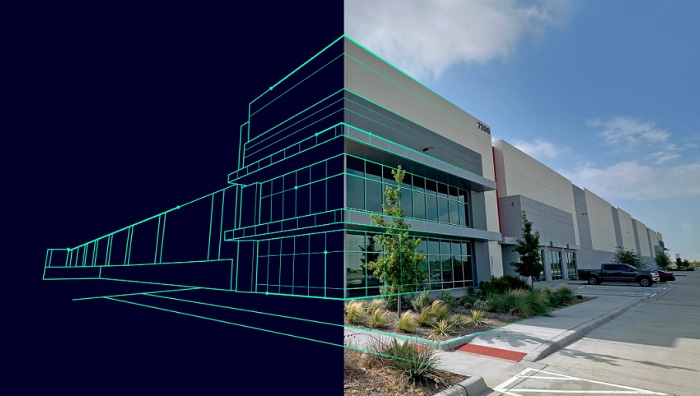
Siemens announced an investment of US$150 million in a new high-tech manufacturing plant in Dallas-Fort Worth to help power American data centers and critical infrastructure. This plant will produce state-of-the-art reliable and efficient electrical equipment. It will enable accelerated growth of U.S. data centers, which is being driven by the exponential adoption of generative AI. It will also ensure secure operation of critical infrastructure. This investment specifically supports long-term customers in the data center space, where demand is expected to grow by around ten percent annually through 2030.

“There’s never been a better time to invest in critical electrical infrastructure and green mobility to support the backbone of America’s economy. The hardware and software we offer – produced through our expanded U.S. manufacturing presence – will ensure that growing industries can meet demand while continuing to make progress in decarbonizing operations,” said Roland Busch, President and CEO of Siemens AG. “With this latest step, Siemens is delivering on its €2 billion global investment strategy for 2023 to boost growth, innovation and resilience.”

New projects create a total of around 1,700 jobs in the U.S.

As part of these investments, Siemens announced a US$220 million investment in a new rail manufacturing facility in Lexington, North Carolina, earlier this year. Construction of this facility is now underway. In addition, the company is investing in two electrical-products manufacturing plants in Grand Prairie, Texas, and Pomona, California. These projects bring the overall investment in the U.S. this year to US$510 million, which will create 1,700 jobs at Siemens as a result.

The new Fort Worth facility and the Grand Prairie and Pomona extensions will meet booming demand for the electrification of critical infrastructure – in other words, data centers, battery plants, semiconductor facilities and EV charging. Production at the new facility in Fort Worth is expected to start in calendar year 2024, gearing up for full operations in 2025. This factory will be built and operated using Siemens advanced manufacturing tools, including digital twin technology and high-tech automation to ensure the highest quality, efficiency and sustainability levels. The Siemens Xcelerator portfolio will be used to capture and analyze data from the shopfloor on production and product performance in real time.

Siemens’ €2 billion global investment strategy to boost growth, innovation and resilience

In June 2023, Siemens announced its global investment strategy in new high-tech factories, innovation labs and education centers to expand leadership in digitalization, automation, electrification and sustainability. As part of this strategy – which totals around €2 billion – Siemens has disclosed investments in regions such as China, Southeast Asia, Europe and the U.S.

Latest stories

Related stories

Lifecycle Focused Construction Practices for Sustainable Infrastructure

Sustainable infrastructure development requires extending construction thinking beyond initial project completion to encompass the entire building lifecycle spanning decades of operation, maintenance, and eventual decommissioning. By integrating lifecycle cost analysis, selecting durable materials, designing for operational efficiency, planning for maintenance accessibility, and anticipating end-of-life material recovery, construction professionals create assets that deliver long-term value while minimizing environmental impact. This holistic approach transforms infrastructure from cost centers requiring perpetual maintenance into resilient assets that serve communities sustainably across generations.

Improving Construction Efficiency Without Compromising Quality

Achieving construction efficiency requires process-focused improvements that enhance productivity while maintaining or improving quality standards. Through workflow optimization, enhanced coordination mechanisms, quality management practices, and strategic technology integration, construction organizations deliver projects faster and more cost-effectively without sacrificing structural integrity or compliance. Balancing speed with excellence transforms construction management from a trade-off exercise into a synergistic approach where efficiency and quality reinforce one another.

Managing Material Costs in a Volatile Construction Market

Construction material price volatility presents significant challenges to project budgeting and risk management. Strategic procurement approaches, supply chain resilience strategies, and contract mechanisms that balance risk effectively enable stakeholders to navigate market fluctuations successfully. Understanding market dynamics, implementing escalation clauses, developing flexible procurement strategies, and maintaining strong supplier relationships help construction professionals maintain project viability despite unpredictable material cost movements.

Cost Optimization Strategies in Material Intensive Construction Projects

Material-intensive construction projects require comprehensive cost optimization strategies that balance budget control with quality maintenance. Through systematic planning, prefabrication techniques, lean construction principles, and strategic procurement approaches, contractors can significantly reduce project expenses while maintaining structural performance standards. Effective material efficiency combined with process optimization transforms how organizations deliver complex construction projects.

Subscribe

- Never miss a story with notifications

- Gain full access to our premium content

- Browse free from any location or device.

Media Packs

Expand Your Reach With Our Customized Solutions Empowering Your Campaigns To Maximize Your Reach & Drive Real Results!

– Access the Media Pack Now

– Book a Conference Call

Leave Message for Us to Get Back

Translate »