























Close
WORLD OF CONCRETE
Saturday, December 20, 2025
JEC WORLD 2026

Siemens launches Connect Box, a smart IoT solution to manage smaller buildings

Note* - All images used are for editorial and illustrative purposes only and may not originate from the original news provider or associated company.

Subscribe

- Never miss a story with notifications

- Gain full access to our premium content

- Browse free from any location or device.

Media Packs

Expand Your Reach With Our Customized Solutions Empowering Your Campaigns To Maximize Your Reach & Drive Real Results!

– Access the Media Pack Now

– Book a Conference Call

– Leave Message for Us to Get Back

Related stories

Emerging Technologies Set to Transform Concrete and Structural Construction

Advanced technologies including self-healing concrete, 3D-printed structures, smart sensors, ultra-high-performance materials, and artificial intelligence-powered design and planning systems are poised to fundamentally reshape construction practices. These innovations promise enhanced durability, reduced waste, accelerated project delivery, improved safety, and optimized resource utilization. Understanding adoption readiness, practical implementation approaches, and realistic timelines enables construction professionals to prepare for technological transformation while maintaining focus on delivering high-quality facilities that serve stakeholders' needs.

Lifecycle Focused Construction Practices for Sustainable Infrastructure

Sustainable infrastructure development requires extending construction thinking beyond initial project completion to encompass the entire building lifecycle spanning decades of operation, maintenance, and eventual decommissioning. By integrating lifecycle cost analysis, selecting durable materials, designing for operational efficiency, planning for maintenance accessibility, and anticipating end-of-life material recovery, construction professionals create assets that deliver long-term value while minimizing environmental impact. This holistic approach transforms infrastructure from cost centers requiring perpetual maintenance into resilient assets that serve communities sustainably across generations.

Improving Construction Efficiency Without Compromising Quality

Achieving construction efficiency requires process-focused improvements that enhance productivity while maintaining or improving quality standards. Through workflow optimization, enhanced coordination mechanisms, quality management practices, and strategic technology integration, construction organizations deliver projects faster and more cost-effectively without sacrificing structural integrity or compliance. Balancing speed with excellence transforms construction management from a trade-off exercise into a synergistic approach where efficiency and quality reinforce one another.
- Advertisement -

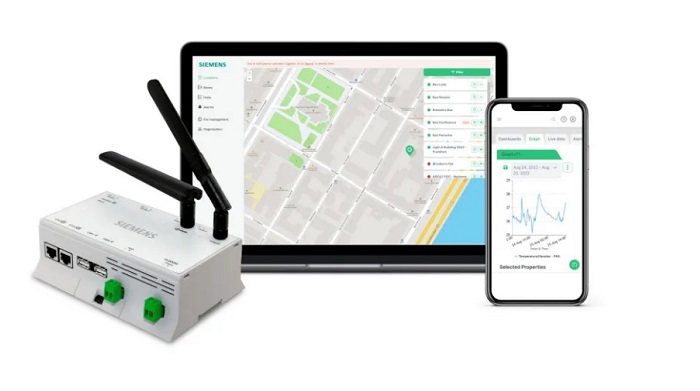
Siemens Smart Infrastructure has launched Connect Box, an open and easy-to-use IoT solution designed to manage small to medium-sized buildings. The latest addition to the Siemens Xcelerator portfolio, Connect Box is a user-friendly approach for monitoring building performance, with the potential to optimize energy efficiency by up to 30 percent and to substantially improve indoor air quality in small to medium sized buildings such as schools, retail shops, apartments or small offices. Siemens Xcelerator is an open digital business platform that enables customers to accelerate their digital transformation easier, faster and at scale.

Connect Box allows users to accomplish essential daily building management tasks from one place via a cloud-based interface with no additional gateway or software. Alarm notifications for potential issues as well as graphics that visualize historical trends provide meaningful insights into the building performance at any time, supporting the optimization of building operations.

Connect Box offers intuitive online access via desktop or smartphone. Installation is fast and easily accomplished via plug and play, so system integrators, technicians and facility managers do not need engineering skills to set up, configure and operate the system. The included library contains more than 500 ready-to-connect field devices and is constantly growing, from both Siemens and third parties. A smart converter supports 11 communication protocols, both standard and proprietary, wired or wireless, including LoRaWAN, BACnet, Modbus and KNX.
As an example, the IAQ (indoor air quality) multi-sensor which Siemens has recently introduced, works as a plug and play solution with Connect Box to provide crucial data on room air quality. The multi-sensor measures air quality in real time, checking key metrics like temperature and humidity, CO₂ saturation, VOC and PM2.5 emissions, as well as light and noise level (dBA). Building operators benefit by getting full transparency on air quality in their building and can make sure that they provide a healthy environment for tenants, visitors or staff.
Connect Box offers two licensing models. The Cloud license allows users to store their building data in the Connect Box online database, while the On-premise license enables users to easily integrate the data collected from wired and IoT devices into an existing automation system, building management system, or external cloud. Both variants are managed remotely and updated over the air.

IoT paves the way to a healthy and zero-emission building stock

Even for smaller and medium-sized buildings that have been run without building automation up to now, it is becoming increasingly important to operate in an energy-efficient and climate-neutral way. On the one hand, for intrinsic cost reasons, on the other hand, because more and more regulatory requirements have to be fulfilled which demand sustainable operations. In Europe, for example, the EPBD (Energy Performance for Buildings Directive) is supporting the EU’s goal to achieve climate-neutral building operations by 2050, forcing building owners and operators to take action.

From a technical point of view, IoT-based building solutions not only provide what is needed to implement such requirements, they also pay off: Energy and emissions savings of up to 30 percent are possible thanks to Connect Box’s key building management features.

Latest stories

Related stories

Emerging Technologies Set to Transform Concrete and Structural Construction

Advanced technologies including self-healing concrete, 3D-printed structures, smart sensors, ultra-high-performance materials, and artificial intelligence-powered design and planning systems are poised to fundamentally reshape construction practices. These innovations promise enhanced durability, reduced waste, accelerated project delivery, improved safety, and optimized resource utilization. Understanding adoption readiness, practical implementation approaches, and realistic timelines enables construction professionals to prepare for technological transformation while maintaining focus on delivering high-quality facilities that serve stakeholders' needs.

Lifecycle Focused Construction Practices for Sustainable Infrastructure

Sustainable infrastructure development requires extending construction thinking beyond initial project completion to encompass the entire building lifecycle spanning decades of operation, maintenance, and eventual decommissioning. By integrating lifecycle cost analysis, selecting durable materials, designing for operational efficiency, planning for maintenance accessibility, and anticipating end-of-life material recovery, construction professionals create assets that deliver long-term value while minimizing environmental impact. This holistic approach transforms infrastructure from cost centers requiring perpetual maintenance into resilient assets that serve communities sustainably across generations.

Improving Construction Efficiency Without Compromising Quality

Achieving construction efficiency requires process-focused improvements that enhance productivity while maintaining or improving quality standards. Through workflow optimization, enhanced coordination mechanisms, quality management practices, and strategic technology integration, construction organizations deliver projects faster and more cost-effectively without sacrificing structural integrity or compliance. Balancing speed with excellence transforms construction management from a trade-off exercise into a synergistic approach where efficiency and quality reinforce one another.

Managing Material Costs in a Volatile Construction Market

Construction material price volatility presents significant challenges to project budgeting and risk management. Strategic procurement approaches, supply chain resilience strategies, and contract mechanisms that balance risk effectively enable stakeholders to navigate market fluctuations successfully. Understanding market dynamics, implementing escalation clauses, developing flexible procurement strategies, and maintaining strong supplier relationships help construction professionals maintain project viability despite unpredictable material cost movements.

Subscribe

- Never miss a story with notifications

- Gain full access to our premium content

- Browse free from any location or device.

Media Packs

Expand Your Reach With Our Customized Solutions Empowering Your Campaigns To Maximize Your Reach & Drive Real Results!

– Access the Media Pack Now

– Book a Conference Call

– Leave Message for Us to Get Back

Translate »