





























Close
MCE 2026
Monday, January 19, 2026
JEC WORLD 2026

Rolls-Royce delivers first Stage V MTU engines for Bell dump trucks

Note* - All images used are for editorial and illustrative purposes only and may not originate from the original news provider or associated company.

Subscribe

- Never miss a story with notifications

- Gain full access to our premium content

- Browse free from any location or device.

Media Packs

Expand Your Reach With Our Customized Solutions Empowering Your Campaigns To Maximize Your Reach & Drive Real Results!

– Access the Media Pack Now

– Book a Conference Call

Leave Message for Us to Get Back

Related stories

Future Ready Construction Equipment for Infrastructure Growth

The next generation of heavy machinery is being forged at the intersection of sustainability and high-performance computing. As nations embark on massive infrastructure renewals, the equipment leading the charge will be defined by its ability to integrate with digital twins, utilize alternative energy sources, and operate within a connected ecosystem that prioritizes long-term resilience and productivity.

Safety Innovation in Modern Construction Machinery Design

The pursuit of a zero-harm workplace is driving a technological revolution in the way heavy equipment is engineered and operated. By integrating advanced sensors and automated intervention systems, the industry is creating a protective shield around its most valuable assets the people on the ground and in the cab significantly reducing the inherent risks of complex building environments.

Compact Construction Equipment Meeting Urban Project Needs

The rapid expansion of city infrastructure requires a new generation of machinery designed for high-density environments. These specialized tools prioritize maneuverability and reduced environmental impact, allowing contractors to execute complex builds in tight spaces without compromising the efficiency or safety of the surrounding metropolitan area.
- Advertisement -

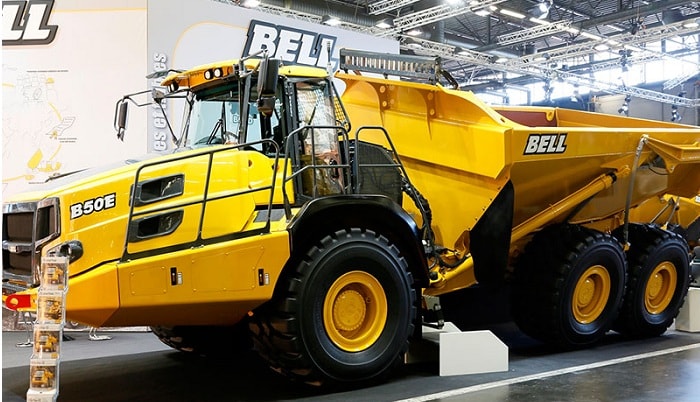
Bell Equipment, the international specialist for articulated dump trucks, recently received the first six Series 1000 – 1500 MTU engines from Rolls-Royce that meet the new EU Stage V emission standard.

The engines cover a power range from 170 to 430 kW. This had been preceded by a test phase of several years under the most adverse operating conditions in order to ensure the trucks would be guaranteed a reliable, cost-effective upgrade. To this end, MTU’s off-road engine series were optimised to comply with the emission standard and a new exhaust aftertreatment system introduced.

Bell Equipment, one of the world’s leading manufacturers of transport vehicles and haulage tractors for the mining, civil engineering and road construction industries, specialises in articulated dump trucks. In preparation for the more stringent emission requirements, Rolls-Royce had made two Stage V prototypes available to Bell for field trials in 2016 – a 260 kW MTU 6R 1000 engine and a 430 kW 6R 1500 were successfully tested in the hot, dusty climate of South Africa and for the tough conditions encountered at extreme altitudes of up to 3,000 metres.

Sensors collect important data during field tests
Bell Equipment and Rolls-Royce with the MTU brand have been working together closely since the 1990s, with Rolls-Royce not only the supplier of more than 1,000 MTU engines a year, but also the technology partner in all emission-related design and construction decisions – including the upgrading of the articulated dump trucks. “During the field trials, we accumulated an enormous amount of experience that goes way beyond any simulation on a test bench, since the real-life interplay between the engine and the vehicle affects the behaviour. Data obtained during the field tests, which we collected from sensors mounted on the engines was subsequently used in the configuration of the components,” said Stefan Rudert, Head of Sales and Application Engineering for Construction & Agriculture at MTU.

New emissions technology in compact form
The new Stage V engines, which Bell will successively upgrade to, besides MTU’s current SCR exhaust technology, also include a diesel oxidation catalyst (DOC) and a diesel particulate filter (DPF), with all components installed in a compact one-box solution behind the driver’s cab. Another positive aspect of the new emissions technology is that it reduces fuel consumption. To prepare for the upgrade to the new emission regulation, Rolls-Royce had around 100 MTU engines undergoing trials with various vehicle manufacturers. In total, over 110,000 operating hours were accumulated as a result, with individual engines running non-stop for more than 4,000 hours. Since the trials had started at an early stage, the MTU engines were certified in accordance with the EU Stage V regulations by mid-2018, marketable and ready for series production.

Latest stories

Related stories

Future Ready Construction Equipment for Infrastructure Growth

The next generation of heavy machinery is being forged at the intersection of sustainability and high-performance computing. As nations embark on massive infrastructure renewals, the equipment leading the charge will be defined by its ability to integrate with digital twins, utilize alternative energy sources, and operate within a connected ecosystem that prioritizes long-term resilience and productivity.

Safety Innovation in Modern Construction Machinery Design

The pursuit of a zero-harm workplace is driving a technological revolution in the way heavy equipment is engineered and operated. By integrating advanced sensors and automated intervention systems, the industry is creating a protective shield around its most valuable assets the people on the ground and in the cab significantly reducing the inherent risks of complex building environments.

Compact Construction Equipment Meeting Urban Project Needs

The rapid expansion of city infrastructure requires a new generation of machinery designed for high-density environments. These specialized tools prioritize maneuverability and reduced environmental impact, allowing contractors to execute complex builds in tight spaces without compromising the efficiency or safety of the surrounding metropolitan area.

Telematics Transforming Construction Equipment Management

The adoption of sophisticated data transmission systems is revolutionizing how heavy machinery is monitored and maintained. By providing a continuous stream of operational insights, these tools allow fleet managers to transition from reactive repairs to a proactive, data-driven strategy that maximizes uptime and optimizes resource allocation across complex jobsites.

Subscribe

- Never miss a story with notifications

- Gain full access to our premium content

- Browse free from any location or device.

Media Packs

Expand Your Reach With Our Customized Solutions Empowering Your Campaigns To Maximize Your Reach & Drive Real Results!

– Access the Media Pack Now

– Book a Conference Call

Leave Message for Us to Get Back

Translate »