























Close
MCE 2026
Friday, January 30, 2026
JEC WORLD 2026

CEMEX and Carbon Upcycling to Use Nanotechnology to Produce Low Emission Concrete

Note* - All images used are for editorial and illustrative purposes only and may not originate from the original news provider or associated company.

Subscribe

- Never miss a story with notifications

- Gain full access to our premium content

- Browse free from any location or device.

Media Packs

Expand Your Reach With Our Customized Solutions Empowering Your Campaigns To Maximize Your Reach & Drive Real Results!

– Access the Media Pack Now

– Book a Conference Call

Leave Message for Us to Get Back

Related stories

Digital Planning Tools for Building Envelope Systems

The complexity of modern architectural skins requires a fundamental shift in how we conceive, design, and manage the outer boundaries of our structures. By leveraging advanced digital planning platforms and integrated modeling environments, the construction industry can achieve unprecedented levels of precision, ensuring that every component of the structural perimeter is optimized for performance, durability, and long-term sustainability throughout its entire operational lifecycle.

Fire Safety and Compliance in Building Openings

The protection of life and property in the built environment depends heavily on the integrity of apertures within fire-rated compartments, where every door and window must function as a reliable barrier against the spread of heat and smoke. By strictly adhering to modern fire regulations and implementing rigorously tested opening systems, architects and developers can ensure a high level of passive fire protection that safeguards occupants and facilitates a more effective response from emergency services.
- Advertisement -

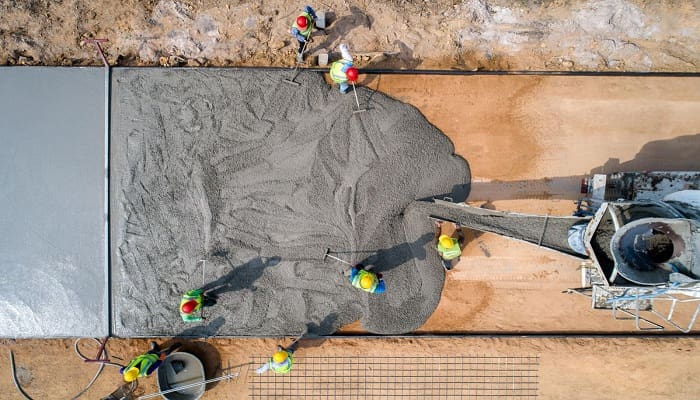
CEMEX has signed an agreement with Carbon Upcycling Technologies intending to improve the processing of residue or by-products of industrial processes, capturing low carbon dioxide (CO2) emissions to produce nanomaterials with greater reactivity and a lower carbon footprint. This would allow the production of concretes with a low CO2 footprint that meets the construction industry’s requirements.

CEMEX signed the agreement with Carbon Upcycling, a company that develops nanomaterials derived from the use of CO2 for industrial use, through its corporate venture capital unit, CEMEX Ventures.

While CEMEX uses 3 million tons of industrial residue each year, as additions to cement and concrete, a large portion of industrial waste produced annually cannot be recycled due to its low reactivity. Large quantities of residue or by-products are deposited in landfills and dumpsites, creating significant economic, environmental, and social costs.

This initiative seeks to increase industrial residue’s reactivity property, allowing more availability of additions with cementitious qualities. With this venture, CEMEX expects to double its current use of industrial residue to consume annually 6 million tons by 2030, thereby reducing its carbon footprint significantly.

Carbon Upcycling technology transforms residues such as fly ash and slag, making them more reactive and increasing their cementitious properties. The use of CO2 previously captured, combined with a physical transformation of the material during the process, generates a new addition for the cement that allows the production of concrete with a low environmental footprint. The improvement in the cementitious capacity of materials achieved by the Carbon Upcycling technology will expand the range of sources that can be used to reduce the amount of clinker needed in cement production and the amount of cement required in concrete.

The agreement will begin with a coordinated analysis between CEMEX and Carbon Upcycling and its implementation on an industrial scale. CEMEX and Carbon Upcycling anticipate initial results from this joint research and development effort by mid-2021.

“This agreement with Carbon Upcycling is yet another example of our determination to deliver net-zero CO2 concrete products globally by 2050,” says Gonzalo Galindo, head of CEMEX Ventures. “Our roadmap to achieve this global ambition involves continuing to innovate our technology internally while, at the same time, continuing to seek complementary innovation outside of CEMEX through investments in startups, consortia, and high-value collaboration agreements such as the one reached with Carbon Upcycling.”

“We’re thrilled to be partnering with CEMEX Ventures on this initiative and working with CEMEX to achieve their net-zero CO2 commitment,” says Apoorv Sinha, CEO of Carbon Upcycling Technologies. “Investigating industrial residue that could be upcycled will unlock the applicability of our technology to achieve emissions reduction in concrete products globally. This works towards a larger vision of beneficiating under-utilized materials, such as natural pozzolanic materials, to reduce the use of portland cement in commercial concrete mixes. We’ve already shown the ability to reduce cement use by over 10% in field deployments across Calgary and are confident that this number can be significantly improved with further research and development.”

Latest stories

Related stories

Digital Planning Tools for Building Envelope Systems

The complexity of modern architectural skins requires a fundamental shift in how we conceive, design, and manage the outer boundaries of our structures. By leveraging advanced digital planning platforms and integrated modeling environments, the construction industry can achieve unprecedented levels of precision, ensuring that every component of the structural perimeter is optimized for performance, durability, and long-term sustainability throughout its entire operational lifecycle.

Fire Safety and Compliance in Building Openings

The protection of life and property in the built environment depends heavily on the integrity of apertures within fire-rated compartments, where every door and window must function as a reliable barrier against the spread of heat and smoke. By strictly adhering to modern fire regulations and implementing rigorously tested opening systems, architects and developers can ensure a high level of passive fire protection that safeguards occupants and facilitates a more effective response from emergency services.

High Performance Windows Meeting Global Energy Codes Today

The implementation of superior fenestration technology is no longer an optional upgrade but a fundamental necessity for architectural projects aiming to achieve regulatory compliance and long-term sustainability. By integrating advanced glazing and framing solutions, buildings can significantly reduce their operational energy demand while providing occupants with enhanced comfort and durability against a backdrop of increasingly stringent global construction standards.

Subscribe

- Never miss a story with notifications

- Gain full access to our premium content

- Browse free from any location or device.

Media Packs

Expand Your Reach With Our Customized Solutions Empowering Your Campaigns To Maximize Your Reach & Drive Real Results!

– Access the Media Pack Now

– Book a Conference Call

Leave Message for Us to Get Back

Translate »