























Close
MCE 2026
Saturday, January 31, 2026
JEC WORLD 2026

Worlds Largest 3D Printed Concrete Pedestrian Bridge Completed in China

Note* - All images used are for editorial and illustrative purposes only and may not originate from the original news provider or associated company.

Subscribe

- Never miss a story with notifications

- Gain full access to our premium content

- Browse free from any location or device.

Media Packs

Expand Your Reach With Our Customized Solutions Empowering Your Campaigns To Maximize Your Reach & Drive Real Results!

– Access the Media Pack Now

– Book a Conference Call

Leave Message for Us to Get Back

Related stories

Interior Finishing Touches That Make a Remodel Look Complete

A remodel rarely fails because of poor structure or...

How Advanced Rigging Solutions Keep Large Construction Projects on Schedule

Large construction projects live and die by their schedules....

Facade Design Trends Influencing Urban Architecture

The rapid evolution of the building exterior is fundamentally reshaping the visual and functional identity of our cities, moving beyond static surfaces toward dynamic, responsive systems that interact with their surroundings. By embracing innovative materials and digital manufacturing processes, designers are creating high-performance envelopes that not only redefine building aesthetics but also contribute to the resilience and sustainability of the modern urban landscape.
- Advertisement -
Advancing Prefabrication 2026

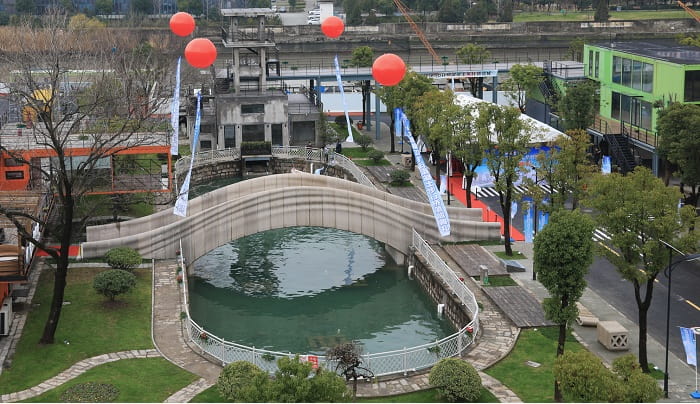
The world’s longest 3D-printed concrete pedestrian bridge has been completed in Shanghai. Designed by Professor Xu Weiguo from the Tsinghua University (School of Architecture) – Zoina Land Joint Research Center for Digital Architecture, the 26.3-meter-long bridge was inspired by the ancient Anji Bridge in Zhaoxian, China.

The single-arch structure was created using a 3D printing concrete system developed by Professor Xu Weiguo’s team, integrating digital design, cost efficiency, smart technology, and architectural dynamism. Enclosing the 3.6-meter width, the bridge’s handrails are shaped like flowing ribbons on the arch, creating a light, elegant movement across the Shanghai Wisdom Bay pond.

The bridge is constructed of 44 hollowed-out 3D printed concrete units, while the handrails are divided into 68 units. The bridge’s components have been printed from composite materials, containing polyethylene fiber concrete to match the structural performance of conventional materials.

The design process involved the construction of a 1:4 scale physical model of the bridge, built to demonstrate the scheme’s viability, and proving that the bridge could hold pedestrians crowding the entire surface. For the actual construction, concrete components for the bridge were printed by two robotic arms, over the course of 450 hours. The streamlined process is estimated to have produced savings of 33% when compared to a more conventional construction process – attributed mainly to the elimination of templates and reinforcing bars.

Embedded in the bridge, a real-time monitoring system provides data on vibrating wire stresses and strains. The results will allow for a greater understanding of the practical performance of new concrete materials, and the structural properties of 3D-printed components.

Concrete is not the only material undergoing major change as a result of 3D printing technology. Earlier this year, Columbia University unveiled a new technique for 3D printing and scanning, producing a timber lookalike with an authentic interior grain. Meanwhile, the world’s first 3D-printed steel bridge was recently unveiled at Dutch Design Week.

Achema Middleeast

Latest stories

Related stories

Interior Finishing Touches That Make a Remodel Look Complete

A remodel rarely fails because of poor structure or...

How Advanced Rigging Solutions Keep Large Construction Projects on Schedule

Large construction projects live and die by their schedules....

Facade Design Trends Influencing Urban Architecture

The rapid evolution of the building exterior is fundamentally reshaping the visual and functional identity of our cities, moving beyond static surfaces toward dynamic, responsive systems that interact with their surroundings. By embracing innovative materials and digital manufacturing processes, designers are creating high-performance envelopes that not only redefine building aesthetics but also contribute to the resilience and sustainability of the modern urban landscape.

Digital Planning Tools for Building Envelope Systems

The complexity of modern architectural skins requires a fundamental shift in how we conceive, design, and manage the outer boundaries of our structures. By leveraging advanced digital planning platforms and integrated modeling environments, the construction industry can achieve unprecedented levels of precision, ensuring that every component of the structural perimeter is optimized for performance, durability, and long-term sustainability throughout its entire operational lifecycle.

Subscribe

- Never miss a story with notifications

- Gain full access to our premium content

- Browse free from any location or device.

Media Packs

Expand Your Reach With Our Customized Solutions Empowering Your Campaigns To Maximize Your Reach & Drive Real Results!

– Access the Media Pack Now

– Book a Conference Call

Leave Message for Us to Get Back

Translate »