
























Close
WORLD OF CONCRETE
Saturday, December 20, 2025
JEC WORLD 2026

The Construction Industry and Climate Change: What Will Change?

Note* - All images used are for editorial and illustrative purposes only and may not originate from the original news provider or associated company.

Subscribe

- Never miss a story with notifications

- Gain full access to our premium content

- Browse free from any location or device.

Media Packs

Expand Your Reach With Our Customized Solutions Empowering Your Campaigns To Maximize Your Reach & Drive Real Results!

– Access the Media Pack Now

– Book a Conference Call

Leave Message for Us to Get Back

Related stories

How To Choose Trailer GPS Units That Actually Work for UK Fleets

You know the drill. A trailer van goes missing...

Improving Construction Efficiency Without Compromising Quality

Achieving construction efficiency requires process-focused improvements that enhance productivity while maintaining or improving quality standards. Through workflow optimization, enhanced coordination mechanisms, quality management practices, and strategic technology integration, construction organizations deliver projects faster and more cost-effectively without sacrificing structural integrity or compliance. Balancing speed with excellence transforms construction management from a trade-off exercise into a synergistic approach where efficiency and quality reinforce one another.

Training Strategies for Operating Advanced Construction Equipment

Modern construction equipment demands operator skills that extend far beyond basic machinery operation. Comprehensive training programs combining classroom instruction, simulator practice, and hands-on field experience prepare operators to safely and efficiently manage increasingly sophisticated equipment. Through structured certification approaches, ongoing skill development, and commitment to continuous learning, construction organizations develop operator competency that enhances project safety, productivity, and equipment longevity.
- Advertisement -
Achema Middleeast

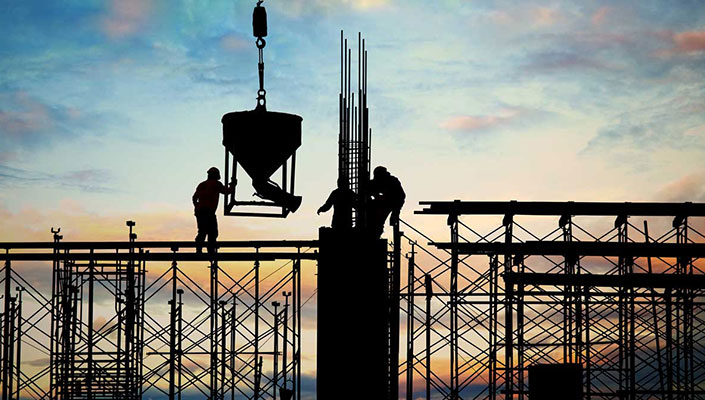
Construction is vital to infrastructure, and understandably a lynchpin of the UK’s ever-growing economy. But construction also represents a significant cost with regard to climate, as a growing crisis begins to impact ecosystems and weather patterns on home soil.

Changes are already being introduced by the government with regard to a national decarbonisation strategy. But with specific regard to the construction industry: what is the carbon cost of construction, and how might change be managed?

The Carbon Cost of Construction

The global construction industry is a leading contributor to carbon emissions, as evidenced by recent data; according to the Royal Academy of Engineering, the global construction sector accounts for 11% of global emissions. Locally, though, the situation is more dire; the ‘built sector’, referring to the carbon cost of buildings, constructions and developments-in-progress alike, is responsible for 40% of national carbon emissions.

While an important majority of this 40% figure includes the pollutive side-effects of heat inefficiency, it also speaks to a wider issue of unsustainable construction practice – from core raw material supply to the construction process itself. As an example, the global cement industry alone is on a par with leading pollutive nations for carbon emissions.

Net-Zero

Looking solely at the above data, it is clear that something has to change in the construction industry. Further reports and studies further illustrate the necessity for decarbonisation in construction, and the government has – to some extent – listened.

Net-zero carbon strategy was already central the UK government’s response to climate change and has been re-affirmed as a core strategy following the COP26 summit in Glasgow. The government’s recent announcements regarding net zero have included a number of sweeping changes and announcements, with particular emphasis on the efficiency of finished homes.

Towards an Ecological Industry

While the construction industry can have an active hand in the government push towards greener buildings, there are still serious internal considerations to make regarding the carbon footprint of construction businesses themselves. What can a given business do to mitigate its own climate impacts?

One of the keyways in which businesses are addressing their climate responsibilities is through a concept called ESG, or Environmental, Social and Governance. ESG is essentially a strategic framework, that seeks to alter internal processes and engagements for a more sustainable and equitable outcome.

ESG lawyers are used to navigate compliance with new eco-forward regulations, and also to chart legal pathways through new sustainable agreements with staff and suppliers alike. The approach must be public as a point of necessity; transparent movements to sustainability are crucial to unified sustainability measures across the industry.

As for specific measures to reducing the carbon cost of construction, a holistic shift towards sustainable and low-carbon materials is a strong start – and one buoyed by new technological innovation. 3D printing, for example, enables the printing of bespoke pieces from recycled plastics.

Achema Middleeast

Latest stories

Related stories

How To Choose Trailer GPS Units That Actually Work for UK Fleets

You know the drill. A trailer van goes missing...

Improving Construction Efficiency Without Compromising Quality

Achieving construction efficiency requires process-focused improvements that enhance productivity while maintaining or improving quality standards. Through workflow optimization, enhanced coordination mechanisms, quality management practices, and strategic technology integration, construction organizations deliver projects faster and more cost-effectively without sacrificing structural integrity or compliance. Balancing speed with excellence transforms construction management from a trade-off exercise into a synergistic approach where efficiency and quality reinforce one another.

Training Strategies for Operating Advanced Construction Equipment

Modern construction equipment demands operator skills that extend far beyond basic machinery operation. Comprehensive training programs combining classroom instruction, simulator practice, and hands-on field experience prepare operators to safely and efficiently manage increasingly sophisticated equipment. Through structured certification approaches, ongoing skill development, and commitment to continuous learning, construction organizations develop operator competency that enhances project safety, productivity, and equipment longevity.

Managing Material Costs in a Volatile Construction Market

Construction material price volatility presents significant challenges to project budgeting and risk management. Strategic procurement approaches, supply chain resilience strategies, and contract mechanisms that balance risk effectively enable stakeholders to navigate market fluctuations successfully. Understanding market dynamics, implementing escalation clauses, developing flexible procurement strategies, and maintaining strong supplier relationships help construction professionals maintain project viability despite unpredictable material cost movements.

Subscribe

- Never miss a story with notifications

- Gain full access to our premium content

- Browse free from any location or device.

Media Packs

Expand Your Reach With Our Customized Solutions Empowering Your Campaigns To Maximize Your Reach & Drive Real Results!

– Access the Media Pack Now

– Book a Conference Call

Leave Message for Us to Get Back

Translate »