

























Close
WORLD OF CONCRETE
Tuesday, December 16, 2025
JEC WORLD 2026

The Construction Business In Europe Is Losing Confidence

Note* - All images used are for editorial and illustrative purposes only and may not originate from the original news provider or associated company.

Subscribe

- Never miss a story with notifications

- Gain full access to our premium content

- Browse free from any location or device.

Media Packs

Expand Your Reach With Our Customized Solutions Empowering Your Campaigns To Maximize Your Reach & Drive Real Results!

– Access the Media Pack Now

– Book a Conference Call

Leave Message for Us to Get Back

Related stories

Reducing Project Variability Through Predictive Logistics and Real-Time Monitoring

Predictive analytics, GPS-enabled fleet management, and data-driven delivery forecasting help avoid delays and reduce uncertainty. Real-time monitoring improves coordination between factory and site operations enabling more reliable project execution.

The Key Trends Shaping the Construction Industry in 2026

The construction industry stands at a critical inflection point,...

UK Prison Construction Accelerates with 5000 New Places Plan

A countrywide prison building programme is speeding up, with...
- Advertisement -
Achema Middleeast

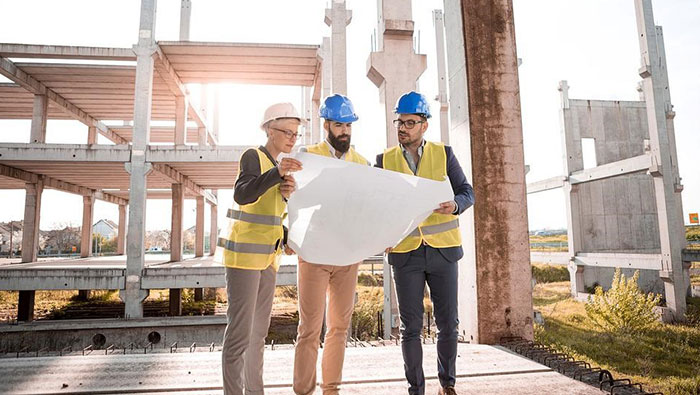
World Construction Today – Economic and financial expert ING observes that overall building output for June was 2.3% lower than in February in its most recent EU Construction Outlook report. The research also demonstrates notable output decreases in Austria (-6.3%) and Germany (-4.5%), where material and labour shortages are severely affecting the building industry.

According to the survey, Poland has the largest year-over-year rise (6.7%).

Even though the report’s confidence indicator is still in the positive, EU contractors say they are less sure about their order books going forward and about the supply chain problems that are still happening.

Overall, ING predicts that the economy will rise by about 1% this year. A lack of materials resulted in production problems, which were noted by 23% of respondents in August.

While noting a minor decrease in steel prices, ING called attention to an increase in the cost of concrete, cement, and bricks, mostly as a result of manufacturing processes becoming more costly as energy prices rise. In April, 50% of those who participated in the ING study said they would raise their pricing to cover some of these additional expenses. As of the survey’s inception in 1985, this is the greatest percentage of respondents who anticipate price increases.

The research also points out that water is a source of concern. Waterborne freight movement is now being impacted by months of poor precipitation, with barges needing to cut loads due to low water tables.

This is aggravating the issue of already high material costs.

Achema Middleeast

Latest stories

Related stories

Reducing Project Variability Through Predictive Logistics and Real-Time Monitoring

Predictive analytics, GPS-enabled fleet management, and data-driven delivery forecasting help avoid delays and reduce uncertainty. Real-time monitoring improves coordination between factory and site operations enabling more reliable project execution.

The Key Trends Shaping the Construction Industry in 2026

The construction industry stands at a critical inflection point,...

UK Prison Construction Accelerates with 5000 New Places Plan

A countrywide prison building programme is speeding up, with...

Hi MATE Vehicle Monitoring System gets Iridium Support

HD Hyundai Construction Equipment, the South Korean manufacturer, has...

Subscribe

- Never miss a story with notifications

- Gain full access to our premium content

- Browse free from any location or device.

Media Packs

Expand Your Reach With Our Customized Solutions Empowering Your Campaigns To Maximize Your Reach & Drive Real Results!

– Access the Media Pack Now

– Book a Conference Call

Leave Message for Us to Get Back

Translate »