

























Close
WORLD OF CONCRETE
Friday, December 19, 2025
JEC WORLD 2026

Singapore Halts Construction Of Changi Airport’s New Terminal Due To COVID-19

Note* - All images used are for editorial and illustrative purposes only and may not originate from the original news provider or associated company.

Subscribe

- Never miss a story with notifications

- Gain full access to our premium content

- Browse free from any location or device.

Media Packs

Expand Your Reach With Our Customized Solutions Empowering Your Campaigns To Maximize Your Reach & Drive Real Results!

– Access the Media Pack Now

– Book a Conference Call

Leave Message for Us to Get Back

Related stories

How To Choose Trailer GPS Units That Actually Work for UK Fleets

You know the drill. A trailer van goes missing...

Improving Construction Efficiency Without Compromising Quality

Achieving construction efficiency requires process-focused improvements that enhance productivity while maintaining or improving quality standards. Through workflow optimization, enhanced coordination mechanisms, quality management practices, and strategic technology integration, construction organizations deliver projects faster and more cost-effectively without sacrificing structural integrity or compliance. Balancing speed with excellence transforms construction management from a trade-off exercise into a synergistic approach where efficiency and quality reinforce one another.

Training Strategies for Operating Advanced Construction Equipment

Modern construction equipment demands operator skills that extend far beyond basic machinery operation. Comprehensive training programs combining classroom instruction, simulator practice, and hands-on field experience prepare operators to safely and efficiently manage increasingly sophisticated equipment. Through structured certification approaches, ongoing skill development, and commitment to continuous learning, construction organizations develop operator competency that enhances project safety, productivity, and equipment longevity.
- Advertisement -
Achema Middleeast

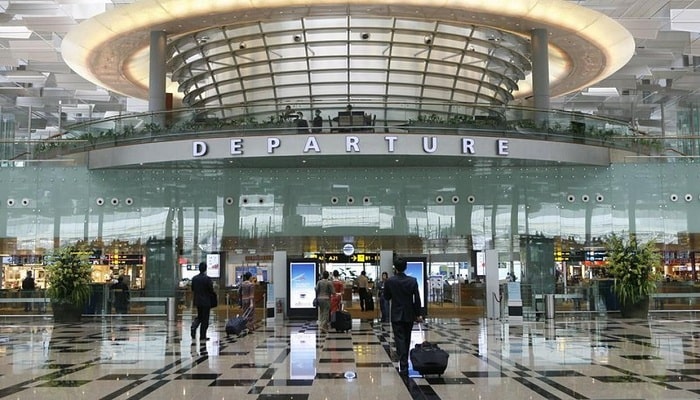
Singapore has put on hold for two years construction of a mega terminal at its international airport in Changi, citing uncertainty created by COVID-19 pandemic and its devastating impact on the aviation sector.

The Singapore government is currently carrying out a study of how the aviation sector will change, and that the design of T5 (Terminal 5) will be changed to take into account new safety requirements, Transport Minister Khaw Boon Wan said on Tuesday, announcing a pause in the terminal construction for at least two years.

Under normal circumstances, the government would have to start calling for major civil engineering tenders to meet its initial timeline for completing T5 in the 2030s.

But until a vaccine is found, there will be fears of future waves of COVID-19 outbreaks, cautioned Khaw.

“Because of all these great uncertainties, we have been doing a major thorough study about aviation, and how it will be like in the next two years, three years, four years, post-pandemic,” The Straits Times quoted Khaw as saying.

“We are consulting as widely as we can. Big questions remain, and we don’t think we will get the answers very quickly within the next few months. It may take us a couple of years, and that is why we have decided to take a pause in the T5 project… So at the minimum, I think we will push it back by two years.”

The aviation sector worldwide has been hard hit by the COVID-19 pandemic, with travel restrictions and fear of the virus leading to plunging travel demand.

In April, Changi Airport handled 25,200 passenger movements, a 99.5 per cent drop from the same time last year.

In response, terminal manager Changi Airport Group has shut down T2 for 18 months to facilitate upgrading works. It has also temporarily closed T4.

T5 was scheduled to be completed around 2030. It covers a land area equivalent to about 667 football fields, and was earmarked to provide future capacity for the airport to ride on the projected growth in air travel.

This, along with the T2’s upgrading works, would have brought Changi Airport’s total passenger handling capacity to around 140 million passengers per year.

Trade and Industry Minister Chan Chun Sing said in a national address on Sunday that Singapore’s major infrastructure projects, including Changi T5, will be completed, even though timelines may shift.

On Tuesday, Singapore reported 151 new coronavirus cases, all among foreign workers, taking the total infections to 40,969 since the disease tracing began in January 2020.

Achema Middleeast

Latest stories

Related stories

How To Choose Trailer GPS Units That Actually Work for UK Fleets

You know the drill. A trailer van goes missing...

Improving Construction Efficiency Without Compromising Quality

Achieving construction efficiency requires process-focused improvements that enhance productivity while maintaining or improving quality standards. Through workflow optimization, enhanced coordination mechanisms, quality management practices, and strategic technology integration, construction organizations deliver projects faster and more cost-effectively without sacrificing structural integrity or compliance. Balancing speed with excellence transforms construction management from a trade-off exercise into a synergistic approach where efficiency and quality reinforce one another.

Training Strategies for Operating Advanced Construction Equipment

Modern construction equipment demands operator skills that extend far beyond basic machinery operation. Comprehensive training programs combining classroom instruction, simulator practice, and hands-on field experience prepare operators to safely and efficiently manage increasingly sophisticated equipment. Through structured certification approaches, ongoing skill development, and commitment to continuous learning, construction organizations develop operator competency that enhances project safety, productivity, and equipment longevity.

Managing Material Costs in a Volatile Construction Market

Construction material price volatility presents significant challenges to project budgeting and risk management. Strategic procurement approaches, supply chain resilience strategies, and contract mechanisms that balance risk effectively enable stakeholders to navigate market fluctuations successfully. Understanding market dynamics, implementing escalation clauses, developing flexible procurement strategies, and maintaining strong supplier relationships help construction professionals maintain project viability despite unpredictable material cost movements.

Subscribe

- Never miss a story with notifications

- Gain full access to our premium content

- Browse free from any location or device.

Media Packs

Expand Your Reach With Our Customized Solutions Empowering Your Campaigns To Maximize Your Reach & Drive Real Results!

– Access the Media Pack Now

– Book a Conference Call

Leave Message for Us to Get Back

Translate »