



























In recent years, off-site manufacturing has gained traction as a popular building method across a variety of developments. This innovative approach involves designing and creating pre-assembled construction elements in a factory setting, which then get transported to the construction site for installation. Among the different off-site building methods are wood panels and precast concrete construction, with the latter involving the fabrication of concrete panels, sometimes referred to as concrete pods, for projects like large apartment blocks. These panels often come integrated with glazing, initial electrical components, and other essential elements.
The benefits of off-site manufacturing, particularly precast concrete construction, are numerous and impactful:
- Reduced Project Time: Off-site manufacturing significantly accelerates project timelines due to the quicker assembly process. Unlike traditional construction that relies on coordinating multiple suppliers and trades on-site, off-site manufacturing streamlines the process, leading to time and potentially cost savings.
- Safer Work Environments: With construction elements pre-assembled in a controlled factory environment, there’s a decrease in on-site lifting and handling of multiple materials. This often leads to a safer work environment by reducing hazards and minimizing manual handling risks.
- Environmental Friendliness: Off-site manufacturing reduces on-site waste, as the assembly of elements takes place in a factory with more opportunities for material reuse and recycling. This contributes to a more environmentally friendly construction process.
While off-site manufacturing offers numerous benefits, it also requires specialized heavy-lifting solutions, especially for precast concrete panels. These panels are notably heavier than individual building materials, such as bricks, necessitating the use of larger tower cranes with substantial lifting capacities. Although these cranes come with higher rental costs, the time saved in construction often outweighs the expenses. Once on-site, the process of lifting and placing precast panels into position becomes much more efficient.
A notable project exemplifying the use of off-site manufacturing is the St Martin’s Place development in Birmingham, where large Saez SL 450 luffing jib tower cranes were utilized to lift heavy concrete panels. This innovative approach showcases how off-site manufacturing, coupled with efficient heavy-lifting solutions, can lead to successful construction outcomes.
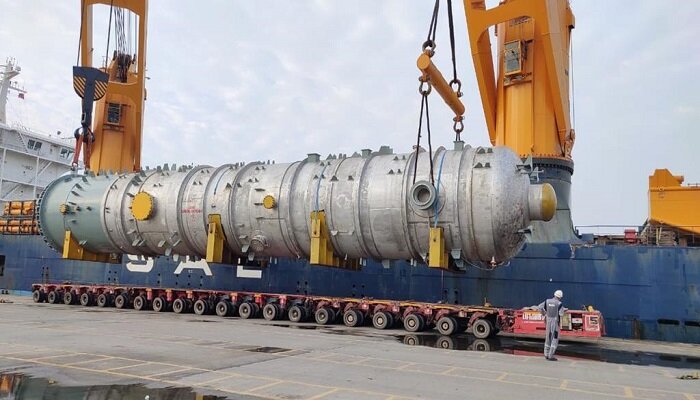
Additionally, modular construction has emerged as another compelling approach. It involves producing building structures or components off-site and then assembling them on-site. This method has gained popularity because of its advantages, including faster delivery, cost reduction, enhanced quality, and reduced waste. However, the increasing size, weight, complexity, and diversity of these modules present new challenges and opportunities for the heavy lift and project cargo industry.
To meet these challenges, the industry must invest in new technologies, equipment, and skills to enhance efficiency and safety. Innovation and collaboration are key, as is adapting to regulations that impact sustainability and profitability. As modular construction continues to rise as a trend, the heavy lift and project cargo industry plays a pivotal role in transporting and installing these sizable modules. Embracing innovation, sustainability, and collaboration positions the industry to excel in this evolving landscape.
From attending industry events like Breakbulk Europe to running a summer internship program for aspiring naval architects, companies like MBM Consultancy are actively engaged in the maritime industry, contributing to its growth and development. By harnessing the potential of off-site manufacturing and modular construction, while addressing challenges and fostering innovation, the industry is poised for a dynamic future.