


























Have you ever wondered how a construction site keeps running when water is needed every hour of the day? Water supports mixing, cleaning, cooling, and worker comfort, yet many beginners overlook how complex planning it can be. Without a clear plan, delays, safety risks, and high costs can quickly appear and slow progress.
This guide explains how to plan water supply for any construction site in a clear and simple way. By reading on, you will learn smart steps to secure steady water, protect workers, and keep your project moving with confidence. This promise helps beginners avoid mistakes from start.
Why Water Planning Matters on Construction Sites
Water plays a quiet but powerful role on every construction site. It supports concrete mixing, dust control, tool cleaning, and basic hygiene for workers each day. When water access fails, work can stop fast, and this can raise stress, costs, and safety risks for everyone involved.
Good water management also helps teams stay within local rules and project schedules. Many areas have strict limits on water use, especially during dry seasons. A clear plan helps avoid fines, rushed decisions, and last minute fixes that often cost more money.
When water needs are planned early, managers can focus on quality work instead of daily problems. Workers stay comfortable and safe, which helps morale and steady progress. This simple planning step often makes the difference between smooth work and daily delays.
Understanding Water Needs Before Work Begins
Every construction site has different water needs based on size and type of work. Small sites may only need water for mixing and cleaning, while large projects need water for many teams at once. Knowing these needs early helps avoid under supply or waste.
Planning starts by reviewing each task that requires water. Concrete work, soil control, and equipment washing all use different amounts. Worker needs such as drinking water and hand washing must also be counted from the first day.
Season and weather also affect water demand. Hot weather increases drinking and cooling needs, while dry conditions raise dust control use. By estimating daily and peak use, planners can size the system correctly and avoid sudden shortages.
Choosing Reliable Water Sources
Once needs are clear, the next step is choosing where the water will come from. Some sites connect to city water lines, while others rely on wells or delivered water. Each option has limits, costs, and setup time that must be reviewed early.
City connections can be steady but may require permits and inspections. Wells may offer control but need testing to ensure safe quality. Remote sites often use delivered water, and in some cases a single water truck rental helps fill tanks during busy phases without long delays.
Reliable sources should match both daily use and emergency needs. Backup plans are important in case of breakdowns or supply limits. Choosing the right source early keeps work moving even when conditions change.
Checking Water Quality and Site Compliance
Water quality affects both worker health and work results on a construction site. Poor quality water can weaken concrete mixes or cause skin issues for workers. Checking water quality before use helps avoid these hidden problems.
Local rules often require testing and records for water use on job sites. These rules protect workers and the surrounding area from harm. Staying aware of these rules helps projects move forward without delays or penalties.
Simple checks done on a regular schedule can protect the entire team. Clear records also help during inspections or audits. Clean and approved water keeps both workers and managers confident.
Managing Storage and Daily Distribution
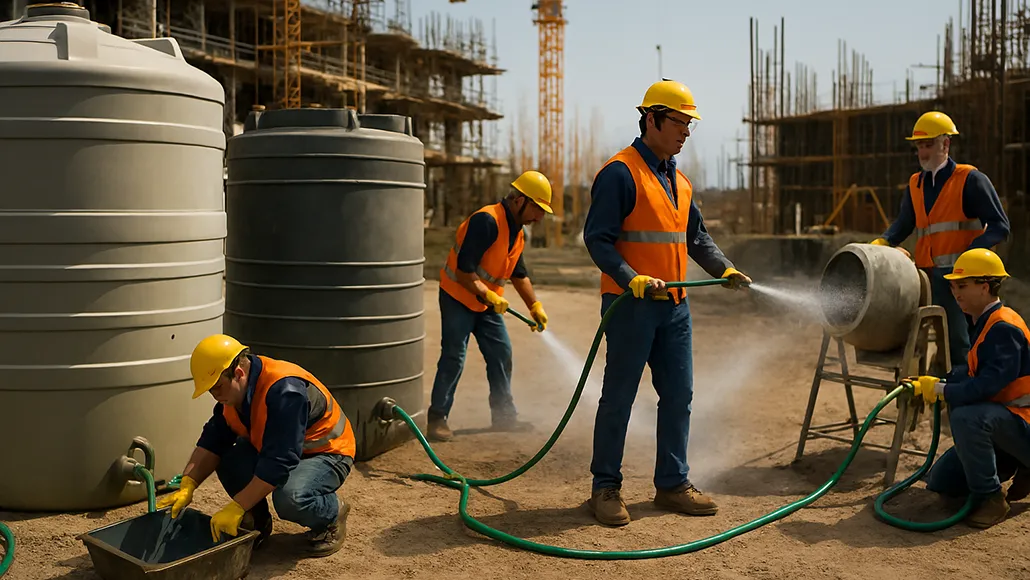
Water storage helps balance supply and daily demand on busy sites. Tanks allow teams to store water during low use times and draw from it when demand rises. This reduces stress on the main supply and prevents work stoppages.
Storage size should match peak use, not just average use. If tanks are too small, refills become constant and costly. If they are too large, space and setup costs may rise without added value.
Distribution also matters as much as storage. Hoses, pumps, and access points should reach all work areas safely. Clear paths and proper signs help workers use water without creating hazards or delays.
Training Workers on Smart Water Use
Workers play a direct role in how water is used each day on site. Simple training helps them understand where water comes from and how to avoid waste. This shared awareness supports the entire plan.
Clear guidance helps workers use water only when needed. It also teaches them how to report leaks or issues early. Early reports help prevent small problems from becoming costly delays.
When workers feel involved, they respect the system more. This teamwork improves safety and saves resources. A trained team helps water plans succeed every day.
Safety Rules and Clean Water Use
Water safety is just as important as water supply on construction sites. Drinking water must stay clean and separate from water used for tools or dust control. Clear labeling helps workers know which water is safe to drink at all times.
Regular checks help prevent leaks, dirt, or chemical mixing. Dirty water can harm workers and damage equipment if left unchecked. Simple routines like tank cleaning and hose checks support safe daily use.
Local rules often guide how water must be stored and protected. Following these rules avoids fines and keeps workers healthy. Safe water planning builds trust and supports a strong safety culture on site.
Planning for Changes and Emergencies
Construction sites change fast, and water plans must stay flexible. New tasks, more workers, or weather shifts can raise demand without warning. A good plan allows quick adjustments without panic or delay.
Emergency planning is also essential. Breakdowns, supply cuts, or dry conditions can stop water flow suddenly. Backup tanks or alternate sources help protect the schedule during these moments.
Regular reviews keep the plan useful as the project grows. Checking use levels and system health helps catch problems early. This steady attention keeps water supply reliable from start to finish.
Strong Steps Toward a Reliable Water Plan
Planning water supply for any construction site supports safety, progress, and cost control. Clear planning helps teams understand needs, choose smart sources, and manage storage with care. Clean water access protects workers and keeps tasks running smoothly each day.
Flexible plans also prepare sites for changes and unexpected problems. When beginners focus on these basics, they avoid delays and build confidence in project control.
Did this guide help you? Browse the rest of this section for more advice on a variety of topics.
