

























Close
MCE 2026
Monday, February 23, 2026
JEC WORLD 2026

Boston-based firm completes largest 3D-printed building in world in Dubai

Note* - All images used are for editorial and illustrative purposes only and may not originate from the original news provider or associated company.

Subscribe

- Never miss a story with notifications

- Gain full access to our premium content

- Browse free from any location or device.

Media Packs

Expand Your Reach With Our Customized Solutions Empowering Your Campaigns To Maximize Your Reach & Drive Real Results!

– Access the Media Pack Now

– Book a Conference Call

Leave Message for Us to Get Back

Related stories

Modular Raised Flooring Systems in Smart Buildings

Modern commercial infrastructure is increasingly reliant on the adaptability provided by modular raised flooring systems. By creating a versatile plenum for cable management and climate control, these structural panels enable smart buildings to evolve with changing technology while optimizing workspace efficiency and occupant comfort.

Installation Technology Advancing Modern Flooring Projects

The success of any flooring installation is no longer dependent solely on manual skill, but on a sophisticated ecosystem of digital tools and chemical innovations. From laser-guided subfloor preparation to rapid-set, low-VOC adhesives, installation technology is fundamentally shortening project timelines while ensuring a level of structural precision that defines the future of building efficiency.

High Performance Wood and Laminate Flooring Solutions

The evolution of wood-look surfaces has reached a pinnacle where natural aesthetics and extreme engineering meet. By combining the warmth of authentic timber with advanced mineral cores and moisture-resistant coatings, high-performance wood and laminate flooring solutions are now capable of thriving in high-traffic and high-humidity environments that were previously inaccessible to organic materials.
- Advertisement -

A Boston-based technology company has completed what it says is the largest 3D-printed building in the world in 21 days.

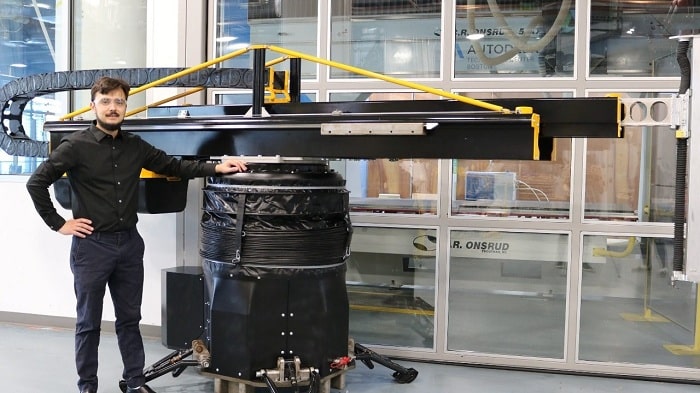
3D printing equipment manufacturer Apis Cor recently built a two-story administrative office building for a Dubai government agency using one mobile printer. Standing at 31 feet tall with an area of 6,889 square feet, the building’s walls were printed while the insulation, roof, foundation and windows were installed using traditional building methods, Apis Cor CEO Nikita Cheniuntai told Construction Dive.

The walls were printed on-site by moving the car-sized printer around the construction site via crane. The cost of the project, a research and development initiative, was not released.

The company’s proprietary printing mixture consists of off-the-shelf materials like sand, cement, gypsum, and other proprietary components that are available for industrial purposes, he said. The entire process took place in an uncovered area in desert conditions, so finding the right mix for the printed material was a main goal of the project.

“The Dubai climate is very harsh, where temperature and humidity change significantly even within a day, so the material has to behave the same way all the time despite the changing of the environmental conditions,” Cheniuntai said.

Printing of buildings is feasible in all types of climates, he said, as long as the project team can create the right blend of materials and the mixing equipment can work properly. Possible applications of the Apis Cor technology include residential, commercial and industrial construction, he said.

Apis Cor, which has been mainly 3D printing houses, plans to offer its technology in the U.S. next year, once it clears building code regulations. In 2017, the company printed a 400-square-foot demonstration house in 24 hours for about $10,000.

“Gaining industry approval for the use of 3D printing technology to build homes has been one of the major barriers to mass availability,” he said, adding that his team’s strategy is comparable to reinforced concrete masonry unit (CMU) walls, which are approved in the U.S.

“We can ensure our 3D-printed walls meet existing building standards by mimicking the characteristics of the CMU wall,” he said.

Dubai is a world leader in 3D construction printing. Its “Dubai 3D Printing Strategy” is moving the country toward more 3D printed structures with the mandate that by 2025, every new building will be 25% 3D printed. The country’s website cites ?many reasons for the initiative, including lowered construction and labor costs and reduced waste. ?

Achema Middleeast

Latest stories

Related stories

Modular Raised Flooring Systems in Smart Buildings

Modern commercial infrastructure is increasingly reliant on the adaptability provided by modular raised flooring systems. By creating a versatile plenum for cable management and climate control, these structural panels enable smart buildings to evolve with changing technology while optimizing workspace efficiency and occupant comfort.

Installation Technology Advancing Modern Flooring Projects

The success of any flooring installation is no longer dependent solely on manual skill, but on a sophisticated ecosystem of digital tools and chemical innovations. From laser-guided subfloor preparation to rapid-set, low-VOC adhesives, installation technology is fundamentally shortening project timelines while ensuring a level of structural precision that defines the future of building efficiency.

High Performance Wood and Laminate Flooring Solutions

The evolution of wood-look surfaces has reached a pinnacle where natural aesthetics and extreme engineering meet. By combining the warmth of authentic timber with advanced mineral cores and moisture-resistant coatings, high-performance wood and laminate flooring solutions are now capable of thriving in high-traffic and high-humidity environments that were previously inaccessible to organic materials.

Advanced Surface Technologies in Commercial Flooring

Commercial environments demand flooring systems that can withstand extreme mechanical stress while maintaining impeccable safety and hygiene standards. The integration of advanced surface technologies ranging from nanocoatings to antimicrobial resins is revolutionizing how high-traffic buildings manage wear, slip resistance, and long-term maintenance costs.

Subscribe

- Never miss a story with notifications

- Gain full access to our premium content

- Browse free from any location or device.

Media Packs

Expand Your Reach With Our Customized Solutions Empowering Your Campaigns To Maximize Your Reach & Drive Real Results!

– Access the Media Pack Now

– Book a Conference Call

Leave Message for Us to Get Back

Translate »