

















Close
MCE 2026
Wednesday, January 28, 2026
JEC WORLD 2026

Adaptability Helps German Building Sector Face Challenges

Note* - All images used are for editorial and illustrative purposes only and may not originate from the original news provider or associated company.

Subscribe

- Never miss a story with notifications

- Gain full access to our premium content

- Browse free from any location or device.

Media Packs

Expand Your Reach With Our Customized Solutions Empowering Your Campaigns To Maximize Your Reach & Drive Real Results!

– Access the Media Pack Now

– Book a Conference Call

– Leave Message for Us to Get Back

Related stories

Digital Planning Tools for Building Envelope Systems

The complexity of modern architectural skins requires a fundamental shift in how we conceive, design, and manage the outer boundaries of our structures. By leveraging advanced digital planning platforms and integrated modeling environments, the construction industry can achieve unprecedented levels of precision, ensuring that every component of the structural perimeter is optimized for performance, durability, and long-term sustainability throughout its entire operational lifecycle.

Fire Safety and Compliance in Building Openings

The protection of life and property in the built environment depends heavily on the integrity of apertures within fire-rated compartments, where every door and window must function as a reliable barrier against the spread of heat and smoke. By strictly adhering to modern fire regulations and implementing rigorously tested opening systems, architects and developers can ensure a high level of passive fire protection that safeguards occupants and facilitates a more effective response from emergency services.

High Performance Windows Meeting Global Energy Codes Today

The implementation of superior fenestration technology is no longer an optional upgrade but a fundamental necessity for architectural projects aiming to achieve regulatory compliance and long-term sustainability. By integrating advanced glazing and framing solutions, buildings can significantly reduce their operational energy demand while providing occupants with enhanced comfort and durability against a backdrop of increasingly stringent global construction standards.
- Advertisement -
Advancing Prefabrication 2026

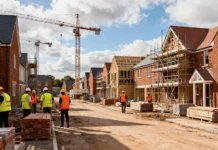
The German construction sector’s outlook is not that optimistic at present. The aftereffects of the pandemic, combined with material shortages and increased prices of building materials and energy, have all had a detrimental effect.

According to survey by the German Economic Institute, it is expected that more than half of the construction companies in Germany are anticipating a decline in their output in 2023, while only 15% are of the opinion that their businesses are going to expand. The survey of almost 2500 companies highlighted that almost a third of them expect to stagnate, and the remaining quarter believe that their businesses are going to grow.

The survey states that industry professionals are cautious about the future, and that is for a good reason. The worldwide pandemic and the Ukraine war were not predicted, and the challenges that they have brought along have indeed been alarming, thereby affecting the sector.

Challenges are there to be addressed; however, the VDMA, trade association has gone on to say that the German construction equipment sector did grow by 3% last year. At a recently held meeting in Frankfurt, the organisation, which goes on to represent almost 3500 mechanical and plant engineering companies, said that, in nominal terms, the sector has indeed reached a new high in 2022.

Manufacturers have been reporting full order books and are anticipating operating at full capacity by the middle of this year, to say the least. The warning from the meeting was that higher interest rates were indeed putting pressure on the residential construction sector, which had led to a negative trend.

That said, from a global scenario, construction equipment sales fell by 4% in 2022, and as per VDMA, this negative outcome was entirely because of China, thereby indicating that the housing crisis, besides COVID’s zero tolerance policies, had gone on to cause the largest market in the world to dip by more than 40%. 

In a bid to bail out the housing shortage across Germany, the federal government is looking to build 400,000 apartments in a year, although many industry groups predict this to be an unrealistic target for 2023. The HDB suggests 25000 apartments, which happens to be a long way away from the federal government’s plans as promised by Klara Geywitz, Germany’s Building Minister.

Achema Middleeast

Latest stories

Related stories

Digital Planning Tools for Building Envelope Systems

The complexity of modern architectural skins requires a fundamental shift in how we conceive, design, and manage the outer boundaries of our structures. By leveraging advanced digital planning platforms and integrated modeling environments, the construction industry can achieve unprecedented levels of precision, ensuring that every component of the structural perimeter is optimized for performance, durability, and long-term sustainability throughout its entire operational lifecycle.

Fire Safety and Compliance in Building Openings

The protection of life and property in the built environment depends heavily on the integrity of apertures within fire-rated compartments, where every door and window must function as a reliable barrier against the spread of heat and smoke. By strictly adhering to modern fire regulations and implementing rigorously tested opening systems, architects and developers can ensure a high level of passive fire protection that safeguards occupants and facilitates a more effective response from emergency services.

High Performance Windows Meeting Global Energy Codes Today

The implementation of superior fenestration technology is no longer an optional upgrade but a fundamental necessity for architectural projects aiming to achieve regulatory compliance and long-term sustainability. By integrating advanced glazing and framing solutions, buildings can significantly reduce their operational energy demand while providing occupants with enhanced comfort and durability against a backdrop of increasingly stringent global construction standards.

Sustainable Materials Shaping Future Building Envelopes

The selection of environmentally responsible building components is fundamentally altering the trajectory of modern construction, moving away from carbon-intensive resources toward innovative, low-impact alternatives. By utilizing advanced bio-based composites, recycled metals, and high-performance insulation, designers are creating resilient structures that not only minimize their initial environmental footprint but also provide superior operational efficiency throughout their entire lifecycle.

Subscribe

- Never miss a story with notifications

- Gain full access to our premium content

- Browse free from any location or device.

Media Packs

Expand Your Reach With Our Customized Solutions Empowering Your Campaigns To Maximize Your Reach & Drive Real Results!

– Access the Media Pack Now

– Book a Conference Call

– Leave Message for Us to Get Back

Translate »