



























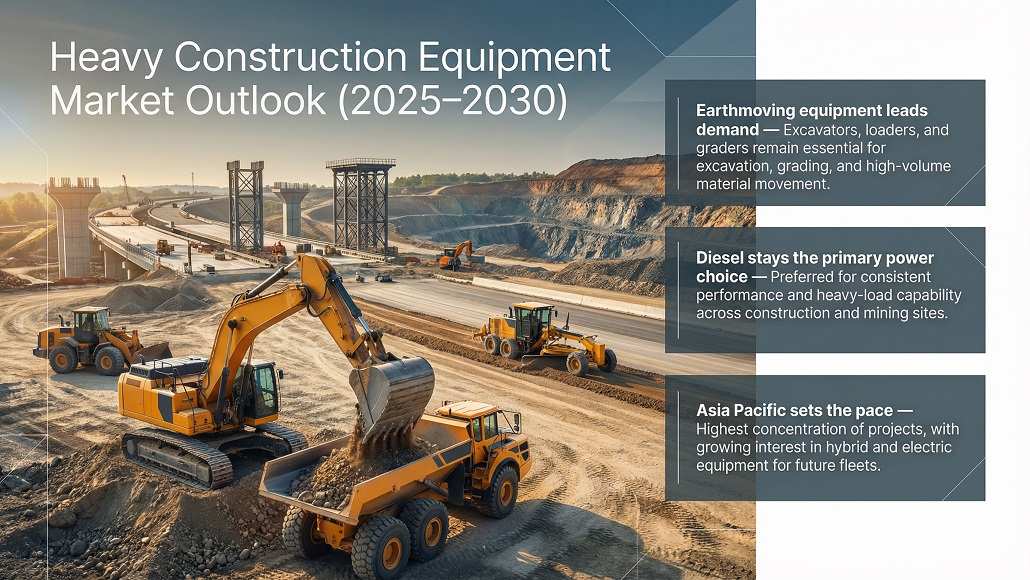

The Heavy Construction Equipment market is projected to grow steadily over the coming years, with estimates indicating it will reach USD 286.51 billion by 2030, up from USD 224.49 billion in 2025, reflecting a CAGR of 5.0% between 2025 and 2030. This growth trajectory is closely tied to the increasing deployment of heavy machinery across mining and construction environments, where operational efficiency and large-scale material handling remain critical. Expanding infrastructure development and sustained activity in extraction industries continue to reinforce demand patterns globally.
Segment Performance Driving Market Value
Across equipment categories, earthmoving machinery accounts for the largest share, supported by its extensive use in excavation, grading, and material loading operations. These machines—ranging from excavators and loaders to motor graders—are widely deployed at mining sites and construction zones, where hydraulic-driven systems ensure operational precision and durability.
-
Earthmoving equipment dominates due to versatility in excavation and grading
-
Diesel-powered machinery leads due to torque efficiency and fuel performance
-
5–10 L capacity equipment gains traction in compact applications
-
Asia Pacific remains the largest regional market by value
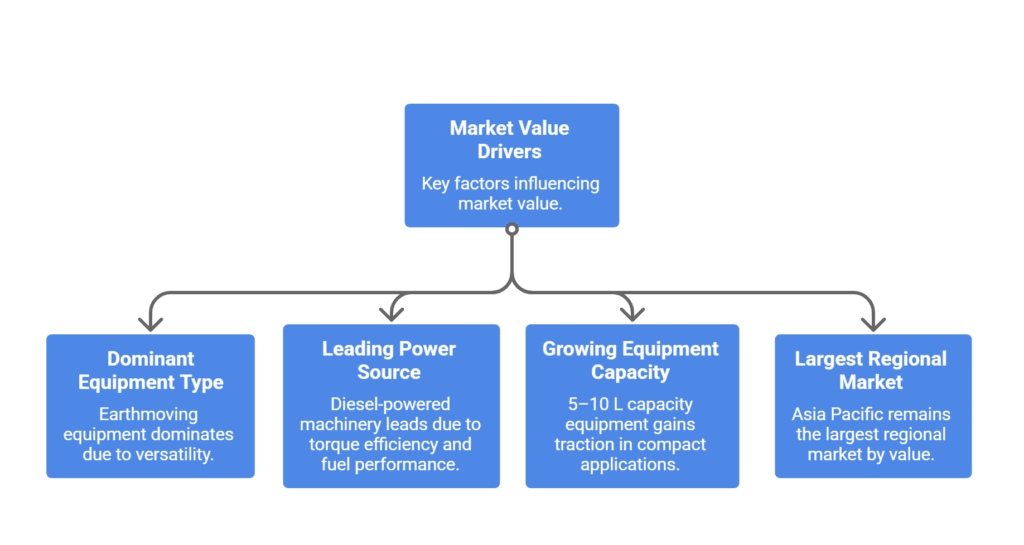
The diesel segment continues to hold a significant portion of the market, largely due to its reliability and higher torque output, which is essential for handling heavy loads. Compared to alternative fuels, diesel delivers greater energy density and improved fuel efficiency, making it the preferred choice for high-performance equipment. Simultaneously, the 5–10 L engine capacity segment maintains a strong presence, particularly in compact excavators used in urban construction, forestry, and landscaping. Population-driven housing demand and commercial expansion are further reinforcing the adoption of this equipment category.
Power Output and Application Trends
In terms of power output, the 201–400 HP segment leads globally, supported by its balance of performance, fuel efficiency, and operational capability. Equipment within this range including loaders, road rollers, and compactors is widely used across both residential and commercial construction projects. Lower maintenance requirements and improved machine efficiency further strengthen its adoption.
Material handling applications also account for a significant share of the Heavy Construction Equipment market, particularly in industries such as construction, manufacturing, mining, and oil and gas. Equipment such as cranes and telescopic handlers play a central role in lifting, transporting, and unloading materials efficiently across complex industrial environments.
End-Use and Regional Outlook
The mining sector is expected to register the fastest growth among end-use industries, driven by rising global demand for consumer goods and the corresponding need for minerals and rare earth metals. Increased mining activity has accelerated the use of advanced machinery designed for drilling, crushing, and excavation. Equipment such as dump trucks, crawler excavators, and motor graders remain essential to these operations.
Regionally, Asia Pacific continues to dominate the global landscape, supported by a high concentration of construction projects and increasing demand for technologically advanced equipment. The region is also witnessing a gradual shift toward electrified and hybrid machinery, with ongoing developments aimed at improving battery capacity and reducing operational constraints.
