


























The global construction industry is at a critical juncture, facing mounting pressure to reduce its environmental impact while meeting the increasing demand for high-performance buildings. One of the most effective strategies for achieving these goals is the implementation of lifecycle lighting analysis during the design and procurement phases. This analytical framework evaluates the environmental performance of lighting systems from raw material extraction and manufacturing through to transportation, installation, operation, and end-of-life disposal. By considering the total impact of a lighting system rather than just its initial cost or energy efficiency, construction professionals can make more informed decisions that support long-term sustainability. This holistic perspective is essential for identifying the trade-offs between different materials and technologies, ensuring that the chosen solutions contribute to a circular economy.
The Methodology of Lifecycle Lighting Analysis in Material Selection
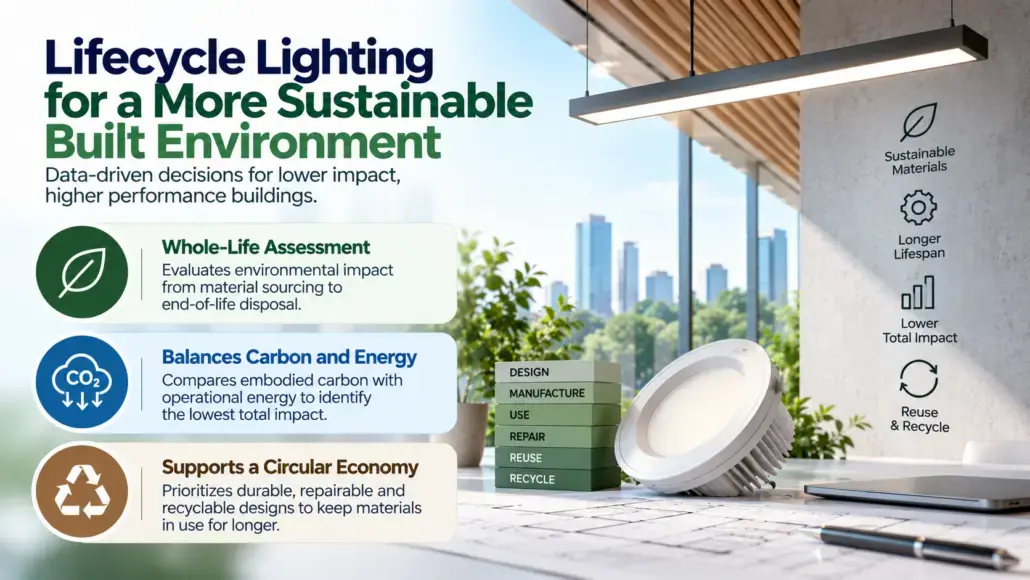
The process of conducting a lifecycle lighting analysis begins with the collection of detailed data on every component of a lighting fixture. This includes the housing materials, such as aluminum or steel, the electronic drivers, the light sources, and the optical systems. Each of these elements has a distinct environmental profile, influenced by factors like the percentage of recycled content, the energy intensity of the manufacturing process, and the distance it must be transported to reach the construction site. By utilizing standardized metrics like Global Warming Potential (GWP) and Acidification Potential, analysts can compare different products on a like-for-like basis. This methodological rigor ensures that the specification process is driven by objective data rather than manufacturer claims, leading to more transparent and reliable outcomes for the project.
In addition to environmental metrics, the analysis also considers the durability and reparability of the specified products. A luminaire that is designed to be easily disassembled and repaired will have a much lower lifecycle impact than one that must be replaced in its entirety if a single component fails. This focus on long-term performance is a central tenet of sustainable construction, as it reduces the demand for new materials and minimizes waste. By integrating these considerations into the lifecycle lighting analysis, designers can prioritize products that offer the best balance of initial performance and long-term resilience. This approach not only benefits the environment but also provides significant financial advantages for building owners by reducing maintenance costs and extending the life of the lighting infrastructure.
Quantifying Embodied Carbon and Operational Energy Interactions
A primary goal of long-term evaluation is to understand the relationship between embodied carbon and operational energy consumption. Historically, the construction industry focused almost exclusively on reducing operational energy, often at the expense of increasing the carbon footprint of the materials used. For example, a highly efficient LED fixture might contain rare earth metals and complex electronics that require a significant amount of energy to produce. If this fixture is only marginally more efficient than a simpler, lower-impact alternative, the total carbon savings over its lifetime may be less than expected. The analysis provides the necessary visibility to evaluate these complex interactions, allowing for the optimization of the overall carbon balance.
The quantification of these impacts is particularly important in regions where the energy grid is rapidly decarbonizing. As the carbon intensity of electricity decreases, the relative importance of embodied carbon increases. This shift necessitates a more nuanced approach to specification, where the environmental cost of manufacturing is weighed more heavily against the potential for future energy savings. By utilizing long-term evaluation, project teams can identify the “tipping point” where the benefits of higher efficiency are outweighed by the impacts of production. This level of insight is essential for achieving true net-zero performance in the built environment, ensuring that every decision contributes to a meaningful reduction in total greenhouse gas emissions.
Circular Economy Principles and the Future of Luminaire Design
The principles of the circular economy are increasingly influencing the design and specification of lighting systems in the construction sector. This transition requires a shift away from the traditional “take-make-waste” model toward a system where materials are kept in use for as long as possible. long-term evaluation is a vital tool for supporting this transition, as it encourages the selection of products that are designed for disassembly, reuse, and recycling. When a luminaire reaches the end of its useful life, the analysis helps identify the most sustainable disposal path, whether that involves refurbishing the unit for another project or recovering valuable materials for use in new manufacturing processes.
The future of luminaire design will be defined by this focus on circularity, with manufacturers increasingly offering “lighting as a service” models where they maintain ownership of the equipment and are responsible for its upkeep and eventual recovery. This model aligns the incentives of the manufacturer with those of the building owner, as both parties benefit from long-lasting, easily repairable products. The implementation of long-term evaluation provides the evidence base needed to support these new business models, demonstrating the long-term value of investing in high-quality, circular lighting solutions. As the construction industry continues to evolve, the integration of these principles will become a standard requirement for all major projects, driving innovation and improving the overall sustainability of the built environment.
Enhancing Supply Chain Transparency Through Comprehensive Reporting
Transparency in the supply chain is a growing concern for construction professionals, who are increasingly held accountable for the environmental and social impacts of their projects. long-term evaluation provides a structured way to gather and report this information, ensuring that every product used in a building meets the required standards. By requiring manufacturers to provide Environmental Product Declarations (EPDs) and other verified data, project teams can build a comprehensive picture of the lighting system’s total impact. This reporting is essential for achieving green building certifications and meeting the reporting requirements of institutional investors and corporate tenants.
Additionally, the data generated during the analysis can be used to identify risks and opportunities within the supply chain. For instance, if a specific component is found to have a high environmental impact due to inefficient manufacturing processes in a particular region, the project team can work with the manufacturer to find a more sustainable alternative. This proactive engagement helps drive improvement throughout the entire industry, encouraging manufacturers to adopt cleaner technologies and more ethical practices. The use of long-term evaluation as a tool for supply chain management ensures that the construction industry’s commitment to sustainability is reflected in every component of the built environment. This level of scrutiny is increasingly necessary as global regulations around corporate responsibility and environmental stewardship become more stringent. Construction firms that can demonstrate a deep understanding of their supply chain impacts are better positioned to secure high-value contracts and attract socially conscious investors. The process of gathering this data also facilitates a more collaborative relationship between developers and manufacturers, leading to the development of bespoke solutions that are tailored to the specific needs of a project. Similarly, the long-term monitoring of these supply chain metrics allows for the identification of trends that can inform future procurement strategies and risk management plans. The resulting transparency not only protects the project from reputational risks but also ensures that the final building is a true reflection of the developer’s sustainability values. The ability to track a component from its point of origin to its final installation provides a level of quality assurance that is essential for high-stakes construction projects. This comprehensive approach to supply chain oversight is a hallmark of excellence in the modern construction sector, setting a new benchmark for accountability and performance.
Strategic Specification for Long Term Asset Resilience
The final phase of long-term evaluation involves using the gathered insights to develop a strategic specification that ensures the long-term resilience of the building’s assets. This goes beyond simple product selection to include the development of comprehensive maintenance and end-of-life management plans. By understanding how the lighting system will perform over its entire life, building owners can plan for future upgrades and ensure that the infrastructure remains a high-performing asset. This strategic approach is essential for protecting the value of the building and ensuring that it continues to meet the needs of its occupants and the environment.
The resilience of a building is also influenced by its ability to adapt to changing technologies and regulations. A lighting system that is designed with future-proofing in mind will be much easier to upgrade as more efficient or higher-performance solutions become available. The long-term evaluation helps identify the specific areas where flexibility should be prioritized, such as the use of standardized control protocols or modular fixture designs. By investing in these resilient solutions today, construction professionals can ensure that their projects remain competitive and sustainable for decades to come. The ultimate goal of this analytical process is to create a built environment that is not only efficient and high-performing but also inherently sustainable and resilient, delivering long-term value for all stakeholders. The integration of these practices into the standard construction workflow represents a significant step forward for the industry, paving the way for a more sustainable and responsible future. Consequently, the adoption of these advanced analytical tools is not merely a technical requirement but a strategic imperative for any firm looking to lead in the green building space. The financial benefits of reduced waste and lower operating costs are clear, but the long-term value of a resilient, high-quality asset is even more significant. As the construction industry continues to mature, the use of long-term evaluation will become an indispensable part of the design and specification process, ensuring that every building is a model of environmental and operational excellence. The transition to these new ways of working will require a commitment to continuous learning and adaptation, but the potential rewards for the planet and the industry are immense. By embracing these challenges today, we can build a better, more sustainable world for everyone. The commitment to this level of detail and rigor is what distinguishes the leaders of the construction industry from the rest, ensuring that their legacy is one of positive impact and enduring value. The future of the built environment depends on our ability to integrate these complex factors into a cohesive and effective strategy for sustainable development.