































The integration of artificial intelligence into the architectural and engineering phases of construction has redefined the parameters of technical precision, particularly within the specialized field of illumination. As building structures become increasingly complex, the demand for lighting design accuracy has shifted from a desirable attribute to a fundamental requirement for regulatory compliance and operational efficiency. Traditional manual methods of calculating lumen output, glare indices, and light distribution patterns often struggle to account for the dynamic variables inherent in modern glass-heavy or irregular structural forms. The introduction of machine learning algorithms and neural networks into lighting software allows for the processing of vast datasets, enabling engineers to predict how light interacts with specific building materials, surface textures, and environmental conditions with unprecedented fidelity.
The Evolution of Computational Lighting Models in Construction
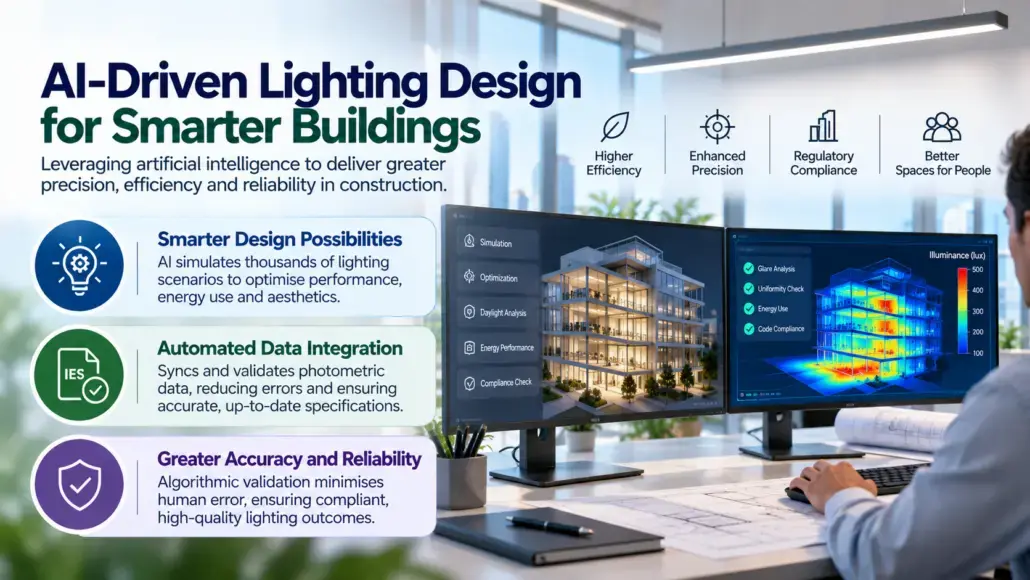
The historical approach to lighting design relied heavily on static calculations and standardized software packages that utilized point-by-point methods to estimate illuminance levels. While these tools provided a baseline for safety and visibility, they frequently lacked the nuance required to optimize energy consumption or support high-level aesthetic objectives. The shift toward artificial intelligence represents a significant leap forward, as these systems can simulate thousands of lighting scenarios in the time it once took to analyze a single configuration. By utilizing generative design principles, lighting design accuracy is enhanced because the software can iterate through numerous permutations of fixture placement, orientation, and intensity to find the optimal balance between performance and cost. This computational power is essential for modern construction projects that must adhere to stringent sustainability certifications like LEED or BREEAM, where even minor discrepancies in projected energy use can result in costly retrofits or failures to meet certification thresholds.
Additionally, the transition to AI-driven models allows for the incorporation of real-world variables that were previously too complex to model effectively. For instance, the impact of varying atmospheric conditions, such as the specific haze or pollution levels in a local urban environment, can now be factored into the initial design phase. This ensures that the lighting design accuracy remains consistent throughout the year, rather than just under ideal laboratory conditions. The ability to simulate these complexities before the first fixture is installed reduces the likelihood of “lighting hot spots” or inadequate illumination in critical zones, thereby protecting the developer from liability and ensuring a high-quality end-product for the occupants.
Automating Photometric Data Integration for Project Reliability
One of the primary challenges in maintaining high levels of lighting design accuracy is the management of photometric data provided by manufacturers. Each lighting fixture possesses a unique set of characteristics, often distributed in IES or LDT file formats, which describe how light is emitted from the source. In large-scale commercial construction, managing thousands of these files across multiple zones can lead to data entry errors or the use of outdated specifications. Artificial intelligence systems streamline this process by automatically syncing with manufacturer databases and verifying the integrity of the photometric data against the physical constraints of the building model. This automation ensures that the simulation is always based on the most current and accurate information available, eliminating a common source of error in the design pipeline.
Beyond simple data management, these intelligent systems analyze the interaction between different light sources and the reflective properties of internal finishes. In a modern office environment, the choice of floor covering or wall paint can significantly impact the effective brightness of a room. By using AI to process the spectral reflectance data of specified materials, engineers can achieve a level of technical precision that accounts for the specific interior design choices of the project. This level of detail is particularly important in sectors like healthcare or high-precision manufacturing, where the visual environment directly affects the safety and performance of the staff. The reliability afforded by automated integration allows for a more cohesive workflow between architects, lighting consultants, and electrical contractors, reducing the friction that often arises during the transition from design to installation.
Mitigating Human Error Through Algorithmic Validation Systems
Human error remains one of the most persistent risks in the construction industry, particularly during the highly technical phase of systems engineering. Even experienced designers can overlook subtle interactions between shadows and structural elements or miscalculate the cumulative effect of multiple light sources in an open-plan space. Algorithmic validation systems act as a continuous quality control layer, flagging potential issues in real-time as the design evolves. These systems are trained on massive libraries of past project data, allowing them to recognize patterns that typically lead to sub-optimal outcomes. By providing an automated “second opinion,” these tools significantly bolster technical precision by ensuring that the final specifications have been rigorously tested against known performance benchmarks.
The validation process extends to the assessment of glare and visual comfort, areas where subjective human judgment has traditionally played a large role. Artificial intelligence can objectively quantify potential glare issues using high-resolution luminance maps, identifying zones where occupants might experience discomfort or reduced visibility. In the context of large-scale construction, fixing these issues after the building is completed is often prohibitively expensive and disruptive. By identifying and resolving these problems during the digital drafting phase, the project team can guarantee a higher standard of habitability. This proactive approach not only improves the final result but also enhances the professional reputation of the firms involved, as the delivered building performs exactly as promised in the initial renderings and technical submissions.
Economic Implications of Enhanced Accuracy in Commercial Builds
The financial benefits of achieving superior technical precision are multifaceted, impacting both the initial capital expenditure and the long-term operational costs of a facility. Precise calculations allow for the optimization of the bill of materials, ensuring that only the necessary number of fixtures and controls are purchased and installed. Over-lighting a space is a common byproduct of low-confidence design, where engineers add extra fixtures as a “safety margin” to compensate for potential inaccuracies in their models. AI-assisted calculations eliminate the need for this excessive redundancy, leading to significant savings in procurement and labor costs. In a large commercial development, reducing the fixture count by even a small percentage without compromising light quality can result in hundreds of thousands of dollars in savings.
Similarly, the operational efficiency gained through precise lighting design is a key driver of asset value in the modern real estate market. Buildings with highly accurate lighting controls and optimized distribution consume less electricity and require less frequent maintenance. AI systems can model the degradation of light sources over time, allowing for the creation of precise maintenance schedules that extend the life of the lighting infrastructure. This data-driven approach to facility management is highly attractive to institutional investors and corporate tenants who are increasingly focused on Environmental, Social, and Governance (ESG) metrics. By investing in technical precision during the construction phase, developers are essentially future-proofing their assets against rising energy costs and evolving environmental regulations, creating a more resilient and profitable property.
Standards for Intelligence Driven Specification Frameworks
As the construction industry continues to embrace digital transformation, the standards governing lighting design are beginning to reflect the capabilities of advanced computational tools. The industry is moving away from simple “average lux” requirements toward more sophisticated metrics that account for the quality, distribution, and timing of light. Achieving these new benchmarks requires a commitment to technical precision that can only be sustained through the use of intelligent specification frameworks. These frameworks integrate the lighting design directly into the broader Building Information Modeling (BIM) environment, ensuring that any changes to the structural or mechanical plans are immediately reflected in the lighting analysis. This level of integration prevents the “siloing” of information that often leads to errors in traditional project management.
The industry is currently observing a transition toward a more integrated approach where lighting is not merely an add-on but a fundamental component of the building’s structural identity. This shift is supported by the increasing availability of high-fidelity data and the computational tools necessary to process it. By prioritizing technical precision, construction professionals can ensure that their projects remain competitive in a market that values both technical performance and occupant well-being. The financial and environmental stakes are high, but the rewards for those who master these advanced calculation methods are substantial.
The future of lighting in construction lies in the development of self-optimizing systems that can adjust their own parameters based on real-time feedback from the built environment. While we are currently in the phase of AI-assisted design, the next step involves using these same algorithms to manage the building’s lighting systems post-occupancy. The foundational work performed during the design phase to establish high technical precision is what enables these future systems to function effectively. By creating a precise digital record of the lighting intent and performance, the project team provides the building owners with a powerful tool for ongoing optimization. This holistic view of the lighting lifecycle, from the first algorithmically-generated calculation to the decades of operational data that follow, represents the new gold standard for excellence in the construction sector. The continued refinement of these AI models will likely lead to even greater levels of precision, further narrowing the gap between theoretical design and physical reality in the built environment. As these technologies mature, they will become an indispensable part of the standard toolkit for every major construction project worldwide, ensuring that the light we live and work in is as efficiently delivered as it is visually pleasing.