




























Internet of Things in construction is emerging as a central pillar in the sector’s digital transformation, enabling real-time data exchange, automated workflows, and enhanced operational visibility across project lifecycles. As construction projects grow in complexity, IoT-driven systems are increasingly being deployed to improve safety outcomes, streamline site management, and support data-led decision-making. The growing convergence of connected devices with digital platforms reflects a broader transition toward Construction 4.0, where physical and digital environments operate in tandem.
Expanding Role of IoT Across Construction Operations
At its core, Internet of Things in construction connects physical assets such as machinery, materials, and infrastructure—through sensor-based networks, allowing continuous monitoring and control. This capability is reshaping traditional construction processes by introducing real-time reporting, automation, and predictive insights into daily operations.
IoT applications are now widely integrated across multiple functions, including site monitoring, resource allocation, and project coordination. Real-time tracking of materials and equipment is improving logistical efficiency, while automated reporting systems are reducing manual intervention and enhancing project transparency. As projects scale in size and complexity, these capabilities are becoming critical for maintaining operational control and minimizing delays.
Key Focus Areas Driving Adoption
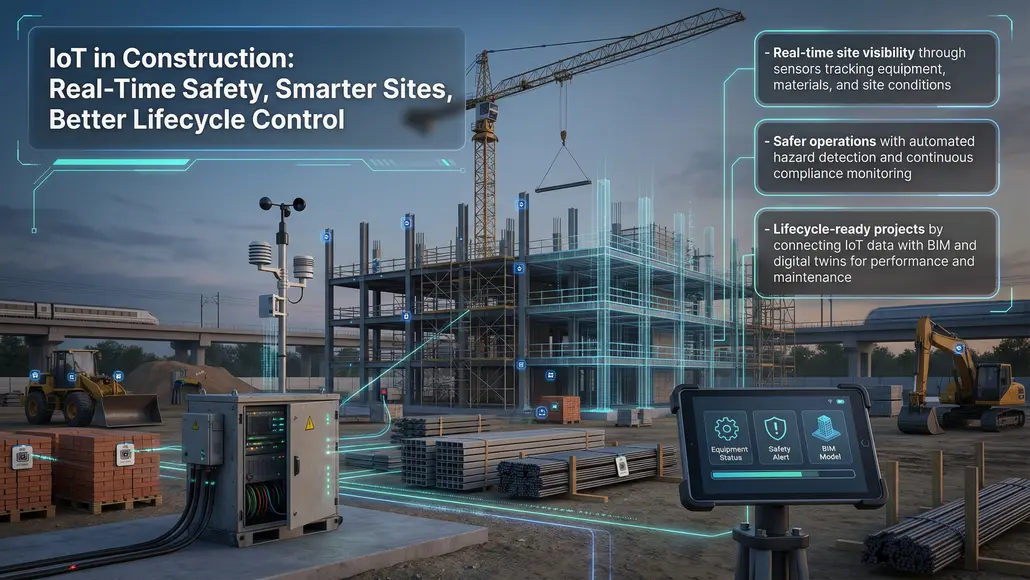
The adoption of IoT technologies in construction is primarily concentrated around safety, efficiency, and lifecycle management. Among these, safety remains the most prominent application area, with IoT systems being used to monitor worker conditions, detect hazards, and ensure compliance with safety protocols.
- Real-time worker monitoring through wearable devices
- Continuous tracking of equipment and site conditions
- Automated hazard detection and alert systems
- Monitoring of prefabricated components and materials
- Structural and infrastructure performance tracking
These applications are particularly relevant in high-risk environments such as underground construction and large-scale infrastructure projects, where real-time visibility can significantly reduce accident risks and improve response times.
Integration with BIM, AI and Digital Twins
The value of Internet of Things in construction is significantly amplified when integrated with complementary technologies. Building Information Modelling (BIM) remains the most established integration, enabling IoT-generated data to feed into dynamic digital models that reflect real-time project conditions. This integration enhances coordination, improves accuracy, and supports more informed decision-making across project stakeholders.
Artificial intelligence and machine learning are increasingly layered onto IoT systems to enable predictive analytics, particularly in areas such as risk assessment, scheduling, and resource optimization. These capabilities allow construction firms to move from reactive to proactive management approaches.
Digital twin technology further extends these benefits by creating virtual replicas of physical assets that are continuously updated using IoT data. These systems are being applied in infrastructure monitoring, facility management, and lifecycle optimization, enabling predictive maintenance and long-term performance analysis.
As observed by World Construction Today, the convergence of IoT with these technologies is redefining how construction data is generated, managed, and utilized across the project lifecycle.
Lifecycle and Post-Occupancy Applications
Beyond the construction phase, IoT is playing an increasingly important role in post-occupancy operations and lifecycle management. Connected systems are being used to monitor building performance, optimize energy usage, and support facility management processes. This shift toward lifecycle-based data integration is enabling stakeholders to maintain asset performance long after project completion.
IoT-enabled lifecycle management also supports prefabrication and modular construction processes by improving visibility and traceability across production and installation stages. Real-time data exchange between off-site and on-site operations is enhancing coordination and reducing inefficiencies.
Emerging Gaps and Underexplored Opportunities
Despite rapid adoption, several gaps remain in the deployment of IoT across construction workflows. While integration with BIM is well established, its application in safety-critical environments such as underground construction remains limited. Similarly, the use of digital twins in design evaluation and prefabrication processes is still underdeveloped.
There is also limited exploration of IoT’s role in enabling lean construction practices, particularly in reducing waste and improving process efficiency through real-time data insights. Bridging these gaps will be essential for maximizing the full potential of IoT-driven construction systems.
From an industry perspective, World Construction Today highlights that addressing these gaps will require stronger integration between digital technologies and construction methodologies, alongside greater collaboration across disciplines.
Strategic Outlook for Construction Stakeholders
Internet of Things in construction is no longer an emerging concept but a foundational technology shaping the future of the industry. Its ability to provide real-time visibility, enhance safety, and support data-driven decision-making is driving widespread adoption across projects and geographies.
However, the next phase of growth will depend on deeper integration with complementary technologies, improved interoperability across platforms, and the ability to scale IoT solutions across complex project environments. As construction continues to evolve toward digital-first operations, IoT will play a defining role in enabling smarter, safer, and more efficient project delivery.
