





























The construction industry is currently undergoing its most significant evolution since the industrial revolution. For decades, the sector was defined by manual labor and traditional craftsmanship, but the digital age has introduced a new paradigm. The workforce transformation in digital construction era is characterized by the integration of robotics, artificial intelligence, and sophisticated data platforms into the daily operations of the job site. This shift is not about replacing humans with machines; rather, it is about augmenting human capabilities and redefining the very nature of construction roles. As we move forward, the “digital builder” will be an expert who combines traditional building knowledge with a high degree of technological literacy, creating a more efficient, safe, and attractive industry for the next generation. This evolution is vital for meeting the massive infrastructure needs of a growing global population.
The Rise of the Human-Machine Collaborative Site
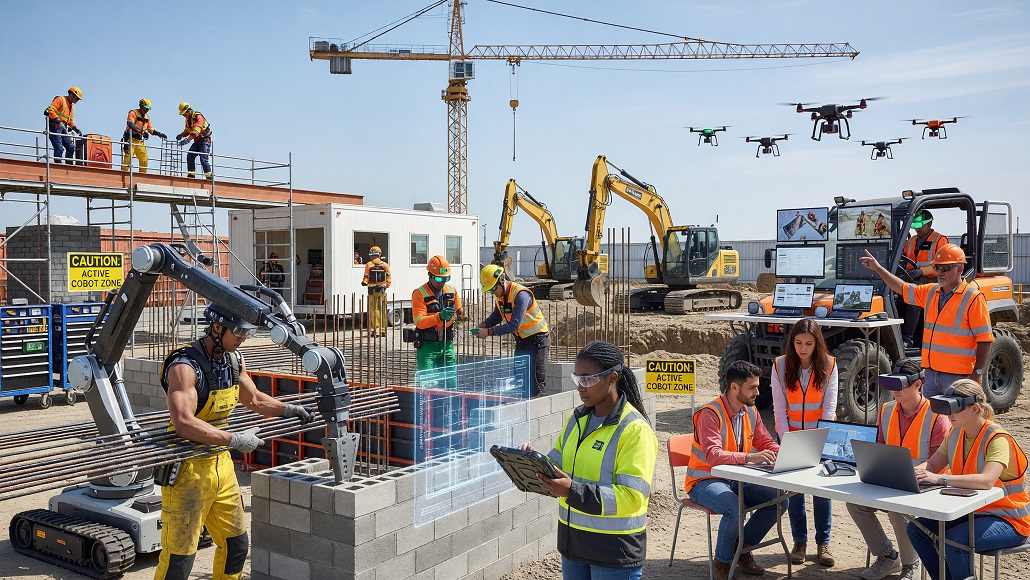
One of the most visible signs of workforce transformation in digital construction era is the presence of collaborative robots, or “cobots.” These machines are designed to work alongside humans, handling physically demanding, repetitive, or dangerous tasks. For example, exoskeletons are now being used to support workers during heavy lifting or overhead work, reducing fatigue and long-term musculoskeletal injuries. Similarly, autonomous bricklaying robots and rebar-tying machines are increasing productivity on site while freeing up human workers to focus on more complex, problem-solving tasks. This collaboration ensures that the human element—judgment, creativity, and adaptability—remains at the center of the construction process. It turns the worker from a “tool-user” into a “robot-manager,” shifting the focus from physical brawn to cognitive oversight and strategic decision-making.
Digital Literacy: The New Baseline for Construction Skills
As the tools of the trade move from the hammer to the tablet, the required skill set for a construction career is being fundamentally reshaped. Workforce transformation in digital construction era demands that every worker, from the site foreman to the apprentice, possesses a baseline of digital literacy. This includes the ability to navigate Building Information Modeling (BIM) software, understand real-time data from IoT sensors, and utilize augmented reality (AR) for on-site visualization. This shift is turning construction into a “knowledge industry,” where the ability to interpret data and coordinate complex digital workflows is just as important as the ability to pour concrete or install wiring. It requires a new educational framework that integrates computer science and data management into vocational training programs, ensuring that the next generation is ready for the high-tech job site.
Upskilling the Existing Workforce for the Digital Leap
The transition to a tech-driven industry poses a significant challenge for the existing workforce. To ensure that experienced tradespeople are not left behind, companies are investing heavily in comprehensive upskilling programs. Workforce transformation in digital construction era involves creating a “learning culture” within construction firms, where continuous education is integrated into the career path. This might involve training an experienced crane operator to manage a fleet of autonomous vehicles or teaching a surveyor how to use drones for high-precision site mapping. By valuing the deep industry knowledge of veteran workers and layering it with new digital skills, firms can create a powerful hybrid workforce. This approach also helps to mitigate the psychological impact of change, showing workers that technology is an ally that makes their jobs safer and more sustainable in the long term.
Attracting New Talent: Changing the Face of the Industry
Historically, the construction industry has struggled to attract young talent due to a perception of it being “dirty, dangerous, and difficult.” However, the workforce transformation in digital construction era is changing this narrative. Today’s construction sites are high-tech environments that offer careers in data science, robotics engineering, and virtual reality design. By highlighting the industry’s role in solving global challenges such as building sustainable cities and utilizing advanced AI construction is becoming an attractive choice for “digital natives.” This influx of new perspectives is essential for driving the innovation needed to meet the infrastructure demands of the 21st century. It is also an opportunity to bridge the “generation gap” in the industry, as young tech experts learn the fundamentals of building from seasoned veterans.
Remote Operation and the “Gamification” of Construction
The digital era is also decoupling the worker from the physical site in unprecedented ways. Workforce transformation in digital construction era includes the rise of remote operation for heavy machinery. Using low-latency 5G networks and sophisticated simulators, an operator can control an excavator or a tower crane from a climate-controlled office hundreds of miles away. This not only improves safety and comfort but also opens up construction roles to a more diverse workforce, including those with physical disabilities or those who prefer a more traditional office environment. Furthermore, the use of AR and VR for training and site inspections is “gamifying” the learning process, making it more engaging and efficient than traditional classroom or on-the-job training methods. It allows for “virtual mistakes” that cost nothing but provide invaluable lessons in safety and technique.
The Evolving Role of Management and Leadership
The manager of the future will need to lead a workforce that is both physically distributed and technologically integrated. Workforce transformation in digital construction era requires a shift in leadership style from “command and control” to “coordinate and empower.” Managers must be able to synthesize data from multiple digital platforms to make real-time decisions while managing the psychological impact of rapid technological change on their teams. Soft skills like emotional intelligence, communication, and adaptability are becoming even more vital as the industry navigates the “human side” of digital transformation. Leaders must be champions of the digital vision, helping their teams to see beyond the initial friction of adoption toward the long-term benefits of a smarter and more collaborative workplace.
Safety as a Digital Priority: Predictive Protection
Perhaps the most profound benefit of the workforce transformation in digital construction era is the improvement in worker safety. Wearable technology, such as smart helmets and vests equipped with sensors, can monitor a worker’s heart rate, fatigue levels, and even their proximity to moving machinery. AI algorithms can analyze this data to predict and prevent accidents before they happen. This shift from reactive safety protocols to “predictive protection” is creating a zero-harm environment that was previously considered unachievable. By using technology to watch over the workforce, we are creating a more caring and sustainable industry culture. It also reduces the administrative burden of safety compliance, as the digital systems automatically generate the necessary reports and audit trails, ensuring that safety is “built-in” to every project.
Cultural Shift: Breaking Down Hierarchy through Data
The digital age is inherently democratic, and this is having a major impact on construction culture. Workforce transformation in digital construction era is breaking down the rigid hierarchies of the past. When every worker has access to the same real-time project data through a mobile device, decisions can be made more quickly and collaboratively on the ground. This transparency fosters a sense of shared ownership and accountability, as everyone can see how their specific task contributes to the overall success of the project. Data is becoming the common language that unites the architect, the engineer, and the laborer, leading to a more harmonious and integrated project team. It encourages a “fail fast, learn faster” mindset that is essential for innovation in a fast-moving market.
The Role of Diversity and Inclusion in the Tech Era
As physical strength becomes less of a barrier to entry, the workforce transformation in digital construction era is providing a unique opportunity to improve diversity and inclusion in the industry. Women and underrepresented groups are increasingly finding opportunities in the tech-focused side of construction, from BIM management to drone piloting and data analytics. A more diverse workforce brings a wider range of problem-solving perspectives, which is critical for an industry that is trying to reinvent itself. By creating a culture that values cognitive diversity and technical skill over traditional brawn, construction can become a leader in the global movement for workplace equity. This diversity also helps to challenge the “groupthink” that can sometimes hinder progress in traditional industries, leading to more creative and effective solutions.
Future Outlook: The Rise of the “Construction Technologist”
Looking ahead, we are likely to see the emergence of entirely new job titles that do not exist today. The “Construction Technologist” will be a senior role responsible for overseeing the entire digital ecosystem of a project, ensuring that the AI, robots, and human teams are working in perfect harmony. This role will bridge the gap between the IT department and the job site, acting as the architect of the project’s digital strategy. The workforce transformation in digital construction era is not reaching an end point; it is a continuous process of evolution that will keep the industry at the cutting edge of global innovation for decades to come. As the “physical” and “digital” worlds continue to merge, the construction worker of the future will be a multidisciplinary expert who is equally at home with a wrench and a neural network.
Conclusion: A Human-Centric Technological Future
The digital transformation of construction is a story of human potential unleashed. By embracing the workforce transformation in digital construction era, we are not diminishing the importance of the human builder; we are elevating it. We are removing the drudgery and danger of the past and replacing it with roles that are more meaningful, safe, and intellectually stimulating. The challenge for the industry today is to manage this transition with empathy and foresight, ensuring that the benefits of the digital age are shared by everyone. As we build the world of tomorrow, it will be the “digital builders” empowered by technology and grounded in craftsmanship who lead the way. The legacy of this transformation will be an industry that is not only more productive but also more profoundly human.
