


























The intricate ballet of a modern construction site relies on the seamless movement of vast quantities of materials, from heavy structural steel to delicate finishing components. Efficient logistics are not merely a matter of convenience; they are a critical driver of project profitability and safety. In this context, construction material handling systems have emerged as the primary solution for managing the complex flow of resources. By leveraging a combination of mechanical ingenuity and digital coordination, these systems ensure that materials are delivered precisely when and where they are needed, reducing the common bottlenecks that often plague large-scale developments. The evolution of these systems reflects a broader industry trend toward automation and precision, as contractors seek to mitigate the rising costs of labor and the inherent risks of manual handling.
Historically, site logistics were often managed through brute force and reactive planning. Materials were often offloaded in bulk and moved manually or with basic machinery, leading to significant site congestion and an increased risk of injury. Today, the implementation of site logistics solutions has transformed the job site into a highly choreographed environment. Modern construction material handling systems integrate various technologies to streamline the journey of a component from the delivery truck to its final installation point. This optimization is particularly vital in high-density urban environments, where space for material storage is almost non-existent and delivery windows are strictly regulated by municipal authorities.
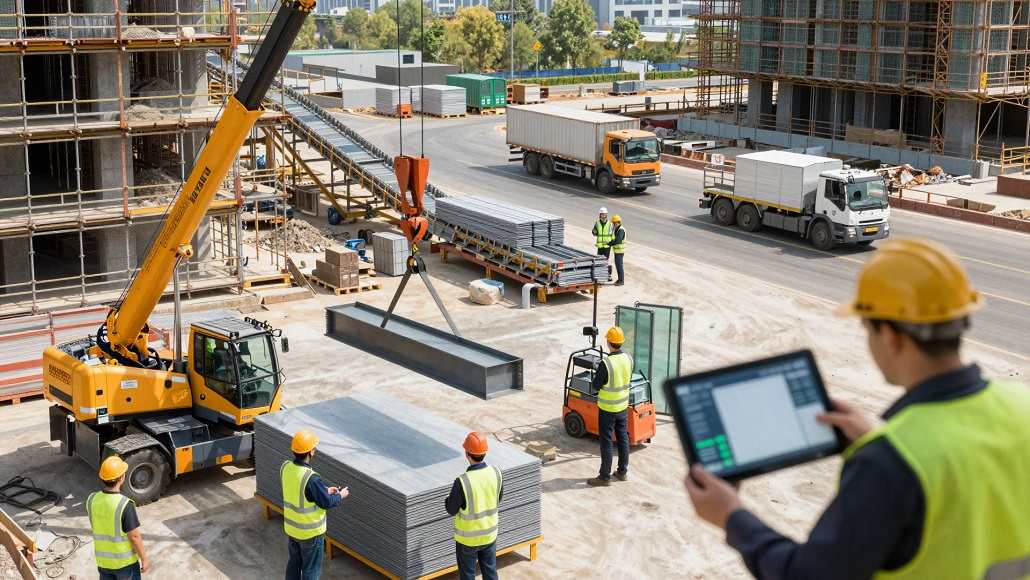
A cornerstone of modern logistics is the strategic use of lifting equipment. Cranes, hoists, and telehandlers have become more sophisticated, incorporating sensors and telematics that allow operators to move loads with incredible precision. These advancements in lifting equipment are not just about capacity; they are about control. Modern tower cranes, for instance, are often equipped with anti-collision systems and load-monitoring technology that ensures the safety of the surrounding environment while maximizing the speed of material placement. By integrating these tools into a broader construction material handling systems framework, project managers can ensure that the vertical movement of materials is as efficient as the horizontal transport, maintaining a steady tempo for the entire project.
The Role of Automation in Site Logistics Solutions
Automation is playing an increasingly prominent role in the development of site logistics solutions. We are seeing a shift away from traditional methods toward more automated and semi-automated systems. For example, conveyor systems are being adapted for the construction environment to transport bulk materials like aggregates or excavated soil with minimal human intervention. Unlike trucks, which can be delayed by traffic or site congestion, conveyor systems provide a continuous and predictable flow of material. This reliability is a game-changer for large-scale earthmoving or tunneling projects, where the volume of material to be moved is immense. By reducing the number of vehicle movements on-site, these systems also contribute to a safer work environment and a lower carbon footprint.
Furthermore, heavy material transport equipment is undergoing a digital revolution. Autonomous and remote-controlled transport vehicles are being deployed to move heavy loads across the site. these vehicles can navigate complex environments using GPS and lidar technology, reducing the need for manual labor in high-risk zones. The integration of these vehicles into the construction material handling systems allows for 24/7 logistics operations, ensuring that materials are staged and ready for the morning shift. This level of coordination is essential for meeting the aggressive timelines of modern infrastructure projects. As these site logistics solutions become more refined, we can expect to see a significant reduction in the “idle time” that often accounts for a large portion of a project’s labor costs.
Safety and Ergonomics in Modern Lifting Equipment
Safety is the paramount concern on any construction site, and the modernization of construction material handling systems is a direct response to this need. Manual material handling is one of the leading causes of musculoskeletal injuries among construction workers. By introducing specialized lifting equipment and mechanical aids, contractors can significantly reduce the physical strain on their workforce. Vacuum lifters for glass panels, specialized pallet jacks for heavy masonry, and ergonomic hoists for mechanical units are all examples of how technology is being used to protect workers. These tools do more than just lift; they allow for precise positioning with minimal physical effort, which in turn reduces the likelihood of accidents and errors.
The data generated by modern lifting equipment also provides valuable insights for safety managers. Telematics systems can track the number of lifts, the weight of the loads, and the frequency of any safety alerts. This data-driven approach to site logistics solutions allows managers to identify trends and implement corrective training before an incident occurs. For instance, if a particular piece of heavy material transport equipment is consistently triggering overload alerts, managers can investigate whether the site layout or the planning process needs adjustment. This proactive stance on safety is a hallmark of professional construction management and is made possible by the integration of smart technology into the handling process.
Optimizing the Supply Chain with Conveyor Systems
While cranes and hoists handle the vertical challenges, conveyor systems are proving to be invaluable for horizontal logistics. In many modern projects, especially those involving demolition or large-scale renovation, the removal of debris is as critical as the delivery of new materials. Specialized conveyor systems can be quickly deployed to move rubble from the upper floors of a building directly to waiting skips at the ground level. This bypasses the need for elevators or manual carting, significantly speeding up the demolition phase. The use of these systems within a comprehensive construction material handling systems strategy ensures that the site remains clear of obstructions, which is vital for maintaining an efficient workflow.
The modular nature of modern conveyor systems also makes them highly adaptable to different site conditions. They can be curved, inclined, and extended to reach difficult areas that would be inaccessible to traditional heavy material transport equipment. This flexibility is a key component of effective site logistics solutions, allowing project managers to tailor the handling system to the specific constraints of the site. As the industry moves toward more prefabricated and modular construction, the role of these systems will only grow. The ability to move large, pre-assembled modules into place requires a sophisticated handling infrastructure that combines the strength of traditional lifting equipment with the precision of modern automated transport.
Future Trends in Construction Material Handling Systems
Looking forward, the integration of artificial intelligence and machine learning will further refine site logistics solutions. Predictive analytics can be used to forecast material needs based on the real-time progress of the project, automatically triggering orders and scheduling deliveries. This “just-in-time” approach to construction material handling systems minimizes the need for on-site storage and reduces the risk of material damage or theft. We may also see the rise of “swarms” of small, autonomous robots working in concert to move materials throughout a building, navigating through tight spaces and stairs with ease.
The sustainability of heavy material transport equipment is also becoming a priority. The industry is seeing a shift toward electric and hybrid-powered machinery, reducing noise pollution and emissions on the job site. This transition is not just about environmental responsibility; it also improves the working conditions for site personnel and reduces the impact on the surrounding community. As lifting equipment and conveyor systems become more energy-efficient, the overall cost of site logistics will decrease, contributing to a more sustainable and profitable construction sector. The continued investment in smart construction material handling systems is essential for meeting the challenges of the 21st-century built environment.
Integrating Technology for a Seamless Workflow
The ultimate goal of any site logistics strategy is to create a seamless workflow where information and materials flow in harmony. This requires the tight integration of construction material handling systems with digital management platforms. When the physical handling of materials is synchronized with the digital project model, managers gain a level of visibility that was previously impossible. They can track the location of every critical component in real-time, from the factory floor to its final position on-site. This transparency reduces uncertainty and allows for more agile decision-making when unexpected challenges arise.
In conclusion, the modernization of site logistics solutions is a multi-faceted endeavor that involves the strategic deployment of lifting equipment, conveyor systems, and heavy material transport equipment. By focusing on the integration of these tools into a cohesive construction material handling systems framework, the industry is achieving new heights of efficiency and safety. The human element remains critical, as skilled operators and managers are needed to oversee these complex systems, but the physical burden and the logistical chaos of the past are rapidly becoming things of the past. As we continue to innovate, the movement of materials will become even more precise, supporting the creation of increasingly complex and ambitious structures worldwide.
