






















Water is the most fundamental and finite resource that underpins every aspect of human civilization, yet its management within the built environment has historically been an afterthought when compared to the intense focus on energy consumption. However, as global water scarcity becomes an increasingly urgent and unavoidable reality, the broad field of sustainable construction has pivoted decisively to prioritize water efficient plumbing. This shift represents a necessary and profound transition from a linear model of simply disposing of wastewater to a sophisticated, circular model of resource recovery, demand reduction, and intelligent management.
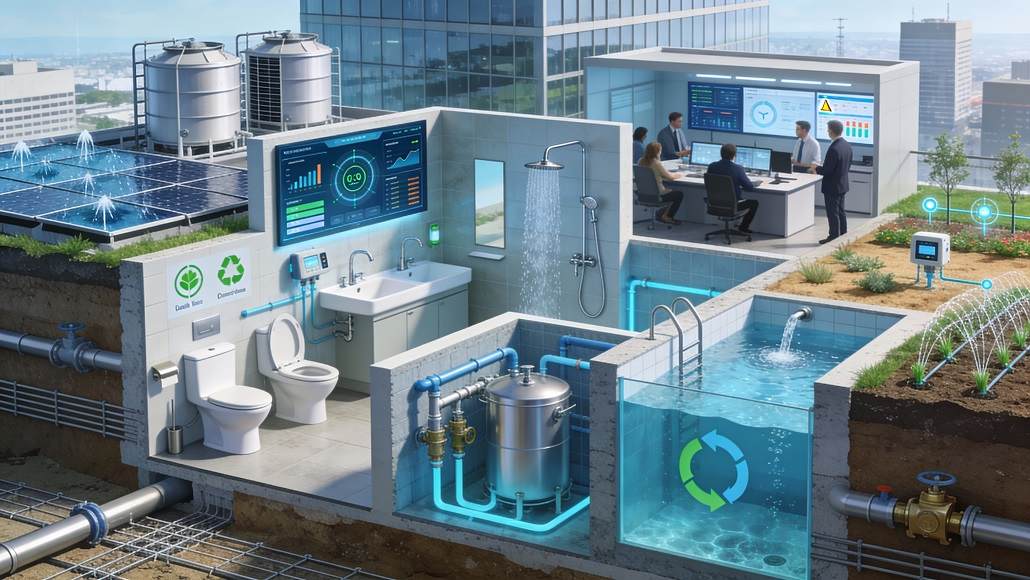
Modern buildings are now being designed and engineered with the explicit goal of minimizing their hydraulic footprint. This is achieved by utilizing a potent combination of high-efficiency low-flow fixtures, advanced greywater and rainwater recycling systems, and digital leak detection technologies. These efforts ensure that every drop of water is accounted for, utilized to its maximum potential, and integrated into the broader urban water cycle with minimal impact on the natural environment.
The Core of Sustainable Construction: Aggressive Demand Management
The most direct and immediate way to achieve meaningful water conservation in any building is through the drastic reduction of demand at the point of use. Modern water efficient plumbing relies heavily on the widespread adoption of next-generation, high-efficiency fixtures. Over the past decade, toilets, faucets, and showerheads have undergone significant engineering improvements, allowing them to provide a high level of performance and user comfort while using only a small fraction of the water required by traditional models.
For instance, dual-flush toilets, vacuum-assisted flush systems, and high-performance aerated faucets allow for significant reductions in daily consumption without any perceived loss in utility. In the context of large-scale commercial sustainable construction, these seemingly small savings per fixture aggregate into millions of gallons of water saved annually across a single facility. This rigorous approach to demand management is a fundamental requirement for meeting the increasingly stringent standards of global green building certifications such as LEED, BREEAM, and the Living Building Challenge.
Greywater Recycling and On-Site Resource Management
Beyond simply reducing demand, the next and most impactful frontier in water efficient plumbing is the intelligent reuse of water that has already been through one cycle of consumption. Greywater recycling systems capture relatively clean wastewater from sinks, showers, and laundry equipment, treat it on-site to a safe, non-potable standard, and then redirect it for secondary uses such as toilet flushing, cooling tower make-up, or landscape irrigation.
This circular approach to plumbing systems drastically reduces the building’s overall reliance on municipal water supplies and significantly lowers the volume of wastewater that must be processed and transported by city treatment plants. In regions facing chronic drought or rapidly depleting aquifers, these green building solutions are no longer just an environmental choice; they are a practical and strategic necessity for ensuring the long-term viability and resilience of urban infrastructure. By closing the loop on-site, a building becomes less of a burden on the city and more of an independent, resource-positive asset.
Digital Oversight and Intelligent, Automated Leak Detection
One of the most persistent and damaging sources of water waste in traditional buildings is the undetected or slow-moving leak. In a large commercial structure or a high-density residential complex, a single dripping faucet or a running toilet valve can waste thousands of gallons of treated water before it is ever noticed by maintenance staff. Sustainable construction now integrates sophisticated digital monitoring directly into the plumbing systems to combat this pervasive issue.
Flow sensors, ultrasonic meters, and smart pressure valves can detect minute anomalies in water usage patterns that indicate the presence of a leak, often identifying problems within seconds of their occurrence. These systems can be programmed to automatically shut off the water supply to a specific zone or floor if a major burst is detected, preventing both massive water waste and potentially catastrophic property damage from flooding. This proactive and automated approach to resource management is a key differentiator of modern, high-performance buildings, ensuring that conservation efforts are not undermined by mechanical failures.
The Role of Green Building Solutions in Urban Cooling and Ecology
An often overlooked but vital aspect of water management is its direct connection to thermal regulation and urban ecology. Many large-scale HVAC systems rely on evaporative cooling towers that consume massive amounts of water to reject heat from the building. Water efficient plumbing strategies in sustainable construction often look for innovative ways to integrate these disparate systems. For example, rainwater harvesting systems can provide the high-quality soft water needed for cooling towers, reducing the need for chemically treated potable water in industrial-scale cooling processes.
Additionally, the use of climate-appropriate, drought-tolerant landscaping and smart, weather-based irrigation systems ensures that outdoor water use is optimized based on real-time soil moisture and weather forecasts. These integrated green building solutions create a more balanced and sustainable relationship between the building and its local ecosystem. By reducing the “thirst” of our buildings, we leave more water in our rivers, lakes, and aquifers, supporting a healthier environment for the entire community.
Regulatory Landscapes and the Compelling Economics of Water Efficiency
The global adoption of water efficient plumbing is being driven by a powerful combination of tightening environmental regulations and the rapidly increasing costs of water and sewer services. Governments and municipal water authorities are introducing stricter plumbing codes that mandate the use of ultra-high-efficiency fixtures in all new construction and major renovation projects. At the same time, the cost of treating and distributing water is rising significantly faster than the rate of inflation in many major urban areas.
This makes the economic case for water conservation stronger than it has ever been. For property owners, developers, and REITs, investing in advanced plumbing systems provides a clear and measurable return on investment through lower monthly operating costs and significantly increased long-term property value. Furthermore, buildings that can demonstrate superior water performance and resilience are often more attractive to high-quality corporate tenants who are deeply committed to their own environmental and social governance (ESG) goals. Efficiency is increasingly seen as a proxy for good management and low risk.
