


























The rising frequency and severity of extreme weather events across the globe have fundamentally altered the requirements for modern building design. As hurricanes, tornadoes, and severe hailstorms become more commonplace, the integration of impact resistant materials building exteriors has transitioned from an optional enhancement to a critical necessity for structural resilience. The exterior of a building serves as its primary line of defense, a shell that must withstand not only static loads but also dynamic, high-velocity impacts from wind-borne debris. By incorporating advanced impact resistant construction materials into exterior protection systems, architects and engineers can significantly reduce the risk of catastrophic failure and ensure the safety of those within.
The Engineering Behind Structural Resilience and Impact Resistance
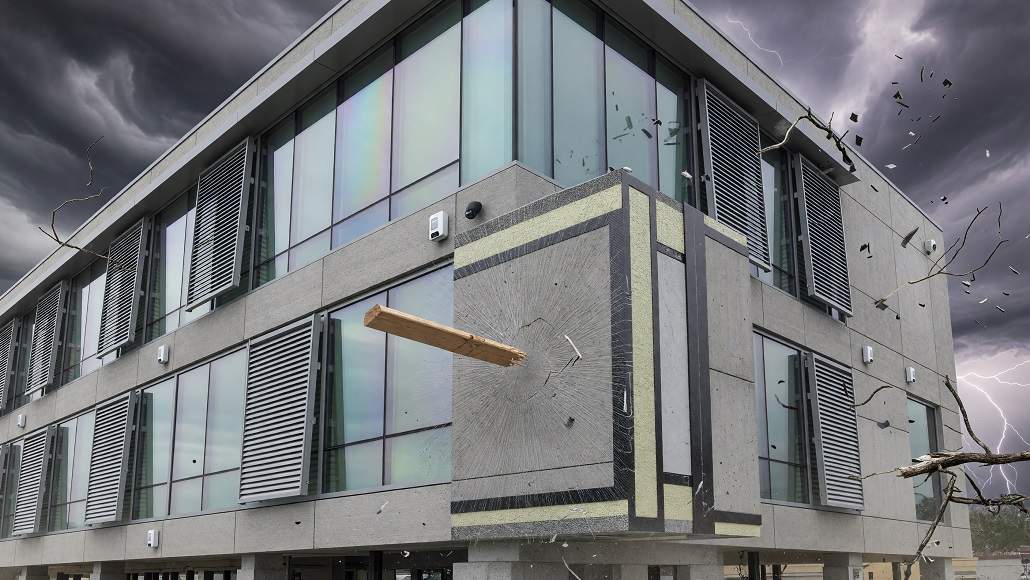
Understanding the physics of impact is the first step in selecting the appropriate storm resistant materials for any given project. When a high-velocity object, such as a tree limb or a piece of roofing material, strikes a building surface, it transfers a massive amount of kinetic energy in a fraction of a second. Traditional building materials, while strong under compression, often lack the ductility or fracture toughness to absorb this energy without failing. Impact resistant materials building exteriors are specifically designed to manage this energy through deformation, reinforcement, or advanced molecular structures. The goal is to prevent the breach of the building envelope, as even a small opening can lead to rapid internal pressurization during a storm, which often results in the roof being blown off the structure.
Evolution of Impact Resistant Construction Materials
The development of durable building materials has seen remarkable progress over the last two decades. One of the most significant breakthroughs has been the advancement of laminated glass technology. Unlike standard tempered glass, which shatters into small fragments upon impact, laminated glass consists of a tough polymer interlayer sandwiched between two layers of glass. In the event of an impact, the glass may crack, but the interlayer holds the fragments together, maintaining the integrity of the envelope. Furthermore, the use of fiber-reinforced cementitious composites has provided a robust alternative for wall cladding. These impact resistant construction materials combine the compressive strength of concrete with the tensile strength of synthetic or natural fibers, allowing the panels to withstand extreme forces without cracking or spalling.
Design Strategies for Exterior Protection Systems
A truly resilient building is more than just a collection of strong materials; it is a meticulously engineered system where every component works in harmony. Effective exterior protection systems must account for the weakest links in the building shell, which are typically windows, doors, and roof-to-wall connections. The integration of impact resistant materials building exteriors must extend to the framing and anchoring systems to ensure that the entire assembly can transfer the loads safely to the building’s foundation. For instance, storm resistant materials like heavy-duty aluminum or steel shutters can provide an additional layer of defense for vulnerable openings, while reinforced masonry or insulated concrete forms (ICF) offer superior resistance for the primary wall structures.
Longevity and the Lifecycle Value of Durable Building Materials
While the initial cost of high-performance impact resistant materials building exteriors may be higher than conventional options, the long-term value they provide is undeniable. Resilience is closely linked to durability; a building that can withstand a major storm without requiring significant repairs is inherently more sustainable and cost-effective over its lifecycle. Beyond the obvious benefit of disaster mitigation, these durable building materials often require less frequent maintenance and are less susceptible to daily wear and tear, such as accidental impacts or environmental degradation. For property owners, this translates to lower insurance premiums and higher resale values, as the market increasingly recognizes the importance of structural reliability in an uncertain climate.
Innovations in Storm Resistant Materials and Testing Standards
The industry has adopted rigorous testing protocols to ensure that impact resistant materials building exteriors meet the highest safety standards. The most common test involves firing a wooden 2×4 at a material at high speeds to simulate wind-borne debris. Materials that pass these tests are certified for use in high-velocity hurricane zones. Emerging technologies, such as carbon-fiber-reinforced polymers and ultra-high-performance concrete (UHPC), are pushing the boundaries of what is possible. These storm resistant materials offer unprecedented strength-to-weight ratios, allowing for the creation of thinner, more elegant exterior protection systems that do not compromise on safety. The future of resilient design lies in the ability to combine these high-performance impact resistant construction materials with smart sensors that can monitor structural health in real-time.
Integrating Aesthetics with Impact Resistant Materials Building Exteriors
One of the common misconceptions about resilient design is that it necessitates a bunker-like aesthetic. On the contrary, modern impact resistant materials building exteriors allow for a high degree of architectural expression. Advances in manufacturing have made it possible to produce storm resistant materials that mimic the appearance of traditional wood, stone, or brick while providing far superior protection. Laminated glass can be produced in large, clear spans, enabling the creation of transparent architecture that remains safe in the face of extreme weather. By thoughtfully selecting durable building materials that offer both beauty and brawn, architects can create structures that are as visually stunning as they are structurally sound, proving that safety and style are not mutually exclusive in modern construction.
Multi-Hazard Protection and the Strategic Use of Concrete
The highest level of structural reliability is often achieved through the use of composite exterior protection systems that can withstand multiple hazards. In addition to storm resistant materials, many buildings in high-risk zones must also consider seismic forces and potential ballistic impacts. The use of reinforced concrete and insulated concrete forms (ICF) provides a massive, high-density core that is inherently resistant to almost any dynamic force. When combined with specialized impact resistant construction materials on the exterior facade, these systems create a multi-layered defense. The concrete provides the mass and stiffness to resist earthquake loads, while the impact resistant materials building exteriors manage the high-velocity impacts from debris or projectiles. This comprehensive approach to building safety is essential for critical infrastructure like hospitals, data centers, and government buildings.
The Economic Consequences of Building Envelope Failure
The true cost of using substandard materials is often hidden until a disaster strikes. When the building envelope fails during a storm, the resulting damage is rarely limited to the exterior. Once wind and water penetrate the interior, the cost of repairs increases exponentially. Mold growth, structural rot, and the destruction of interior finishes and equipment can lead to the total loss of a property. By investing in high-performance impact resistant materials building exteriors, developers can significantly lower the risk of such catastrophic events. This financial risk mitigation is a key driver for the adoption of durable building materials in the commercial sector. Institutional investors and insurance companies are increasingly mandating the use of storm resistant materials as a condition for funding or coverage, recognizing that resilience is a fundamental component of long-term asset value.
Structural Reliability in the Face of Changing Environmental Demands
As climate patterns continue to shift, the definition of a “demanding environment” is also changing. Regions that were once considered safe from major storms are now experiencing unprecedented weather patterns. This means that the use of impact resistant materials building exteriors is no longer just for coastal areas. Architects and builders must now consider a broader range of exterior protection systems that can handle a variety of challenges, from record-breaking hailstorms to high-velocity straight-line winds. The flexibility and durability of modern impact resistant construction materials are their greatest strengths, allowing them to be adapted to different regional needs while maintaining a high level of structural reliability. This proactive approach to design ensures that the buildings we construct today are prepared for the unknown challenges of the future.
