


























The commercial real estate sector is currently navigating a period of unprecedented and rapid change, driven by the dual and often overlapping pressures of economic optimization and environmental accountability. At the absolute forefront of this transformation is the rapid increase in heat pump adoption across both ambitious new developments and major large-scale retrofits. Once considered a solution primarily suited for residential applications or moderate temperate climates, heat pumps have evolved through significant and sustained HVAC innovation to become the preferred and often mandated choice for modern commercial construction.
These systems, which operate by transferring heat rather than generating it through the combustion of fossil fuels, offer a clear and reliable pathway toward the complete electrification of building systems. This alignment is crucial for corporate assets as they strive to meet the global transition toward a net-zero future, ensuring that buildings are not only efficient today but remain viable and compliant in the regulatory environment of tomorrow.
The Strategic Shift Toward Building Electrification
The movement toward building electrification is far more than just a preference for cleaner energy sources; it is a calculated strategic response to a rapidly changing regulatory and economic landscape. Many major municipalities and global cities are now implementing strict bans on new natural gas connections, making electric heating systems the only viable path forward for new projects. Heat pumps are uniquely positioned to meet this need because of their exceptional and inherent efficiency.
Unlike traditional boilers or furnaces that might achieve a peak efficiency of 90 to 95 percent, heat pumps can deliver three to four units of thermal energy for every single unit of electricity consumed. This high “Coefficient of Performance” (COP) makes them the undeniable cornerstone of any modern strategy aimed at reducing operational carbon emissions in the commercial sector. By leveraging electricity which is increasingly sourced from renewable wind and solar heat pumps allow commercial buildings to decouple their thermal comfort from the carbon-intensive fossil fuel industry.
Advances in Commercial Heat Pump Technology
The acceleration of heat pump adoption in commercial construction has been made possible by several key and recent technological breakthroughs that have addressed previous limitations. Modern commercial-scale systems are now capable of operating effectively in extreme cold climates, a traditional weakness that once limited their geographic reach. The development of enhanced vapor injection (EVI) compressors and the transition to next-generation, low-global-warming-potential (GWP) refrigerants have expanded the operating range and improved the environmental profile of these units significantly.
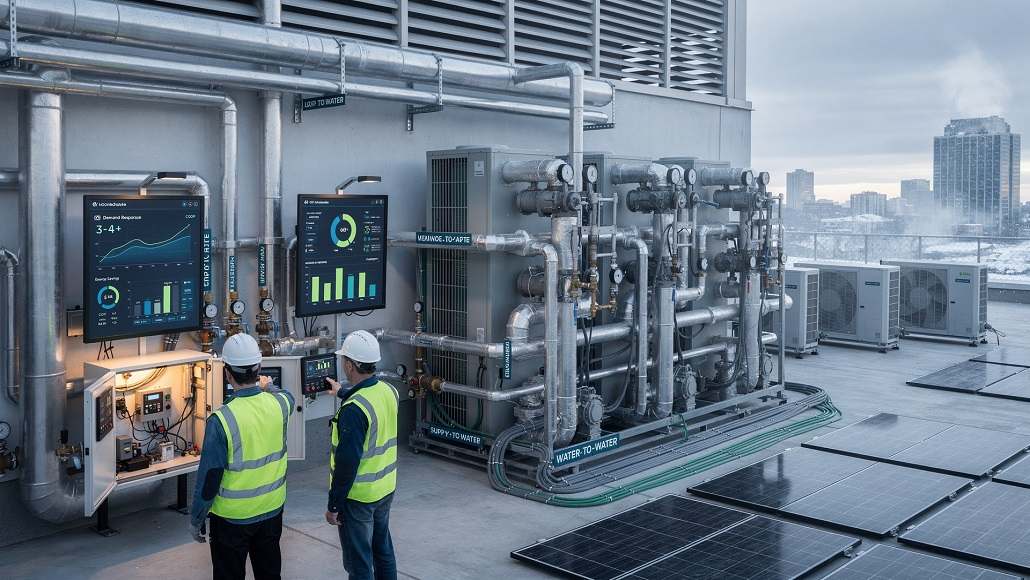
Furthermore, the engineering of large-scale air-to-water and water-to-water heat pumps allows for the seamless integration of these systems into existing hydronic heating loops. This is particularly important for the modernization of older commercial properties, allowing for a phased transition away from steam or high-temperature hot water systems without requiring a complete overhaul of the building’s distribution infrastructure. This versatility is a primary reason why heat pump adoption is seeing such a dramatic uptick in the corporate sector.
Economic Drivers and Long-Term Lifecycle Value
While it is true that the initial capital investment for heat pump systems can sometimes be higher than for traditional gas-fired equipment, the long-term economic benefits and lifecycle value are becoming increasingly clear to savvy developers and investors. Heat pump adoption is often driven by the desire to consolidate heating and cooling into a single, unified system, which inherently reduces the amount of mechanical equipment that needs to be purchased, installed, and maintained over time.
Additionally, as electricity markets continue to transition toward more stable renewable sources, the operational costs of electric heating systems are expected to remain more predictable relative to the often-volatile prices of natural gas and heating oil. For many commercial developers, the decision to invest in heat pumps is a vital form of futureproofing. It ensures that their buildings remain attractive to high-quality tenants who are increasingly prioritizing sustainability and “green” credentials in their corporate site selection and leasing decisions.
Integration with Smart Building Ecosystems
The true and full potential of heat pumps in commercial construction is realized when they are integrated into a broader, more intelligent smart building framework. By connecting heat pump arrays to advanced building management systems (BMS), facility managers can optimize performance in real-time based on a multitude of variables. This includes active participation in demand-response programs, where the building can temporarily and automatically reduce its power consumption during peak grid stress periods in exchange for financial incentives from the utility provider.
This level of HVAC innovation allows a commercial building to act as a flexible and responsive asset on the electrical grid, contributing to overall grid stability while simultaneously minimizing the building’s own energy costs. The synergy between high-efficiency mechanical hardware and intelligent control software is a hallmark of the modern commercial office space, providing a level of operational agility that traditional systems simply cannot match.
Addressing Challenges and the Path Forward
Despite the clear and numerous benefits, the widespread and total adoption of heat pumps in the commercial sector is not without its practical challenges. These include the immediate need for specialized training for the next generation of HVAC technicians, the requirement for larger electrical service capacity in some older buildings, and the inherent complexity of managing large-scale thermal energy storage systems. However, as the industry gains more hands-on experience and the supply chain matures, these hurdles are being systematically and effectively overcome.
The combination of falling technology costs, supportive government subsidies and tax credits, and a growing global consensus on the absolute importance of building electrification ensures that heat pump adoption will continue to accelerate. This shift is not just about changing a piece of machinery; it is about reshaping the way we heat, cool, and power our commercial centers for the next century, creating a more resilient and sustainable urban foundation.
