


























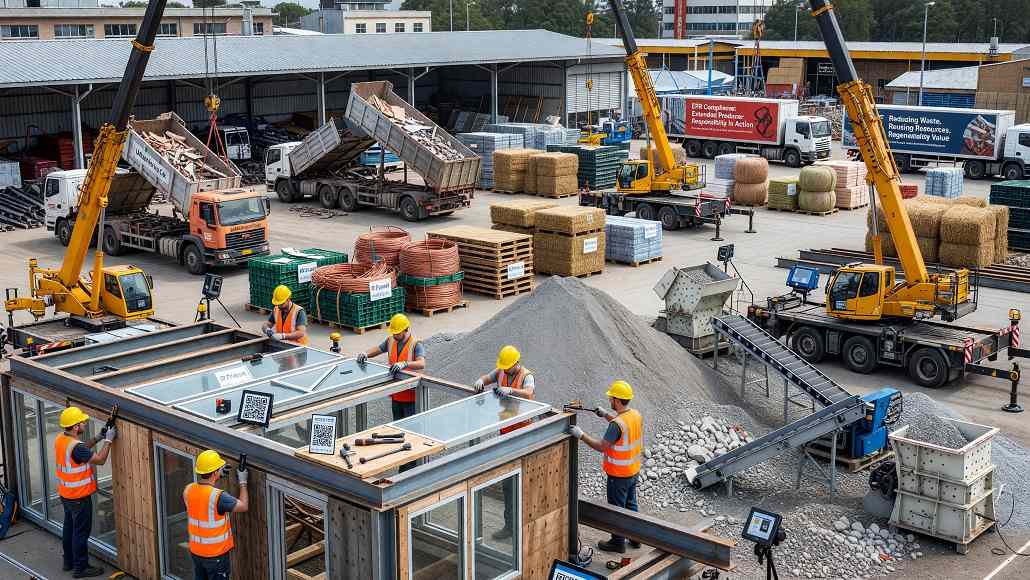

The traditional “take-make-waste” linear model of the construction industry is increasingly unsustainable in a world of finite resources and growing environmental pressure. As the sector accounts for nearly forty percent of global waste, the transition toward a circular economy in construction materials is no longer an optional ethical choice but a strategic necessity. This paradigm shift involves rethinking every stage of a building’s life from the initial design and material selection to its eventual deconstruction and the recovery of its components. By treating buildings as “material banks,” we can ensure that the value of our natural and manufactured resources is preserved and circulated for as long as possible.
Shifting from Demolition to Design for Deconstruction
The foundation of a successful circular economy in construction materials begins at the drafting board. Historically, buildings have been constructed as monolithic structures that are difficult to take apart without destroying the value of the materials. Design for Deconstruction (DfD) is a proactive strategy that emphasizes the use of reversible connections, modular components, and standardized dimensions. By ensuring that a building can be disassembled like a kit of parts, we can recover high-quality steel, timber, and glass that can be reused in new projects with minimal processing. This foresight drastically reduces the amount of debris sent to landfills and lowers the demand for virgin raw materials. It requires architects to think in “time layers,” acknowledging that while the structure may last fifty years, the interior fit-out might change every five.
The Role of Material Passports and Digital Documentation
For a circular economy in construction materials to function effectively, there must be complete transparency regarding what is inside a building. Material Passports are digital datasets that document the identity, characteristics, and location of every component within a structure. When integrated with Building Information Modeling (BIM), these passports provide future generations with the information they need to safely and efficiently recover materials. Knowing the exact chemical composition of a steel beam or the fire-rating of a glass panel decades after installation allows for its seamless reintegration into the supply chain, transforming an old building into a valuable source of raw materials for the next project. This digital record creates a “lineage” for building components that adds value and reduces the risk associated with reusing second-hand products.
Advancing the Recycled Concrete and Aggregate Market
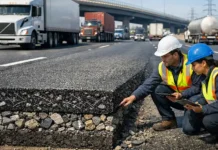
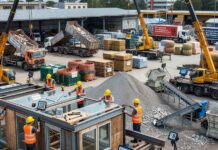
Concrete is the most widely used human-made material on Earth, yet it remains one of the most difficult to fully circulate. A core component of circular economy in construction materials is the development of advanced crushing and sorting technologies that turn old concrete into high-quality recycled aggregates. While traditional recycling often resulted in low-grade material used for road base, modern processes allow for the separation of the cement paste from the aggregate, creating a material that can be used in structural-grade new concrete. This “closed-loop” recycling of concrete is essential for reducing the environmental impact of quarrying and preserving natural landscapes. Research into “smart” crushing techniques is even allowing for the recovery of unhydrated cement, which can be reused as a binder.
Urban Mining and the Value of the Existing Built Environment
As the price of raw materials fluctuates and supply chains become more volatile, the concept of “Urban Mining” is gaining traction as a key circular economy in construction materials strategy. Urban mining views existing cities as rich deposits of valuable resources. Instead of shipping iron ore or timber across the globe, developers can “mine” their local environment for steel, copper, and wood. This localized approach to material sourcing not only reduces transportation emissions but also supports local economies and increases the resilience of city-wide supply chains. The city of the future is not just built on land; it is built on the recycled history of its predecessors. This approach also encourages the preservation of historic facades and structural elements, blending sustainability with urban heritage.
The widespread adoption of a circular economy in construction materials requires a supportive regulatory environment. Many governments are now implementing “Extended Producer Responsibility” (EPR) for construction products, requiring manufacturers to take back their products at the end of their life. Furthermore, landfill taxes and stricter waste management regulations are making it financially prohibitive to simply dump construction debris. Incentives such as tax breaks for projects that use a high percentage of recycled content or fast-tracked permitting for buildings designed for deconstruction are helping to tip the economic scales in favor of circularity. The introduction of “green” public procurement mandates is also ensuring that large-scale government projects lead the way in setting circular standards for the broader market.
Overcoming the Structural and Aesthetic Biases of Reused Materials
One of the primary hurdles for a circular economy in construction materials is the perception that reused materials are inferior in quality or appearance. Structural engineers are often cautious about the load-bearing capacity of second-hand steel or timber. To overcome this, the industry is developing sophisticated non-destructive testing (NDT) methods that can verify the integrity of recovered components. Simultaneously, architects are embracing the “industrial chic” and unique character of salvaged materials, turning “old” into “premium.” By showcasing the beauty and durability of reused materials in high-profile projects, we can change the cultural narrative around waste. The key is to prove that “reused” does not mean “compromised,” but rather “proven” and “characterful.”
The Industrial Symbiosis of Cross-Sector Circularity
A circular economy in construction materials does not exist in a vacuum. It often involves industrial symbiosis, where the construction sector utilizes the waste of other industries. For example, plastic waste can be processed into insulating boards, and agricultural waste like straw can be used for carbon-negative wall panels. These cross-sector collaborations expand the definition of “construction materials” and provide new pathways for waste reduction across the entire global economy. By looking beyond the traditional boundaries of the building site, we can find innovative solutions that turn global waste streams into the building blocks of a sustainable future. This collaborative mindset is essential for solving the massive waste problem that defines modern civilization.
Financial Models for a Circular Built Environment
Traditional real estate financial models are built on a linear “depreciation” mindset. However, a circular economy in construction materials requires a shift toward “asset preservation” models. This involves the use of “Materials-as-a-Service” (MaaS), where instead of buying a lighting system or an elevator, the building owner leases it from the manufacturer. The manufacturer remains responsible for the maintenance and eventual recycling of the component, ensuring they have a financial incentive to design for durability and disassembly. This approach shifts the financial risk away from the developer and onto the party best equipped to manage the material lifecycle. It also creates a more predictable maintenance budget for the building operator, fostering long-term stability.
The Role of Logistics and Material Hubs
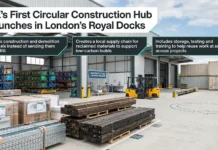
The physical movement of materials is a critical logistical component of a circular economy in construction materials. To make recycling and reuse efficient, cities need dedicated “material hubs” or “circularity centers” where salvaged components can be cleaned, tested, and stored until they are needed for a new project. These hubs act as the physical marketplace for urban mining, providing the infrastructure needed to link the supply of salvaged materials with the demand from new developments. By optimizing the logistics of material recovery, we can reduce the costs and environmental impact associated with the circular supply chain. These hubs can also serve as educational centers, teaching the local workforce the skills needed to safely and effectively deconstruct the buildings of the past.
Certification and Standardization of Circular Products
To build trust in the market, circular economy in construction materials strategies must be backed by rigorous certification schemes. Programs like Cradle to Cradle (C2C) provide a framework for assessing the health, circularity, and environmental impact of building products. Standardizing these certifications allows for a transparent “circularity score” for buildings, which is increasingly being used by investors and insurers to evaluate project risk. As these standards become more common, the friction of using salvaged or recycled materials will decrease, leading to a more fluid and efficient market for circular components. This standardization is the final piece of the puzzle needed to bring circularity from the fringe of the industry into the mainstream.
Conclusion: Designing Out Waste for the 21st Century
The transition to a circular economy in construction materials represents a fundamental re-evaluation of our relationship with the physical world. It requires a shift from viewing building materials as disposable commodities to seeing them as precious assets that must be stewarded through multiple lifecycles. By embracing design for deconstruction, digital material tracking, and advanced recycling technologies, the construction industry can lead the way in creating a truly sustainable and regenerative global economy. The buildings we create today should not be the waste of tomorrow; they should be the foundation of a perpetual cycle of renewal and growth. Our legacy as builders will be measured not just by what we create, but by how much of it we manage to preserve for the generations that follow.
