


























The history of architecture is, in many ways, a history of stone and ceramics. From the limestone of the Great Pyramids to the intricate mosaics of the Byzantine Empire, these materials have provided the literal and figurative foundation for human civilization. In the current era, however, we are witnessing a remarkable evolution in how these ancient mediums are applied. Driven by advancements in extraction technology and digital fabrication, stone and tile design trends are undergoing a period of intense innovation. Modern architects are no longer looking at stone and tile as mere coverings but as structural and aesthetic components that can redefine the scale, texture, and light of an interior environment. This renaissance is characterized by a push toward extreme formats, hyper-realistic textures, and a renewed focus on the inherent beauty of natural geological formations.
The Rise of Large-Format Slabs and Seamless Surfaces
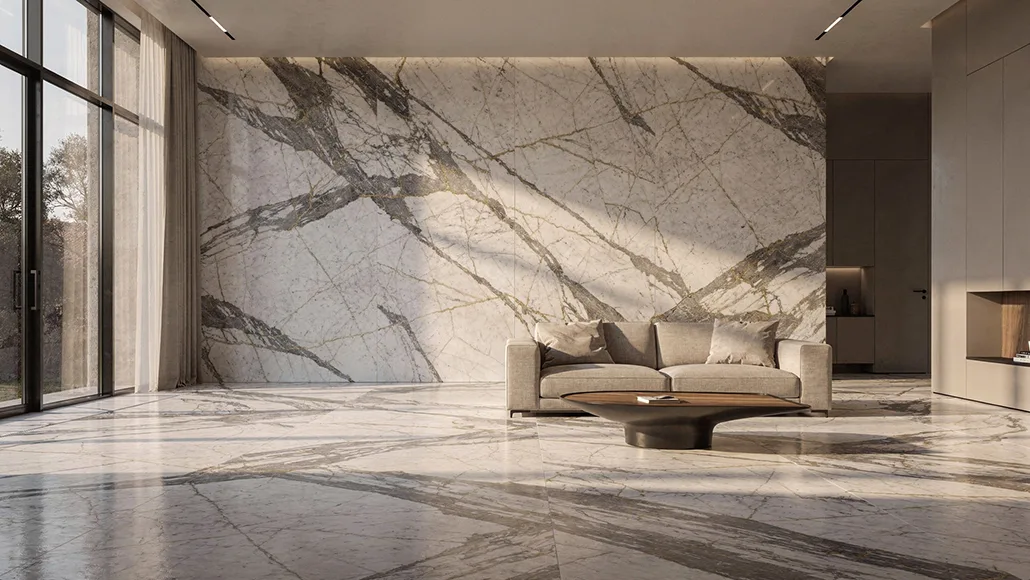
One of the most dominant stone and tile design trends in contemporary architecture is the move toward massive, large format tiles and gauged porcelain slabs. For centuries, the size of a tile was limited by the weight a single person could carry and the structural integrity of the ceramic itself. Today, advanced pressing and firing techniques allow for the production of porcelain panels that can reach dimensions of up to 160 by 320 centimeters while maintaining a thickness of just a few millimeters. These large-format slabs allow for nearly seamless installations, reducing grout lines to a minimum and creating a sense of monolithic continuity that was previously only possible with extremely expensive, solid blocks of stone. This aesthetic of “continuous surface” is a hallmark of modern luxury, as it emphasizes the raw, uninterrupted beauty of the material’s pattern and color.
Textured Finishes and the Haptic Experience
As our digital lives become increasingly smooth and screen-oriented, there is a growing desire for physical environments that offer a rich tactile experience. This has led to a surge in textured architectural tile trends, where surfaces are designed to be felt as much as seen. We are seeing a move away from the high-gloss, “mirror-finish” floors of the past toward “haptic” finishes that mimic the feel of raw, hand-hewn stone, weathered concrete, or even artisanal textiles. Techniques such as 3D digital carving and sandblasting are being used to create surfaces with varying levels of relief, which interact with light to create dynamic shadows and depth. These stone and tile design trends respond to the fundamental human need for sensory connection, transforming a floor or wall from a passive background into a primary site of physical interaction.
Biophilic Integration and Geological Realism
The trend toward biophilic design integrating nature into the built environment is profoundly influencing the selection of contemporary architecture materials. Architects are increasingly specifying natural stone flooring that showcases the “imperfections” of the earth, such as fossil inclusions, dramatic veining, and natural color variations. The goal is to bring the wild, untamed energy of the natural world into the structured environment of a modern building. Simultaneously, the ceramic industry has achieved a level of “geological realism” with porcelain that is staggering. Using high-definition 3D printing and depth-sensing technology, manufacturers can replicate the exact look and feel of rare stones like Onyx, Calacatta marble, or sedimentary limestone. These stone and tile design trends allow for the use of “nature-inspired” surfaces in environments where natural stone might be too fragile or cost-prohibitive, bridging the gap between luxury and utility.
Sustainability and the Eco-Logic of Modern Surfaces
In the age of environmental accountability, the sustainability of building materials has become a primary driver of architectural tile trends. The stone and tile industry is responding by developing products that have a lower carbon footprint and higher recycled content. Thin-profile porcelain slabs, for instance, require significantly less raw material and energy to produce and transport than traditional-thickness tiles. Furthermore, many modern tiles are now manufactured using “closed-loop” water systems and are fired in kilns powered by renewable energy. When it comes to natural stone flooring, the focus has shifted toward responsible quarrying practices and the use of “upcycled” stone scraps to create stunning terrazzo and mosaic patterns. These stone and tile design trends prove that high-end design does not have to come at the expense of the planet, aligning the beauty of the earth with the ethics of modern construction.
The Intersection of Performance and Aesthetics
In commercial and public architecture, the durability of a surface is as important as its appearance. Modern stone and tile design trends are increasingly focused on “active” surfaces that contribute to the building’s performance. This includes the development of anti-microbial tiles that use titanium dioxide or silver-ion technology to eliminate bacteria and viruses upon contact. In high-traffic environments like transit hubs and healthcare facilities, these durable surfaces are essential for maintaining public health. Additionally, there is a growing interest in photocatalytic tiles that can break down air pollutants like nitrogen oxides when exposed to light, effectively turning the building’s facade or interior walls into an air-purifying system. This fusion of material science and interior surface design is a key characteristic of contemporary architecture materials, where every surface must “earn its keep” through multi-functional performance.
Light Manipulation and Reflective Surfaces
The way a material interacts with light is a fundamental concern of interior surface design. Current stone and tile design trends are exploring new ways to manipulate light through reflective and translucent materials. Back-lit onyx and semi-translucent porcelain slabs are being used to create glowing feature walls that act as a primary light source for a room. Similarly, metallic-glaze tiles and iridescent glass mosaics are being used to bounce light into darker spaces, creating a sense of brilliance and animation. By carefully selecting materials with specific refractive properties, architects can control the mood and perceived size of a space, demonstrating that the floor and walls are not just boundaries, but filters through which we experience light and shadow.
The Future of Digital Stone and Parametric Tiling
As we look forward, the integration of digital design tools like parametric modeling is set to revolutionize the world of stone and tile. Architects can now use software to design complex, non-repetitive tiling patterns that are cut using robotic waterjets with surgical precision. This allows for the creation of intricate “digital mosaics” that span entire buildings, where every single piece is unique. Furthermore, the advent of 3D-printed ceramics suggests a future where stone and tile design trends move into the realm of custom-fabricated, three-dimensional architectural components. These “printed” surfaces could feature integrated acoustic baffles, thermal insulation, or even built-in lighting channels. This trajectory suggests that the stone and tile of the future will be as much a product of code and computation as it is of earth and fire, continuing its role as the most versatile and enduring medium in the history of the built environment.
Restoring the Human Element through Artisanship
While technology is a powerful driver of modern design, there is a simultaneous trend toward a return to traditional artisanship. Many contemporary architecture materials are being treated with hand-applied glazes, manually hammered textures, and artisanal pigments to create a sense of “wabi-sabi” the beauty of the imperfect and the hand-made. This trend is a reaction to the sterility of mass production, offering a sense of soul and character that only a human touch can provide. By blending the precision of modern manufacturing with the warmth of traditional craftsmanship, today’s stone and tile design trends are creating environments that are both technically perfect and emotionally resonant. This balance ensures that the materials we use to build our world are as complex and nuanced as the people who inhabit them.
Conclusion: A Synthesis of Earth and Innovation
The enduring appeal of stone and tile lies in their ability to bridge the gap between the geological past and the architectural future. Today’s stone and tile design trends are a testament to this versatility, showing how ancient materials can be reimagined through the lens of modern technology and sustainability. Whether it is a seamless slab of high-performance porcelain or a hand-carved piece of natural marble, these surfaces provide the textures and tones that define our experience of space. As we continue to push the boundaries of what is possible in contemporary architecture, stone and tile will remain the essential palette for designers, providing the durability, beauty, and soul that turn a building into a work of art.
