




























When walking the warehouse floor and spotting a dented column, a bent beam or a bay loaded beyond capacity, warehouse workers might wonder whether it is safe or whether they are one impact away from catastrophic failure. Facility planners face this tension daily, balancing storage-density demands against the reality that a single compromised component can trigger collapse.
The solution starts with understanding load limits, recognizing structural red flags and selecting quality suppliers.
The Hidden Costs of Poor Rack Stability
Maximizing space utilization remains a priority for warehouse operations seeking to increase inventory capacity without expanding footprints. However, pushing density limits without accounting for structural integrity can compromise safety. When facilities overload their bays or install racking systems designed for lighter applications, the risk of component failure escalates.
Recognizing Progressive Collapse Risks
Unlike traditional building structures that incorporate redundancy through multiple load paths, warehouse racking systems depend on each component performing as engineered. When one element fails, the system lacks alternative pathways to redistribute forces. This vulnerability creates conditions for progressive collapse, where a single damaged beam or column initiates a chain reaction across adjacent bays.
Rack stability relies on interconnected components working in concert, making even minor damage a potential trigger for catastrophic events. Load forces transfer directly from beams to columns to floor anchors. When any link in this chain weakens, the entire assembly becomes compromised.
Balancing Density with Accessibility
Facility planners must reconcile competing demands for storage density and operational efficiency. High-density engineered storage solutions maximize vertical space and reduce aisle requirements, but they can also limit forklift maneuverability and increase impact risks. An experienced provider can evaluate operational requirements and determine the ideal racking configuration to deliver the best balance of density and selectivity.
Understanding Load Capacity and Structural Design
The physical architecture of warehouse racking equipment determines how safely it performs under real-world conditions. Material specifications, engineering tolerances and installation quality all influence whether a system withstands years of daily use or fails prematurely.
Beam and Upright Specifications
Steel gauge and thickness directly affect how much weight horizontal beams can support before they deflect or fail. Thicker steel provides greater load-bearing capacity but adds cost and weight. Columns must be engineered to handle vertical loads transmitted from multiple beam levels while resisting lateral forces from forklift impacts.
The material grade and manufacturing process influence how columns respond to stress. Cold-rolled steel typically offers superior strength compared to hot-rolled alternatives, though either can perform adequately when properly specified for the intended load rating. Perforations in columns allow for beam height adjustments but also create stress concentration points that must be accounted for in structural calculations.
Floor Anchorage and Impact Deflection
The connection between racking columns and the warehouse floor plays a critical role in system stability. Anchors provide rotational restraint that increases stiffness at the base of columns, preventing the frame from rotating or shifting under load. Inadequate anchoring allows columns to move when struck by forklifts or when upper beams deflect under weight.
Planners must evaluate concrete floor conditions before installation. Cracked, spalled or improperly cured concrete cannot reliably hold anchors under the forces that racking systems generate. Floor flatness also matters, as uneven surfaces create load distribution problems that can overstress anchor points.
Mastering OSHA and ANSI Safety Standards
Regulatory compliance protects both warehouse personnel and the inventory they manage. OSHA enforces general workplace safety requirements, while ANSI standards provide specific technical guidance for industrial steel storage rack design, installation and maintenance.
The Importance of Load Capacity Plaques
Visible signage prevents operators from accidentally exceeding safe loading limits. Proper load capacity plaques should clearly display the maximum permissible unit load and average unit load per level, ensuring forklift operators understand weight restrictions before positioning pallets.
Plaques must be mounted in conspicuous locations where they remain legible from normal operating distances. Faded, damaged or missing plaques represent compliance violations and increase the likelihood of overloading incidents. Each beam level may have different capacity ratings depending on beam spacing and column load distribution, so comprehensive labeling is essential.
Routine Visual Inspections
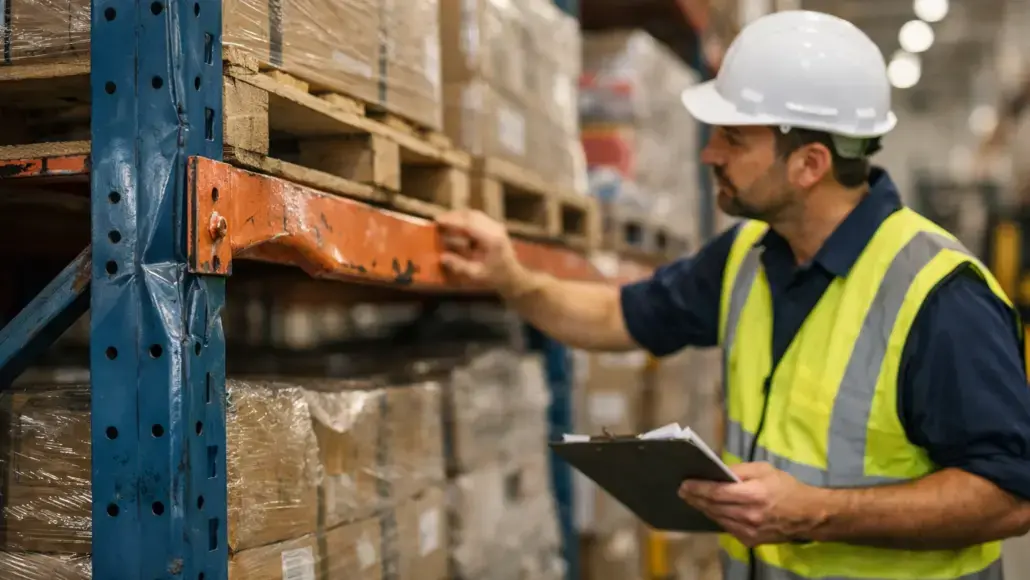
Regular inspections allow facility managers to identify damage before it progresses to dangerous levels. ANSI MH16.1-2023 visual inspection guidelines require evaluators to look for bent, cracked or dented beams and out-of-plumb frames that indicate underlying structural damage.
Qualified personnel should assess columns showing visible deformation to determine whether repair or replacement is necessary. Beams with excessive deflection under load suggest either overloading or material fatigue. Frame connections that appear loose or misaligned compromise load transfer and should be corrected immediately.
Industry standards recommend these inspections occur at least annually, with high-traffic facilities conducting quarterly or monthly assessments.
Top Warehouse Racking Companies Across the Nation
Selecting the right supplier ensures access to quality-engineered storage solutions backed by installation expertise and ongoing support. The following companies are leading providers across different regions, each offering specialized capabilities to help facility planners navigate complex storage projects.
Arnold Machinery Company — Colorado
Arnold Machinery Company serves as a premier provider of warehouse racking and shelving solutions throughout Colorado. With over 80 years of material-handling experience, its associates bring deep technical expertise to every storage-system design and implementation project.
The company’s Silver Service® Guarantee demonstrates its commitment to customer satisfaction, ensuring it will do any and every ethical thing to keep customers happy with its products and services. This policy extends across all phases of a project, from initial AutoCAD layout design through installation and ongoing maintenance support.
Arnold Machinery Company maintains a team of more than 200 technicians who provide on-site consultations and installation services. Facilities requiring automated storage and retrieval systems can access solutions that may include the latest technology platforms and deliver measurable reductions in labor costs. The company offers free warehouse AutoCAD design services and free on-site consultations to help planners optimize existing spaces.
Key features:
- Free warehouse AutoCAD layout design
- 200+ technicians for installation and support
- Silver Service® Guarantee for customer satisfaction
WSN Rack — Washington
WSN Rack is one of the leading distributors of industrial storage solutions in the Pacific Northwest. The company offers high-quality shelving and racking equipment designed to fit diverse operational requirements across warehouse environments.
Its team offers in-house design and engineering services to help facilities maximize available space through optimized storage configurations. WSN Rack maintains one of the largest stocks of used equipment in the area, providing cost-effective alternatives for operations with budget constraints. These products remain in good condition and deliver the same structural reliability as newly manufactured components.
The company delivers and installs orders efficiently, minimizing downtime and allowing facilities to resume normal operations quickly.
Key features:
- In-house design and engineering services
- Large inventory of quality used equipment
- Efficient delivery and installation timelines
First Access — New Jersey
First Access maintains one of the largest inventories of new pallet racks in the region, with most items in stock and available for immediate purchase. This extensive inventory allows facilities to secure equipment quickly without extended lead times.
The company carries used pallet racking systems, providing options for operations seeking value-oriented solutions without compromising on structural integrity. Beyond racking, First Access carries a full line of workstations, packing tables and dock equipment to address comprehensive material handling needs.
Key features:
- Extensive new pallet rack inventory
- Immediate delivery on most stock items
- Full line of material handling equipment
Frequently Asked Questions
Here are the most commonly asked questions about racking solutions.
What is the most common cause of racking failure?
Forklift impacts and even minor collisions can bend columns or dislodge beams, creating structural weaknesses that worsen over time. Overloading bays beyond their rated capacity also contributes significantly to premature failures, as excessive weight causes beam deflection and joint stress.
How often should a warehouse rack system be inspected?
ANSI standards recommend that visual inspections be conducted at least annually by trained personnel who can identify signs of damage or deterioration. High-traffic warehouses with frequent forklift activity should consider more frequent inspections, potentially quarterly or monthly, depending on the frequency of impacts and load-cycling intensity.
Does rack damage always require a full replacement?
Not necessarily. Minor damage may be repairable depending on its location and severity. Qualified structural engineers can assess whether straightening bent components or reinforcing damaged sections restores adequate safety margins. However, damage to primary load-bearing elements or the compromise of multiple components typically warrants full replacement to maintain structural integrity.
Ensuring a Safe Warehouse Future
An engineered storage solution serves as the backbone of warehouse operations, supporting both inventory management efficiency and worker safety. Facility planners who prioritize regular inspections, adhere to load capacity limits and partner with reputable suppliers position their operations for long-term success. Assessing current racking systems today helps identify vulnerabilities before they escalate into costly failures or safety incidents.