

























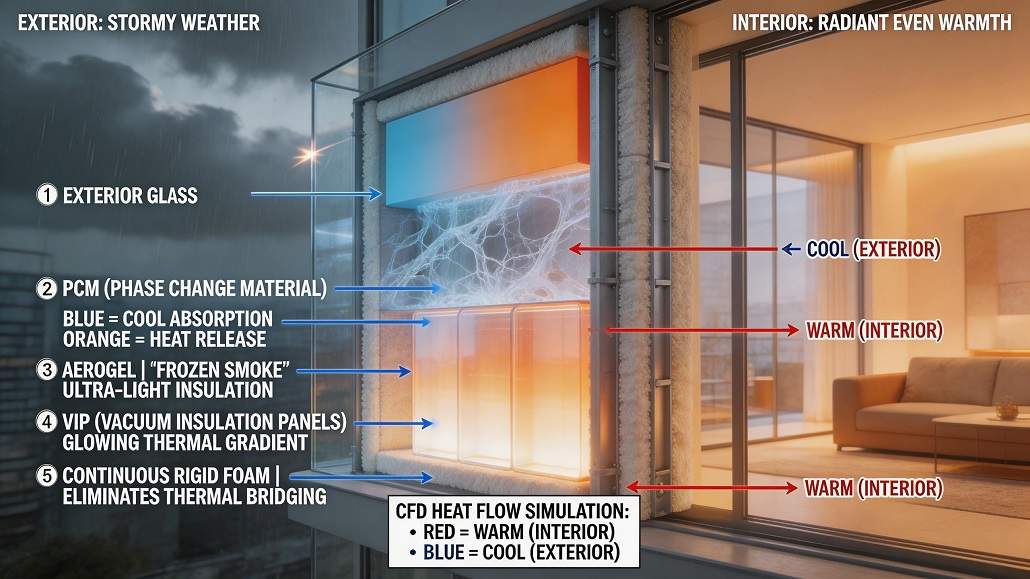


The fundamental challenge of modern architecture involves managing the delicate balance between structural integrity, aesthetic appeal, and thermal regulation. As global energy demands continue to rise and environmental regulations become increasingly stringent, the role of thermal insulation solutions building efficiency has shifted from a supplementary consideration to a core architectural necessity. Thermal management is essentially the science of controlling heat flow through conduction, convection, and radiation. By implementing sophisticated thermal insulation materials within building insulation systems, architects and engineers can create environments that maintain stable internal temperatures regardless of external fluctuations, thereby reducing the carbon footprint of the built environment.
The Scientific Foundation of Heat Transfer Mitigation
To understand why thermal insulation solutions building efficiency are so critical, one must first examine the physics of heat migration. Heat naturally moves from warmer areas to cooler ones until equilibrium is reached. In the context of a building envelope, this means that during winter, expensive warmth escapes to the outside, while in summer, external heat infiltrates the living space. Thermal insulation materials act as a barrier to this flow. The effectiveness of these materials is typically measured by their R-value, which represents their thermal resistance. Higher R-values indicate greater insulating power. However, simply choosing a material with a high R-value is only one part of the equation; the strategic placement and continuity of building insulation systems are what truly determine the final building performance.
Innovations in Thermal Insulation Materials and Composites
The industry has moved far beyond traditional fiberglass batts. Today, energy efficient construction relies on a diverse array of insulation technology options ranging from Vacuum Insulation Panels (VIPs) to advanced aerogels. VIPs offer an R-value several times higher than conventional materials with only a fraction of the thickness, making them ideal for urban projects where space is at a premium. Similarly, aerogels, often referred to as frozen smoke, represent the pinnacle of current material science. These silica-based structures are incredibly light and provide exceptional thermal resistance. While cost remains a factor for these high-end solutions, their long-term impact on energy efficient construction and operational savings often justifies the initial investment.
Strategic Integration within Building Insulation Systems
The implementation of building insulation systems requires a holistic approach that considers the entire building envelope as a single functioning unit. Thermal bridging the phenomenon where heat bypasses insulation through conductive materials like steel studs or concrete slabs remains a major obstacle to achieving peak building performance. Modern insulation technology addresses this by utilizing continuous insulation strategies. By wrapping the exterior of the structure in a seamless layer of rigid foam or mineral wool, designers can effectively eliminate thermal bridges. This method not only improves the efficiency of thermal insulation solutions building efficiency but also protects the structural components from temperature-induced expansion and contraction, thereby extending the life of the building.
The Economic and Environmental Imperative of Efficiency
Investing in high-performance thermal insulation solutions building efficiency provides a clear path to economic sustainability. The primary driver for property owners is the reduction in HVAC operational costs. A well-insulated building requires significantly less energy for heating and cooling, which directly translates to lower utility bills. Over the lifespan of a structure, these savings can amount to hundreds of thousands of dollars. Furthermore, as energy prices remain volatile, a highly efficient building serves as a hedge against future cost increases. From an environmental perspective, the reduction in energy consumption directly correlates to a decrease in greenhouse gas emissions. Since the building sector is responsible for nearly 40% of global carbon emissions, the widespread adoption of advanced building insulation systems is a non-negotiable component of global climate strategy.
Enhancing Indoor Environmental Quality and Occupant Comfort
Beyond the technical metrics of R-values and energy savings, thermal insulation solutions building efficiency play a vital role in human-centric design. Occupant comfort is not merely about air temperature; it is also about the radiant temperature of surrounding surfaces. In poorly insulated buildings, walls remain cold in the winter, drawing heat away from the human body and creating a perception of discomfort even when the thermostat is set to a high level. High-quality building insulation systems ensure that interior surface temperatures remain close to the air temperature, providing a more stable and pleasant environment. Additionally, many modern thermal insulation materials offer secondary benefits such as acoustic damping, reducing the transmission of external noise and contributing to a quieter, more productive indoor atmosphere.
Future Directions in Insulation Technology and Building Performance
As we look toward the future, the integration of smart materials into energy efficient construction is set to redefine building performance. Phase Change Materials (PCMs) are an emerging insulation technology that can absorb and release heat as they transition between solid and liquid states. When integrated into building insulation systems, PCMs can act as a thermal battery, buffering the building against peak daytime temperatures and releasing that energy during the cooler night hours. This dynamic approach to thermal management, combined with the traditional reliability of high-performance thermal insulation materials, ensures that thermal insulation solutions building efficiency will continue to lead the way in creating the next generation of resilient, sustainable, and comfortable architecture.
The Role of Computational Modeling in Thermal Strategy
The precision of modern energy efficient construction owes much to advanced computational fluid dynamics (CFD) and building information modeling (BIM). Before a single brick is laid, engineers can now simulate how thermal insulation solutions building efficiency will perform under a thousand different climatic scenarios. This allows for the identification of potential thermal weak points that might not be obvious in traditional 2D drawings. By modeling the complex interactions between building insulation systems and the surrounding environment, designers can optimize the thickness and type of thermal insulation materials used in different parts of the structure. For instance, north-facing walls in the northern hemisphere may require significantly more insulation than south-facing ones, a detail that can be fine-tuned through data-driven building performance analysis.
Synergistic Benefits: Acoustic Insulation and Fire Safety
While the primary goal of thermal insulation solutions building efficiency is thermal regulation, many high-performance thermal insulation materials provide secondary benefits that are equally important for a high-quality built environment. Mineral wool and certain recycled cellulose products are exceptional at sound absorption, turning building insulation systems into powerful acoustic barriers. This is particularly valuable in dense urban settings or multi-family housing, where noise pollution is a major detractor from quality of life. Furthermore, many of these materials are naturally fire-resistant or treated with fire retardants, enhancing the overall safety of energy efficient construction. By selecting multi-functional insulation technology, architects can solve multiple design challenges with a single integrated solution.
Adapting Insulation Standards to a Changing Global Climate
As global temperatures continue to fluctuate and reach new extremes, the standards for building performance are being forced to evolve. In many regions, the historical focus on winter heating is shifting toward a greater emphasis on summer cooling. Thermal insulation solutions building efficiency that were once considered adequate are now being outpaced by the sheer intensity of heatwaves. This has led to a push for higher mandatory R-values and the adoption of reflective insulation technology to combat solar radiation. The future of energy efficient construction lies in creating buildings that are not just passive shells but active, resilient systems capable of protecting their occupants from the increasing volatility of the natural world. This long-term perspective is what separates a standard project from a masterpiece of modern engineering.