






























The global industrial landscape is currently experiencing a profound metamorphosis, often referred to as the Fourth Industrial Revolution or Industry 4.0. In the specialized sector of flooring fabrication, this shift is manifesting as a move away from traditional, linear assembly lines toward fully integrated, smart manufacturing flooring production ecosystems. This evolution is driven by the need for higher efficiency, greater product customization, and a drastic reduction in environmental impact. For an industry that has historically relied on heavy machinery and manual quality checks, the introduction of cognitive computing and advanced robotics represents more than just an upgrade; it is a total reimagining of how architectural surfaces are brought to life.
The Architecture of the Smart Factory
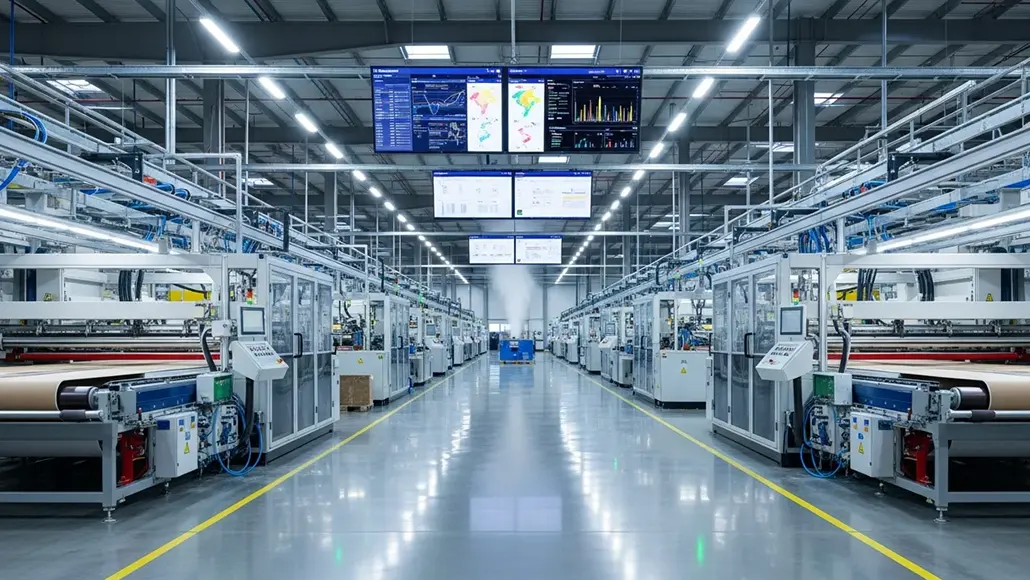
At the heart of this transformation is the concept of the “smart factory,” a facility where every machine, sensor, and logistics vehicle is connected through a unified digital nervous system. In modern flooring manufacturing technology, these factories use the Internet of Things (IoT) to monitor every stage of production in real-time. From the initial processing of raw timber or synthetic resins to the final curing and packaging of finished tiles, data is constantly being collected and analyzed. This allows for predictive adjustments; if a sensor detects a minute deviation in the moisture content of a wood veneer or the temperature of a pressing machine, the system can automatically calibrate itself before the error results in a defective product. This level of industrial automation ensures a level of consistency that was previously impossible, significantly lowering the “cost of quality” for manufacturers and end-users alike.
Artificial Intelligence and Predictive Analytics
Beyond simple automation, the integration of artificial intelligence (AI) is providing flooring producers with a predictive edge. AI algorithms can analyze years of production data to forecast potential equipment failures or supply chain bottlenecks before they occur. In the context of the construction supply chain, this means that smart manufacturing flooring production can adapt to fluctuations in raw material availability or shifts in market demand with remarkable agility. For instance, if a specific pattern of luxury vinyl tile is trending in the European market, AI-driven systems can reconfigure production schedules across multiple facilities to meet that demand without overproducing less popular lines. This data-driven decision-making process minimizes inventory overhead and maximizes the efficiency of the entire manufacturing lifecycle.
Autonomous Robotics and Precision Fabrication
The physical labor of flooring production is also being revolutionized by a new generation of autonomous robots. Unlike the static robotic arms of the past, these machines are equipped with advanced computer vision and tactile sensors, allowing them to handle delicate materials like natural stone veneers or intricate parquet patterns with human-like dexterity but far greater speed. In smart manufacturing flooring production, robots are now responsible for high-precision tasks such as laser-cutting modular components, applying protective nanocoatings, and performing high-speed visual inspections. These robotic systems operate 24/7 with zero fatigue, ensuring that every piece of flooring that leaves the factory meets the exact specifications required for high-performance architectural projects. This reduction in manual handling also decreases the risk of workplace injuries, contributing to a more sustainable and ethical industrial model.
Sustainability and Waste Reduction Through Digitalization
One of the most compelling arguments for the adoption of smart manufacturing flooring production is its impact on environmental sustainability. Traditional manufacturing often results in significant material waste due to overproduction or cutting errors. However, by using digital twins virtual replicas of the physical production line engineers can simulate the manufacturing process and optimize material usage before a single machine is turned on. This precision allows for a “near-zero-waste” approach, where off-cuts are minimized and any remaining material is systematically tracked for recycling or repurposing. Furthermore, smart factories are increasingly being powered by integrated renewable energy systems that adjust their output based on the real-time energy demands of the production equipment, ensuring that the carbon footprint of the flooring is as low as possible.
Transparency in the Construction Supply Chain
The digitalization of production also brings a new level of transparency to the construction supply chain. Smart manufacturing flooring production allows for the implementation of blockchain-based tracking, where every batch of flooring is assigned a unique digital identity. This “digital passport” can record the origin of the raw materials, the specific factory conditions under which it was produced, and its entire transport history. For architects and developers seeking green building certifications like LEED or BREEAM, this level of verifiable data is invaluable. It ensures that the flooring specified for a project is truly sustainable and ethically sourced, protecting both the developer’s reputation and the environmental integrity of the building. This move toward radical transparency is reshaping the relationship between manufacturers, contractors, and clients.
Energy Efficiency and Resource Management
Industry 4.0 flooring technologies are also tackling the challenge of energy consumption. Smart factories utilize energy management systems that communicate directly with the electrical grid, shifting high-energy tasks like the operation of large-scale kilns or presses to times of day when renewable energy is most abundant or grid demand is lowest. Additionally, advanced water filtration and closed-loop systems are being integrated into the production process to ensure that water used in the cooling or cleaning of materials is treated and reused on-site. This focus on resource efficiency is not just an environmental choice but an economic one, as reducing waste and energy consumption directly improves the production efficiency and profitability of the manufacturing firm.
The Future of Customization and On-Demand Production
As we look toward the future, the most exciting potential of smart manufacturing flooring production lies in “mass customization.” Traditionally, custom floor designs were prohibitively expensive and required long lead times. However, digital manufacturing allows for “batch size one” production, where a single, unique tile or plank can be produced with the same efficiency as a standard run of ten thousand. This opens up endless possibilities for interior architecture, allowing designers to create bespoke floors that feature unique gradients, brand-specific imagery, or site-specific navigation cues. As 3D printing and additive manufacturing technologies continue to mature and integrate into the smart factory, the physical constraints of flooring design will vanish, leaving only the limits of the designer’s imagination.
The Role of Human-Machine Collaboration
Despite the rise of automation, the human element remains a critical component of smart manufacturing flooring production. We are entering an era of “cobotics,” where human workers and robots work side-by-side in a collaborative environment. Humans provide the creative oversight, complex problem-solving, and strategic management, while robots handle the repetitive, high-precision, and physically demanding tasks. This synergy allows flooring companies to innovate faster and respond more effectively to the complex needs of modern construction projects. The workforce of the future in the flooring industry will be one of “digital artisans,” who use data and technology as their primary tools to craft the surfaces of the future.
Conclusion: A Foundation of Innovation
The transition to smart manufacturing is not a destination but a continuous journey of innovation. By embracing the principles of Industry 4.0, the flooring industry is positioning itself as a leader in the broader construction sector’s digital transformation. The result is a generation of surfaces that are more durable, more beautiful, and more sustainable than anything that has come before. As smart manufacturing flooring production becomes the global standard, the buildings of the future will be built on a foundation of data, precision, and ecological responsibility, ensuring that our urban environments are as intelligent as the processes that created them.