



























The construction industry is one of the world’s largest consumers of raw materials and a major contributor to global waste. For decades, the sector has operated on a linear “take-make-dispose” model, where resources are extracted, processed into building components, and eventually demolished and sent to landfills. However, the rising cost of materials and the urgent need to address climate change are driving a significant shift toward a circular economy in construction materials. This strategic transition focuses on keeping resources in use for as long as possible, extracting their maximum value, and then recovering and regenerating materials at the end of their service life. By decoupling economic growth from the consumption of finite resources, the industry can create a more resilient and sustainable built environment.
The adoption of circular economy in construction materials requires a fundamental rethink of the entire building lifecycle. It begins at the design stage, where architects and engineers are increasingly designing for deconstruction rather than just construction. This “design for disassembly” approach ensures that building components can be easily removed and repurposed at the end of a building’s life, rather than being crushed and downcycled. This paradigm shift is not just about environmental stewardship; it is also about economic opportunity. As the sustainable building materials market matures, companies that embrace circularity are finding new ways to reduce costs and create value through material recovery and secondary markets.
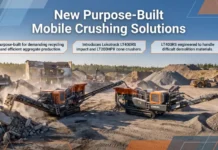
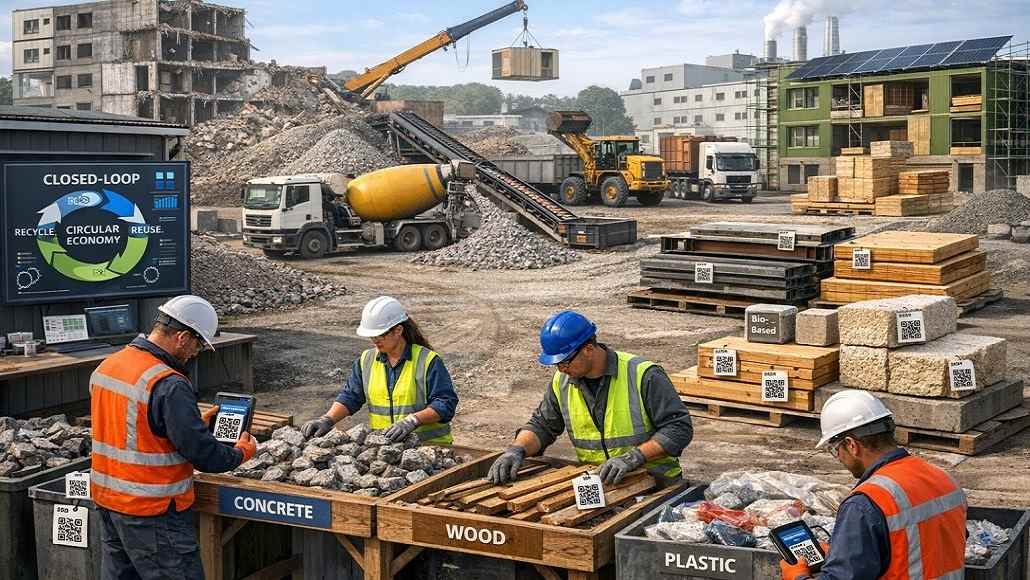
One of the most visible aspects of this transition is the increasing use of recycled construction materials. Innovations in material science have made it possible to incorporate recycled content into everything from concrete and steel to insulation and interior finishes. For example, crushed concrete from demolition sites can be used as aggregate for new structural elements, while recycled plastics are being transformed into high-performance decking and cladding. These recycled construction materials often perform as well as, if not better than, their virgin counterparts, while significantly reducing the energy and carbon emissions associated with resource extraction and manufacturing. The integration of these materials into the supply chain is a critical step in closing the loop on resource use.
Advancing Construction Waste Management Practices
Effective construction waste management is a cornerstone of the circular economy. Traditionally, waste management was an afterthought, with contractors simply paying for the removal of mixed debris. Today, progressive firms are implementing rigorous on-site sorting and recovery programs. By separating wood, metal, masonry, and cardboard at the source, contractors can ensure that these materials are diverted to recycling facilities rather than landfills. This practice not only reduces disposal fees but also provides a steady stream of feedstock for the sustainable building materials market. The shift toward more precise management is also being supported by digital tools, such as material passports, which track the composition and history of building components, making it easier to manage them at the end of their life.
The transition to green construction practices is also being driven by regulatory pressure and client demand. Many governments are introducing stricter landfill taxes and mandates for the use of recycled content in public infrastructure projects. Simultaneously, developers are recognizing that green buildings—those that incorporate circular principles—often have higher market values and lower operating costs. This alignment of economic and environmental incentives is accelerating the adoption of circular economy in construction materials across the globe. By viewing waste as a resource, the industry is not only reducing its environmental footprint but also enhancing its long-term viability in an increasingly resource-constrained world.
The Growing Sustainable Building Materials Market
The sustainable building materials market is currently experiencing unprecedented growth. This expansion is fueled by innovations in bio-based materials and the refinement of traditional recycling processes. Materials like cross-laminated timber (CLT) are gaining popularity as a renewable alternative to concrete and steel, while mushroom-based insulation and seaweed-derived tiles are moving from the laboratory to the commercial market. These innovations are essential for a circular economy in construction materials because they provide low-carbon alternatives that can be safely returned to the biological cycle at the end of their use. The diversification of the material palette allows designers to create buildings that are not only functional and beautiful but also truly sustainable.
Investment in the infrastructure for material recovery is also a key driver of the sustainable building materials market. Specialized facilities are being developed to process complex waste streams, such as composite panels and treated timber, which were previously difficult to recycle. By creating a more robust secondary market for recycled construction materials, the industry can ensure a consistent supply of high-quality resources for new projects. This ecosystem of material recovery, processing, and manufacturing is the engine of the circular economy, providing the physical infrastructure needed to keep materials in high-value loops.
Implementation of Green Construction Practices
The successful implementation of green construction practices requires a collaborative effort across the entire value chain. It is no longer enough for individual companies to act in isolation; the circular economy depends on the creation of closed-loop systems that involve manufacturers, contractors, and facility managers. For example, some manufacturers are now offering “product-as-a-service” models, where they retain ownership of building components like lighting or flooring. At the end of the product’s life, the manufacturer is responsible for taking it back and recycling it, ensuring that the material is managed within a circular system. This model incentivizes manufacturers to design more durable and recyclable products, further advancing the goals of the circular economy in construction materials.
On the job site, green construction practices are manifesting in the form of modular and prefabricated construction. By manufacturing building components in a controlled factory environment, companies can drastically reduce material waste and improve quality control. Modular units can also be designed to be rearranged or expanded, providing buildings with a level of flexibility that extends their useful life. When a building’s function changes, modular components can be relocated to a new site, embodying the core principles of the circular economy. This approach not only saves materials but also reduces the time and disruption associated with traditional construction methods.
Overcoming Barriers to Circularity
Despite the clear benefits, several barriers remain to the widespread adoption of circular economy in construction materials. One of the primary challenges is the lack of standardized metrics for circularity. Without clear definitions and ways to measure progress, it can be difficult for companies to demonstrate the value of their efforts. Additionally, the existing building codes and standards are often based on the use of virgin materials, which can create hurdles for the use of recycled construction materials. Addressing these regulatory barriers will require a concerted effort from policymakers and industry associations to update standards and provide incentives for circular practices.
Another significant challenge is the complexity of the modern construction supply chain. Coordinating the recovery and reuse of materials across multiple stakeholders and geographic locations requires high levels of transparency and communication. Digital technologies, such as blockchain and digital twins, are beginning to play a role in overcoming these logistical hurdles. By providing a secure and transparent record of material origins and transformations, these tools can build trust in the secondary market and facilitate the trade of recycled building components. As these technologies become more accessible, the barriers to implementing a circular economy in construction materials will continue to diminish.
The Future of Circular Construction
The future of the built environment is inherently linked to our ability to embrace circularity. As urban populations continue to grow, the demand for new buildings and infrastructure will only increase. To meet this demand without exceeding the planet’s ecological limits, we must transition to a system where the “waste” of today becomes the “resource” of tomorrow. The circular economy in construction materials offers a roadmap for this transition, providing a framework for creating buildings that are regenerative by design. The integration of recycled construction materials, the expansion of the sustainable building materials market, and the refinement of construction waste management are all essential steps on this journey.
Ultimately, the shift toward circularity is about more than just managing materials; it is about reshaping our relationship with the built environment. It is about creating structures that are designed to evolve and endure, providing value for generations to come. By prioritizing green construction practices and investing in the technologies that enable circularity, the industry can transform itself from a consumer of resources into a steward of the environment. The journey toward a circular economy in construction materials is well underway, and the organizations that lead this transition will be the ones that thrive in the sustainable economy of the future.