



























The traditional approach to building design and engineering has historically involved a fragmented and siloed process where architects, structural engineers, and various mechanical contractors worked in relative isolation from one another. However, the sheer complexity and the increasingly aggressive performance requirements of the twenty-first century have necessitated a radical shift toward a more holistic and collaborative methodology. Integrated building systems represent the absolute pinnacle of this evolution, where the various mechanical, electrical, and digital components of a structure are designed, installed, and operated as a single, unified, and highly intelligent entity.
This convergence is a primary and powerful driver of construction innovation, enabling the creation of buildings that are more energy-efficient, significantly easier to manage, and far more responsive to the needs of their occupants than anything previously possible. By breaking down the long-standing silos between different building technologies, the industry is moving toward an era of truly smart infrastructure that functions with the cohesion of a living organism.
The Foundation of System Integration in Modern Architectural Design
System integration is not merely about making different hardware devices “talk” to each other through basic wires; it is about creating a shared, high-speed digital ecosystem that oversees and optimizes every aspect of building performance in real-time. At its core, this involves the adoption of common, open-source communication protocols that allow the HVAC, lighting, security, vertical transportation, and fire safety systems to share a massive stream of data and coordinate their actions with surgical precision.
When these integrated building systems work together in a unified fashion, the result is far greater than the simple sum of its individual parts. For instance, the building’s security system can inform the HVAC and lighting systems the exact moment a specific zone is unoccupied, allowing the temperature to be set back and the lights to be extinguished automatically without any manual intervention. This level of seamless coordination is the defining hallmark of modern construction innovation, providing a friction-less user experience while maximizing the building’s overall operational efficiency and reducing its environmental impact.
The Role of Digital Twins in Advancing Construction Innovation
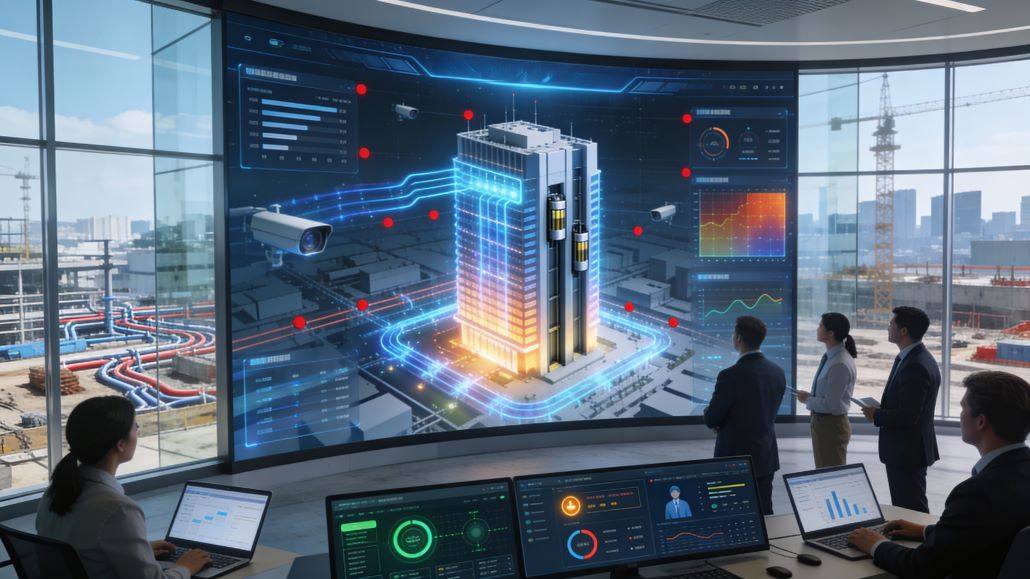
One of the most exciting and transformative developments in the field of building technologies is the widespread use of digital twins. A digital twin is a high-fidelity, virtual replica of a physical building that is constantly fed with a live stream of real-time data from the integrated building systems. This allows architects, engineers, and facility managers to simulate and test the performance of a building before the first stone is ever laid, and to monitor its health with incredible detail throughout its entire functional lifecycle.
By utilizing these sophisticated virtual models, construction teams can identify and resolve potential clashes between different systems such as ductwork interfering with electrical conduits during the design phase, which drastically reduces the need for costly and time-consuming changes in the field. This application of smart infrastructure technology ensures that the final physical building operates as close to its theoretical peak performance as possible, driving continuous improvement in building energy performance and long-term reliability. The digital twin becomes a living manual for the building, evolving as the structure matures.
Smart Infrastructure and the Transformation of the Occupant Experience
While a significant portion of the focus on integrated building systems is naturally placed on energy efficiency and cost reduction, the impact on the day-to-day occupant experience is equally profound and arguably more visible. In a traditional, non-integrated office environment, employees often have very little control over their immediate surroundings, leading to discomfort and reduced productivity. In a building designed with unified building technologies, the interior environment can be personalized to an incredible and unprecedented degree.
Smart, tunable lighting systems can automatically adjust their color temperature and intensity throughout the day to support the natural circadian rhythms of the workers, while occupancy-aware HVAC systems ensure that fresh, high-quality air is always delivered to the areas where it is needed most. This human-centric approach to system integration is a key component of modern construction innovation, as it recognizes that a building’s ultimate and most important purpose is to support the well-being, health, and creativity of the people who occupy it. When a building “knows” its users and anticipates their needs, it becomes a powerful tool for business success.
Optimizing Lifecycle Management through Deep System Integration
The numerous benefits of integrated building systems extend far beyond the initial construction and commissioning phases. By providing a centralized, high-fidelity platform for monitoring all building components, these systems drastically simplify the long-term management and maintenance of the asset. Maintenance teams no longer need to check individual systems manually; they can access real-time diagnostic data from every motor, valve, and sensor from a single, unified interface, often on a mobile device.
This integrated approach also facilitates far more accurate and data-driven capital planning. Property owners can see exactly how hard specific systems are working and predict with high accuracy when they are reaching the end of their useful life and will require replacement. In an era where building owners are under increasing pressure from investors and regulators to demonstrate the long-term value, sustainability, and resilience of their assets, the role of unified building technologies has become absolutely indispensable. Integration is the key to protecting the long-term financial health of real estate investments.
Addressing Challenges and the Future of Integrated Building Technologies
Despite the clear and overwhelming advantages, achieving full and seamless system integration remains a complex and demanding task for even the most experienced teams. It requires an exceptionally high degree of collaboration between different trades and a firm, non-negotiable commitment to using open standards that prevent proprietary vendor lock-in. Furthermore, the increasing reliance on complex digital building controls necessitates a robust, multi-layered approach to cybersecurity to protect the building’s vital infrastructure from increasingly sophisticated external threats.
However, as the industry continues to mature and the “Internet of Buildings” becomes a reality, these challenges are being systematically addressed through better professional training, more sophisticated software tools, and improved industry standards. The future of construction innovation lies in the continued and relentless refinement of these integrated building systems. As we move forward, buildings will become even more autonomous, utilizing artificial intelligence to manage their own energy production, storage, and consumption, ensuring that our urban environments are not just structures of steel and glass, but intelligent, self-sustaining platforms that enhance every aspect of the human experience and the health of our planet.