





























The architectural landscape of the twenty-first century is undergoing a profound and necessary transformation, driven by the dual imperatives of environmental sustainability and the demand for unprecedented levels of interior comfort. At the very heart of this evolution lies the integration of smart HVAC systems, which have transitioned from being simple, background mechanical utilities to becoming the complex central nervous system of modern building design. These sophisticated networks do far more than merely heat or cool a space; they utilize a dense array of sensors, high-speed actuators, and advanced software to create living environments that respond intuitively and instantaneously to the needs of their inhabitants. The shift toward these intelligent frameworks is not merely a passing trend but a fundamental reimagining of how we conceptualize building performance, occupant well-being and global environmental stewardship.
In the past, heating, ventilation, and air conditioning were often treated as isolated components, often over-designed to handle peak loads that rarely occurred, leading to massive energy inefficiencies. Today, the integration of smart HVAC systems allows for a more surgical approach. By constantly monitoring internal and external variables, these systems ensure that energy is only deployed where it is needed and in the exact quantity required. This precision is not just an engineering triumph; it is a cornerstone of the modern effort to create buildings that are as intelligent as the people who occupy them.
The Intersection of Automation and Efficiency
Central to the success of these technological advancements is the concept of building automation. In traditional structures, climate control was largely a reactive process, characterized by manual thermostat adjustments and significant energy waste as systems struggled to balance entire floors based on a single sensor reading. However, modern building design now prioritizes systems that anticipate demand rather than just reacting to it after comfort has already been lost. By integrating building automation with sophisticated climate control, engineers can create a seamless feedback loop where data informs action with millisecond latency.
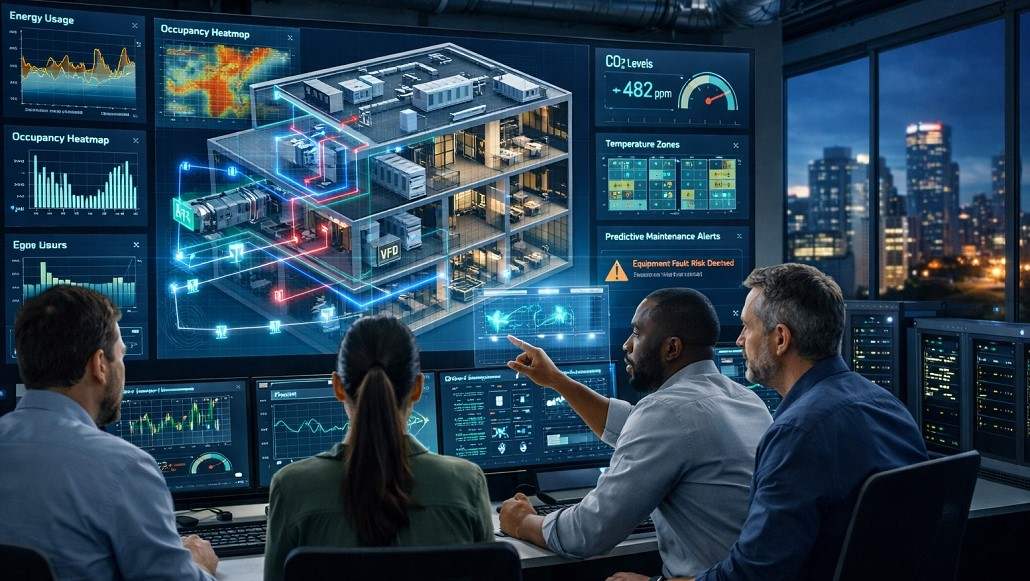
For instance, modern occupancy sensors do not just detect motion; they can count the number of individuals in a specific zone, allowing smart HVAC systems to adjust the volume of fresh air and cooling based on the actual metabolic load present in the room. This granular level of control ensures that energy is not squandered on empty boardrooms or quiet corridors, representing a major leap forward in energy efficient HVAC implementation. Furthermore, these systems can integrate with the building’s lighting and window shade controls, creating a holistic environment where the thermal load is managed through both active cooling and passive heat gain mitigation.
Leveraging Real-Time Data for Indoor Air Quality
The quality of the air we breathe indoors has become a paramount concern for developers, corporate tenants, and occupants alike, especially in the wake of global health events that highlighted the importance of ventilation. Modern smart HVAC systems play a critical role in maintaining high indoor air quality through continuous, multi-parameter monitoring. By utilizing advanced sensors that track not only temperature but also carbon dioxide levels, volatile organic compounds, and fine particulate matter, these systems can automatically increase ventilation rates or activate specialized filtration protocols when specific thresholds are exceeded.
This proactive approach to indoor air quality ensures that buildings remain healthy environments that foster productivity and well-being. Instead of relying on a fixed schedule for air exchange, which often fails to account for varying occupancy levels, the system breathes with the building. This dynamic response ensures that CO2 levels are kept low preventing the drowsiness often associated with poorly ventilated offices while ensuring that outdoor pollutants are filtered out before they reach the workspace. This intelligence represents a significant move beyond the simple “set it and forget it” mentality of older installations, placing human health at the center of the mechanical design.
Advanced HVAC Controls and the User Experience
One of the most visible and impactful changes in building management is the evolution of HVAC controls. The days of the basic, non-communicative wall-mounted thermostat are rapidly fading, replaced by centralized management platforms and mobile-first interfaces that offer deep, actionable insights into system performance. These modern controls allow facility managers to oversee vast, interconnected networks of equipment from a single, unified dashboard, identifying potential failures or performance drifts before they manifest as occupant complaints.
Furthermore, for the individual occupant, these systems offer a level of personalization that was once deemed impossible in a commercial setting. Individualized micro-climates can now be maintained within a larger open-plan office through the use of smart diffusers and localized sensing. This caters to diverse personal preferences without compromising the overall building energy performance. When a building can adapt to the specific comfort needs of its users while simultaneously reducing its utility bill, it represents the ultimate synthesis of form, function, and technology.
Data-Driven Performance Optimization and Machine Learning
The true power of smart HVAC systems lies in their ability to learn and adapt over time through the application of machine learning. These systems do not just store historical data; they analyze it to predict future needs with remarkable accuracy. By studying weather forecasts, previous energy consumption patterns, and the thermal inertia of the building itself, a smart system can pre-cool or pre-heat an interior during off-peak hours when energy rates are lower and the outdoor temperature is more manageable.
This predictive capability is a fundamental pillar of modern building design, allowing for a level of operational intelligence that significantly reduces the carbon footprint of commercial and residential structures. Over time, the system identifies the most efficient way to maintain comfort in every corner of the building, accounting for factors like solar orientation and the heat generated by office equipment. This ongoing optimization ensures that the building remains efficient even as its usage patterns change over the years.
The Future of Sustainable Urban Infrastructure
As we look toward the future, the role of intelligent climate management will only become more vital to the survival and success of our cities. The integration of renewable energy sources, such as solar arrays or geothermal wells, necessitates a control system that can manage varying power inputs and complex storage capabilities. Smart HVAC systems are uniquely equipped to handle this complexity, serving as the intelligent interface between the building’s internal needs and the external energy grid.
In an era where urban centers are becoming increasingly dense and the climate more volatile, the ability to maintain thermal comfort while minimizing environmental impact is the ultimate goal of architectural engineering. The continued refinement of these systems incorporating even more advanced sensors and AI-driven control logic will undoubtedly shape the next generation of skyscrapers and residential complexes. These buildings will not just be shelters from the elements; they will be active, intelligent partners in the quest for a more sustainable and healthier world.
Refining the Mechanical Landscape
Beyond the digital interface, the mechanical components themselves are becoming “smarter” and more modular. High-efficiency variable speed drives and magnetic bearing compressors are now standard in smart HVAC systems, allowing the hardware to match the precision of the software controlling it. This mechanical agility means that the system can operate at a fraction of its total capacity for the majority of the time, leading to massive energy savings and reduced wear and tear on the equipment.
The synergy between high-performance hardware and intelligent software creates a building that is resilient to external shocks. Whether it is a sudden heatwave or an unexpected spike in occupancy, the smart HVAC system can pivot its operations in real-time, protecting both the comfort of the occupants and the longevity of the building’s infrastructure. This level of robustness is essential for modern building design, ensuring that today’s investments continue to provide value in the decades to come.