


























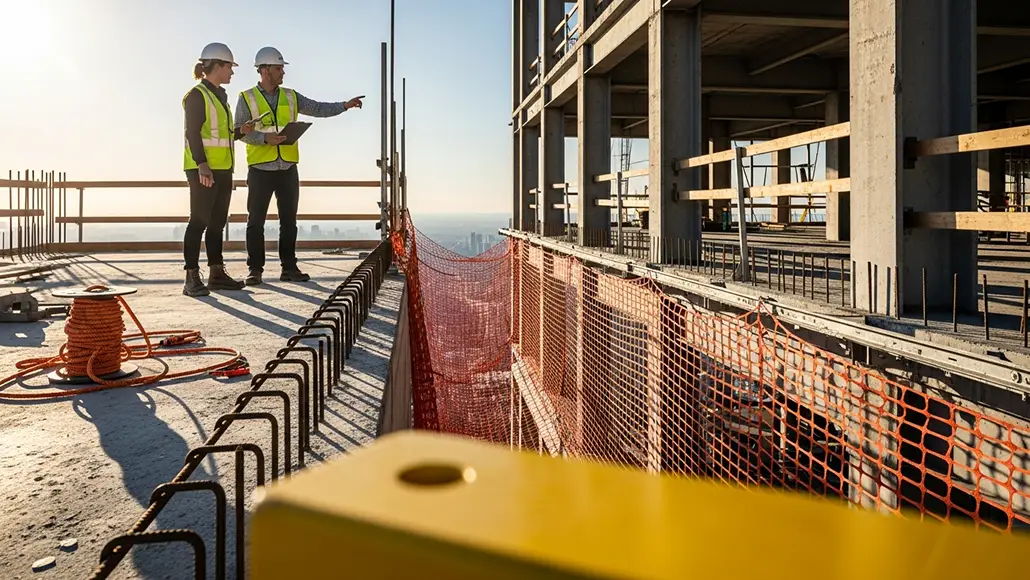


Falling objects are one of OSHA’s Fatal Four hazards, a persistent danger on any vertical construction project. The stark reality of these dangers was highlighted when New York State saw a decade-high 74 construction worker fatalities in 2023. These incidents aren’t just statistics; they represent catastrophic failures in safety protocols that can halt projects and ruin lives. The risk from falling objects from a simple hand tool to a heavy metal beam is constant, as demonstrated in a recent incident where a heavy metal beam fell from a work site amidst moving vehicles. This guide will provide you with clear, actionable best practices to mitigate risks from falling objects. Following these steps will help you protect your crew, maintain project timelines, and ensure a compliant, secure worksite.
Implement Proactive Controls: Securing Tools and Materials at Height
The most effective way to prevent a falling object incident is to stop objects from falling in the first place. This requires a proactive strategy for securing every tool, piece of equipment, and material that is handled at height. A dropped tool can gain deadly velocity, making simple containment measures an essential control. As attorneys who specialize in worksite dangers often note, the injuries from falling objects can be severe and life-altering, ranging from traumatic brain injuries to fatalities. Proper proactive controls are the first and most critical step in upholding a site’s duty of care to its workers and the public.
Master Proper Material Hoisting and Rigging Techniques
Hoisting materials is one of the most high-risk activities on a high-rise site. A failure in rigging, equipment, or communication can have devastating consequences, as seen in incidents where heavy beams have fallen onto public roads, leading to the removal of the site engineer and safety officer. Before any lift, ensure that your procedures are flawless and powered by reliable equipment. Choosing the right machinery is fundamental to ensuring the consistent and safe operation of cranes and hoists. Your pre-lift protocol must be rigorous and followed without exception.
- Inspect All Equipment: Before each use, thoroughly inspect all ropes, slings, cables, and hooks for signs of wear, fraying, or damage. Immediately remove any defective equipment from service.
- Verify Load Capacity: Never exceed the manufacturer’s specified load capacity for cranes, hoists, or rigging hardware. Check that the weight is stable and the items are locked in place before raising them.
- Establish Clear Communication: Use a certified signal person and standardized hand signals or dedicated radio channels to communicate with the crane operator. All personnel involved in the lift must be briefed on the plan.
- Utilize Tag Lines: Attach tag lines to control the load and prevent it from swinging or rotating, especially in windy conditions. This keeps the load steady and away from personnel and structures.
- Clear the Hoist Path: Ensure the entire path of the lift both vertically and horizontally is completely clear of personnel and obstructions.
Mandate a Comprehensive Tool Tethering Program
A simple dropped hammer or wrench can be fatal. A tool tethering system is a simple, cost-effective control that connects a tool to a worker or a fixed anchor point. This ensures that if a tool is dropped, it doesn’t become a projectile. For the 2024 fiscal year, inadequate fall protection was the most cited OSHA violation, demonstrating a widespread need for better implementation of basic safety measures like tethering. Your program should include providing workers with appropriate lanyards and anchor points for all tools used above ground level, turning a potentially lethal hazard into a manageable event.
Establish and Maintain Physical Barrier Systems
While securing objects at the source is the primary goal, secondary containment systems are essential to catch anything that might slip through. These physical barriers protect workers below, adjacent properties, and the public from falling debris and materials. The need for these systems is underscored by incidents where citizens become unsuspecting victims, such as a man who was nearly killed by a falling tree at an under-construction site, culminating in an FIR being lodged against the contractor due to negligent conduct. Physical barriers are an essential layer of public and worker protection.
Design and Enforce No-Go Drop Zones
A drop zone is a clearly marked, controlled area where the risk of falling objects is highest, such as directly below hoisting operations or overhead work. Access to these zones must be strictly limited to essential personnel. As safety guidance from authorities in Queensland reinforces, clearly defined exclusion areas are a proven strategy to prevent injuries, a measure prompted by over 300 falling object incidents recorded since July 2023. You should use high-visibility barricades, fencing, and clear signage to demarcate these areas and strictly enforce access protocols to prevent anyone from entering unnecessarily.
Select the Right Protective Netting and Guardrails
Guardrail systems, including toe boards and debris netting, provide a critical last line of defense. Toe boards vertical barriers at the edge of a walking or working surface prevent tools and materials from being kicked off the edge. Debris netting catches finer materials and larger objects. It’s crucial to select the right system for your site’s needs to ensure structural integrity. A robust protective system requires both strong components and proper installation.
| Protective System | Primary Use | Key Advantages | Installation Considerations |
| Toe Boards | Preventing tools and small items from rolling off the edges. | Required by OSHA on most scaffolds and elevated platforms; easy to install. | Minimum 3.5 inches high and must be fastened securely. |
| Debris Netting | Catching dropped tools, materials, and construction debris. | Highly versatile; provides containment over large areas. | Must be rated for impact and installed without gaps by trained personnel. |
| Canopies/Sidewalk Sheds | Protecting workers and the public at ground level. | Offers robust overhead protection from heavy objects. | Requires structural engineering and permits; can be costly. |
Foster a Culture of Safety Through Vigilance and Training
Even the best systems and protocols are useless without a well-trained team and a culture of constant vigilance. Tragic incidents, like the fatal collapse that killed an untrained temporary worker, serve as a grim reminder that gaps in safety planning can lead to disaster. A subsequent report on that incident confirmed the workers had no training or safety equipment before a fatal workplace accident. Alarmingly, a 2023 analysis found that 73% of New York construction sites where a worker died had prior OSHA violations, highlighting a systemic failure in ongoing safety management that can only be corrected through a dedicated safety culture.
Conduct Daily Site Inspections and Good Housekeeping
Your site supervisor or foreman should conduct a walk-through at the start of every shift, specifically to identify potential falling object hazards. Look for loose materials near edges, improperly stacked items, and damaged guardrails or netting. Good housekeeping keeping work areas clean and organized is a simple yet powerful way to reduce risk. This proactive vigilance is critical, as hazards can develop quickly on a dynamic high-rise site. Simple checks can prevent the kind of negligence that leads to worker injuries and hefty fines, such as the £80,000 fine levied on a contractor after a worker fell from a roof without adequate safety measures.
What to Do When Prevention Fails: Navigating a Falling Object Incident
Even with robust safety protocols, accidents can happen. When an object falls, the first priority is to secure the area and provide immediate medical attention to anyone injured. The incident must be reported, and a thorough investigation must begin to determine the cause and prevent a recurrence.
Navigating the aftermath is complex, involving internal reviews, OSHA reporting, and potential legal consequences. In these situations, understanding your rights and obligations is critical. For those injured, the path to recovery can be fraught with medical bills and lost wages.
Construction settlements in New York can range from tens of thousands to over $10 million for severe injuries, highlighting the need for expert guidance. An experienced construction accident attorney in New York can manage the complex investigation required to determine liability, whether it lies with a general contractor, subcontractor, or equipment manufacturer. They work to secure the compensation victims deserve while helping families navigate the difficult recovery process. For companies, these legal experts can also assist in establishing robust post-incident protocols to ensure such an accident never happens again.
Conclusion: Building a Safer Skyline, One Site at a Time
Ultimately, mitigating the risk of falling objects depends on a multi-layered approach: proactively securing all materials, engineering robust physical barriers, and fostering an unwavering commitment to daily inspections and training. These measures are more than just items on a safety checklist; they are fundamental practices that protect your most valuable asset your people. A safe site is an efficient and successful site. By taking these proactive steps, you can ensure that your project contributes positively to the skyline without adding to the tragic statistics that plague the construction industry.