





















A sudden power outage on a construction site or in a commercial building can create costly downtime, safety risks and missed deadlines. Fortunately, emergency power equipment is available to keep critical systems running when the grid fails. Picking the right options is key to matching capacity, runtime, portability and maintenance. Evaluate the top picks available to ensure you maintain the protection of schedules and people.
Defining Emergency Power Equipment
Emergency power equipment is any system that keeps circuits and gear running when the grid goes down. On construction sites, they can range from small portable generators to permanently installed standby generators. These solutions differ by capacity, fuel or battery type, portability and how quickly they can take over for the main supply.
A loss of power can have a significant impact on productivity and quality of life. It can halt tools, darken work areas, interrupt safety and fire protection systems and corrupt digital plans. Those issues drive schedule slippage and can create large safety hazards. Choosing the right equipment means matching runtime, load capacity and deployment speed to the job so you limit disruption and protect people and assets.
Types of Emergency Power Supplies
Different jobs require different types of backup. The main types of power equipment include the following.
Portable Generators
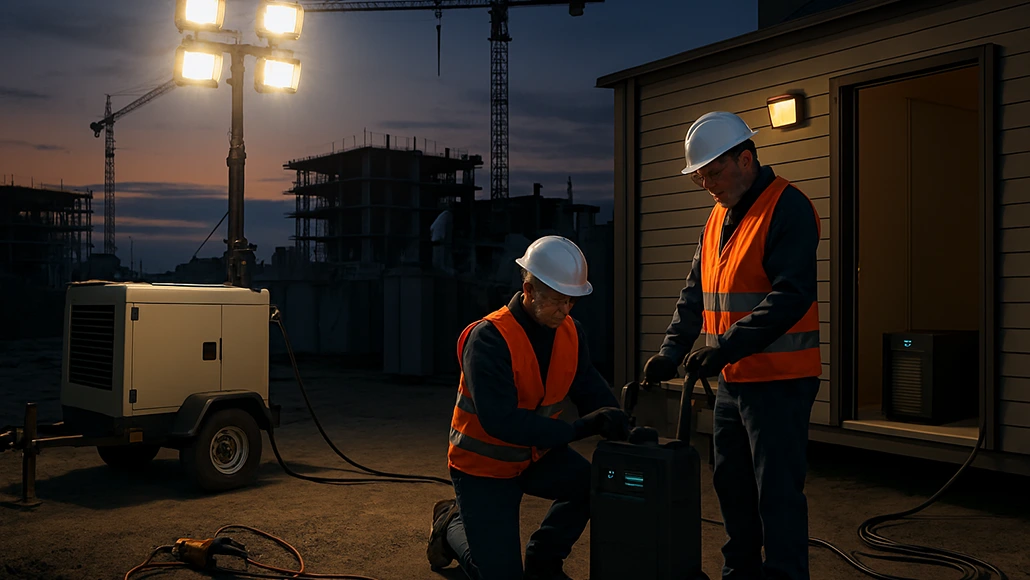
Portable generators are gas- or diesel-powered units that deliver flexible, on-demand AC power for tools, lighting and small equipment. They are compact and mobile, allowing you to move them where work is and access power online quickly. Portable generators are the best fit for short-term tasks, remote stations and situations that prioritize mobility and simple setup.
Towable and Industrial
Towable and industrial generators are trailer-mounted or skid-mounted units made for sustained, high-capacity output across an entire site. These systems pair with distribution panels and transfer switches to feed multiple loads for extended runtimes. Choose towable or industrial generators when you need steady, heavy-duty power for large machinery, site trailers or continuous operations.
Battery-Powered Power Station
Portable power stations are lithium-battery systems that supply quiet, emissions-free AC and DC output and often support solar charging. They are ideal for powering sensitive electronics, site offices and smaller tools where noise, fumes or indoor use make combustion engines impractical. Deploy battery stations when you want low-noise operations, clean power and flexible recharge options.
Uninterruptible Power Supply (UPS)
A UPS provides instantaneous backup power and power conditioning to protect computers, servers, security systems and other critical electronics from outages and surges. UPS units close the gap between a grid interruption and the start of a generator, or can supply short-term runtime for a graceful shutdown. Use UPS to safeguard data, maintain security infrastructure and keep essential site-office IT running during brief interruptions.
The Top Emergency Power Equipment
The following are the top types of emergency power equipment used on jobsites and in commercial buildings. It is important to consider how each works, where they are most useful and the key trade-offs.
1. Sunbelt Solomon
Sunbelt Solomon specializes in rental and turnkey power solutions built for worksite demands. It supplies industrial standby generators, portable rental units and site power distribution gear so projects can keep systems online during outages.
Construction and building managers can deploy Sunbelt Solomon when a temporary yet heavy-duty power source is necessary. Its generators work well for powering large equipment, remote site offices or phased tie-ins where uptime and predictable capacity are crucial. Sunbelt Solomon’s fleet-based rental model allows you to scale capacity up or down without a large capital investment.
Key features:
- Capacity and equipment: Utilize industrial generators and portable rental units, along with distribution panels and transfer switches, for seamless handoffs.
- Site-ready services: Load studies, delivery and setup, fuel and maintenance options and 24/7 support to minimize downtime.
- Scalability: Short- or long-term rentals enable crews to adjust runtime and kW to match the job’s changing needs.
Benefits:
- Rapid deployment: Rental fleets and setup get power on-site quickly, allowing work to continue without long procurement delays.
- Cost flexibility: Avoid large capital outlays while matching capacity to project phases and budgets to optimize efficiency.
- Full-service support: Delivery, fuel, maintenance and 24/7 technical help reduce the burden on-site teams and keep systems running.
2. Cat
Cat builds industrial-grade power systems for long runtimes and heavy loads. Its lineup ranges from towable diesel generator sets, known as gensets, to permanently installed standby units and paralleling systems for continuous use.
Cat is deployable when you need dependable, long runtime power for large equipment, extended site operations or building backup. Because their generators have a larger power capacity, they are excellent for applications where consistent output and robust controls are key.
Key features:
- Product range: Cat offers a variety of solutions, including towable and skid-mounted diesel generators, permanent standby generators, and more.
- Durability: Its engines and components are built for sustained high loads and withstanding tough environments.
- Controls and monitoring: It provides automatic transfer switches, remote monitoring and advanced control systems for seamless operation.
Benefits:
- Reliable performance: Cat hardware is proven to deliver consistent power under continuous demand.
- Scalable capacity: Paralleling and modular options let you increase output as projects expand.
- Operational support: A global dealer network makes it easy to get parts, field service and commissioning.
3. Generac
Generac is a leading name for portable and standby generators, known for easy-to-use systems that scale from jobsite needs to whole-building backup. Its products focus on practical power delivery for contractors, small commercial sites and residential applications.
Choose Generac when you need dependable, user-friendly units for jobsite tools, site offices or building backup. Each is simple to install and operate.
Key features:
- Product range: Generac offers portable generators, inverter-based power stations and permanently installed standby systems.
- Ease of use: Its units are suitable for straightforward setup, simple controls and minimal training for on-site crews.
- Integration: Many models include automatic transfer switches and remote monitoring options to simplify backup workflows.
Benefits:
- Accessible operation: Generac units are designed for easy deployment and operation with minimal fuss.
- Flexible sizing: Options range from small portables to larger systems, so you can match capacity to the job.
- Good availability: Wide dealer and distribution networks make procurement, service and parts replacement straightforward.
4. United Rentals
United Rentals operates one of the largest rental fleets and offers broad temporary power capabilities for construction and commercial projects. Its power portfolio includes generators, power distribution gear, transfer switches and complementary site services, such as fuel management and temporary HVAC.
United Rentals makes a good choice for when you need flexible, large-scale rental capacity with single vendor logistics for deliveries, setup and ongoing site support.
Key features:
- Extensive fleet: The company maintains a diverse selection of generators and power distribution equipment in various sizes to accommodate different load profiles.
- Turnkey services: It provides delivery, on-site setup, fuel management and ongoing maintenance so you get ready-to-run systems.
- Logistics and scale: United Rentals’ nationwide footprint supports multisite deployments and fast reallocation of equipment as project needs change.
Benefits:
- Easy scaling: Access to a large fleet makes it simple to adjust capacity as the job evolves.
- Operational convenience: Delivery, setup and fuel services reduce coordination overhead for site teams.
- Single-source coordination: Bundling power with other equipment rentals streamlines procurement, invoicing and service.
5. Cummins
Cummins is a global leader in engines and power systems, offering durable, well-engineered generators and integrated power solutions. Its lineup covers diesel and natural gas gensets, hybrid systems and controls used across construction, commercial and industrial sites.
Cummins is most deployable when you need proven engine technology, fuel flexibility and integrated controls. Choose these options for continuous or standby power on larger jobsites.
Key features:
- Product range: Cummins offers high-performance diesel and natural gas generators, as well as hybrid or battery-integrated systems and paralleling switchgear.
- Engine reliability: Its engines provide long runtimes and consistent output under heavy loads.
- Controls and integrations: The control systems enable paralleling, remote monitoring and automated transfer for seamless backup.
Benefits:
- Dependable uptime: Cummins systems provide steady power to keep equipment and systems running smoothly.
- Fuel flexibility: Multiple fuel options allow you to choose between diesel, natural gas, or hybrid configurations to match your site’s logistics.
- Integrated operation: Advanced controls and monitoring simplify commissioning and long-term management.
6. EcoFlow
EcoFlow focuses on high-capacity, battery-powered portable power stations that pair with solar charging to deliver quiet, emissions-free energy. Its products are a great fit for you if you need clean, portable backup for tools, electronics and site offices without the noise and fumes.
You can also use EcoFlow stations for jobs where quiet operation, indoor-safe power or easy solar recharging are crucial. The systems also work well for site offices, sensitive electronics and remote-check-in points.
Key features:
- Battery capacity and output: The supplier offers lithium power stations that provide sustained AC and DC output for tools and electronics.
- Solar integration: Many models support solar panels, allowing you to extend on-site runtime with renewable energy.
- Portability: Units are available to lug or wheel around to locations and set up.
Benefits:
- Cleaner jobsites: Battery operation eliminates on-site exhaust and reduces emissions compared with fuel-based generators.
- Lower noise impact: Silent running keeps work areas and nearby communities more comfortable.
- Flexible recharge options: Solar and AC charging let you top up power from panels or grid sources, depending on on-site conditions.
7. Anker SOLIX
Anker SOLIX builds on Anker’s reputation in consumer electronics with durable, high-capacity portable power stations and solar-ready systems that are well-suited for smaller construction tasks and site offices.
Anker SOLIX is a top option when you need lightweight, transportable battery backup for tools, charging stations and site electronics. It also delivers quiet, simple operation and quick setups.
Key features:
- Battery capacity and output: Its units pack high-performance lithium batteries that provide sustained AC and USB power for tools and devices.
- Solar compatibility: Many models support solar panel input so you can recharge on sunny jobsites and extend runtime.
- Portability: The products are sized and weighted for easy movement between locations without the need for heavy rigging.
Benefits:
- Quiet, low-emission operation: Battery power eliminates engine noise and on-site exhaust, resulting in cleaner and less disruptive sites.
- Fast setup: Simple controls and portable form factors let crews deploy power quickly with minimal training.
- Flexible recharging: Solar and AC recharge options enable you to top up from solar panels or shore power, depending on the site’s availability.
Comparing the Top Emergency Power Providers
Get a quick overview of your options to help you narrow down your top choices.
| Provider | Primary Offering | Best For | Key Features |
| Sunbelt Solomon | Turnkey Power Rentals | Temporary, heavy-duty power needs and scaling capacity without a large capital investment. | Industrial generator rentals, 24/7 support, load studies, flexible rental terms. |
| Cat | Industrial-Grade Generators | Dependable, long-runtime power for large equipment and continuous site operations. | Durable engines, advanced controls, global dealer network for parts and service. |
| Generac | Portable and Standby Generators | User-friendly, accessible power for jobsite tools and straightforward building backup. | Simple setup and operation, automatic transfer switches, wide dealer network. |
| United Rentals | Large-Scale Equipment Rental | Flexible, large-scale capacity with single-vendor logistics for all site needs. | Extensive rental fleet, turnkey services (delivery, fuel and setup), nationwide footprint. |
| Cummins | High-Performance Generators | Jobs requiring proven engine technology, fuel flexibility (diesel/natural gas) and integrated controls. | Reliable engines, advanced paralleling and monitoring controls, multiple fuel options. |
| EcoFlow | Portable Power Stations | Quiet, emissions-free power for indoor use, sensitive electronics, or jobsites with noise restrictions. | High-capacity batteries, solar panel integration, excellent portability. |
| Anker SOLIX | Portable Power Stations | Lightweight, highly portable battery backup for smaller tools, charging stations and site offices. | Fast setup, solar compatibility, compact and easy-to-move designs. |
How to Choose the Right Emergency Power Solution for Your Site
Choosing the right emergency power setup is about matching capacity, runtime and logistics to your specific site and workload. Use the following checkpoints to narrow options that work for your project.
Assess Your Power Needs
List everything that must run during an outage, then note the running and starting wattage of each item. Add those figures together, include a 25% buffer for unexpected loads and translate the total into kilowatts to size generators or battery banks. Also, think about runtime, such as how many hours per day you need the system to run before refueling or recharging.
Consider Portability and Site Layout
Determine whether the unit needs to be relocated between work areas or remain stationary for weeks or months. Portable and towable units are ideal when mobility and quick redeployment are crucial, while skid- or pad-mounted systems are better suited for longer-term, centralized distribution. Factor in cable runs, transfer switch placement, clearances for ventilation and access for delivery and service.
Choose Fuel and Energy Sources that Match Logistics
Match fuel type to what is practical on-site. For example, diesel and natural gas support long runtimes and high capacity, while battery stations provide quiet, low-emissions power for shorter runs and indoor use. Pick the option that best fits site fuel availability, refueling plans and environmental or noise considerations.
Prioritize Safety, Permits and Compliance
Confirm local permitting, noise and emissions rules before deployment and follow manufacturer guidance for ventilation, grounding and fuel handling. Specify transfer switches and site distribution that separate temporary circuits from the utility to protect crews and equipment. Finally, ensure staff receive basic operator training and that you have a maintenance and refueling plan in place to keep systems reliable.
Making Power Part of the Plan
Emergency power is insurance. It keeps projects moving and preserves safety when the grid fails. However, the right option depends on matching capacity, runtime, portability and fuel to your site’s needs. Start with a simple load assessment, and then pick the solution that best fits your timeline, budget and operations.