




























Introduction
As the world shifts towards more sustainable building, the need for technologies that are environmentally and economically rewarding is increasing. Electrochromic windows, popularly referred to as “smart glass,” are leading the pack in this transition, offering dynamic light and heat transmission control and thus lowering HVAC (Heating, Ventilation, and Air Conditioning) loads in contemporary buildings. Spurred by a combination of growing regulatory demands and rising expectations for energy efficiency, the use of electrochromic windows is gaining momentum, with profound implications for building sustainability.
Industry Context and Market Overview
The building and residential construction industries are coming under increasing pressure to reduce energy consumption and decrease carbon footprints. The U.S. Department of Energy states that HVAC systems consume almost 40% of the energy within buildings—making such improvements essential for reaching sustainability goals. Electrochromic windows solve this problem by adapting their color continuously according to light and temperature conditions, providing energy savings and improved occupant comfort.
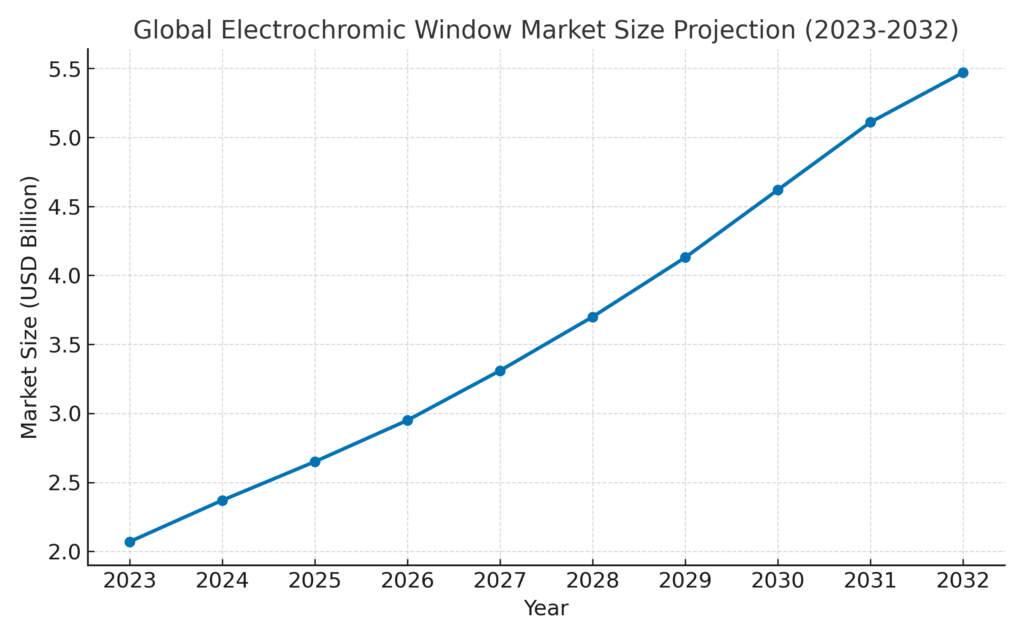
The worldwide electrochromic window market, worth USD 2.07 billion in 2023, is anticipated to grow to around USD 5.47 billion by 2032, at a high CAGR of 11.40% from 2024 to 2032 (SNS Insider, 2025). The larger electrochromic glass market is forecasted to grow to USD 4.4 billion by 2033, at a 9.2% CAGR (Allied Market Research, 2025). The majority of this demand stems from the construction sector, which accounted for nearly three-fourths of the market share in 2023.
Electrochromic Window Market Growth 2023–2032

Recent Developments and Trends
The development of smart buildings and the implementation of Internet of Things (IoT) technologies are revolutionizing the ground for building energy management. Electrochromic windows can now be automatically managed through building automation systems, dynamically adjusting tint in accordance with real-time occupancy, sunlight, and temperature information.
One of the standout trends is the increasing popularity of self-dimming, or “passive,” electrochromic windows, which adjust indoor light and temperature automatically with minimal user input.Technology once the preserve of high-end office skyscrapers is increasingly being used in residential buildings, hotels, airports, hospitals, and even automobiles.
Technology and Innovation Insights
Electrochromic Windows that employ thin coatings of materials such as tungsten oxide, which change opacity as a function of voltage, modulate sunlight precisely, reducing glare, solar heat gain, and UV radiation.When combined with HVAC and lighting controls, smart windows can optimize energy consumption holistically.
A 2023 report from the U.S. Department of Energy highlights that, “EC windows offer additional cost savings opportunities by enabling the downsizing of heating, ventilating, and air-conditioning (HVAC) systems. Electrochromic glass’ ability to modulate solar gain directly leads to reduced cooling loads—an especially significant benefit in hot climates.”
“Dynamic glass delivers both sustainability and bottom-line savings. In many projects, the HVAC system can actually be right-sized or even downsized due to the reduced peak loads from solar heat gain.”
— Paraphrased from a statement by Dr. Helen Sanders, SageGlass (Saint-Gobain)
Key Players and Stakeholders
The competitive landscape is defined by a mix of specialty innovators and global building materials giants. Notable players include:
| Company | Notable Electrochromic Products | Market Presence |
| SageGlass (Saint-Gobain) | Dynamic smart windows for commercial sites | North America, Europe |
| View, Inc. | View Smart Windows | US, global |
| AGC Inc. (Halio) | Halio Smart Glass | Asia, US, Europe |
| Chromo Genics AB | Conver Light Dynamic Glass | Scandinavia, Europe |
| Guardian Glass | Sun Guard Electrochromic Glass | US, Europe |
| Gentex Corporation | Auto-dimming windows, mirrors | Automotive & buildings |
| Pleotint LLC (Suntuitive) | Suntuitive Dynamic Glass | US, commercial buildings |
| Raven Window | RavenWindow Smart Glass | US, commercial & residential |
Data and Forecasts
The electrochromic window market is poised for robust expansion, with growth driven by both regulatory mandates and economic incentives. The following data points summarize the market outlook:
| Market Metric | 2023 Value | 2032/2033 Forecast | CAGR (2024–2032/33) |
| Electrochromic Windows | USD 2.07B | USD 5.47B (2032) | 11.40% |
| Electrochromic Glass | USD 1.9B | USD 4.4B (2033) | 9.2% |
| Smart Glass Market | USD 7.38B (2024) | USD 10.42B (2030) | 10.2% (2025–2030) |
Regulations Driving Adoption
Tough energy codes and green building certifications like LEED, WELL, and local regulations in the EU and US are driving the use of electrochromic windows. More and more of these standards are incentivizing or mandating dynamic glazing as a component of envelope optimization. For example, Europe’s focus on sustainable building methods and the decarbonization of the built environment is a prime mover, with Germany, the UK, and France leading at scale.
Government incentives, such as tax breaks for energy-efficiency retrofits and grants for smart infrastructure, further reinforce market adoption.
Real-World Examples
- North Central College (Illinois, US): Leveraged SageGlass electrochromic windows for west-facing facades. Automatically tinting glass helps optimize natural lighting while reducing HVAC loads, contributing to LEED gold certification.
- San Francisco International Airport (SFO): Integrated View Inc.’s smart windows in Terminal 1, resulting in a 20% reduction in energy usage for cooling during peak periods.
- European Office Towers: Adoption of electrochromic facades is helping corporations meet both regulatory and ESG (Environmental, Social, Governance) targets.
Challenges and Opportunities
While electrochromic windows offer compelling benefits, high upfront costs and the need for compatible electrical and control infrastructure can be hurdles—especially in retrofits. However, as manufacturing scales and more competitors enter the market, prices are expected to fall, making the technology accessible for wider adoption.
“Electrochromic technology enables buildings to dynamically respond to environmental conditions—unlocking a new paradigm in sustainable design.” — Industry executive, paraphrased from SNS Insider market report
The growing demand for green building certification and net-zero targets is set to create lucrative opportunities for both technology providers and construction firms.
Future Outlook
As the world’s building stock continues to grow—especially in rapidly urbanizing areas—the imperative for energy efficiency becomes even more pressing. Electrochromic windows, with their documented ability to save HVAC costs, enhance occupants’ comfort, and advance sustainability, are becoming a key addition to the net-zero and smart building toolkit.
As demand increases and regulation becomes firmer, the path for electrochromic windows is certain: strong growth, wider adoption, and increasingly tight integration with systemic building control systems.
Conclusion
Electrochromic windows are a meeting point of innovation, sustainability, and regulatory compliance. Their potential to save HVAC costs and enhance the energy profile of buildings guarantees their dominance in tomorrow’s built environment. As the market moves towards USD 5.47 billion by 2032, industry players—manufacturers, architects, building owners, and policymakers—need to come together to unlock the true potential of this revolutionary technology.